Precious McKenzie
The Micro World of Animal and Plant Cells
The Micro World of Animal and Plant Cells
💎 Earn 32 Points (£0.32) on this item.
YOU SAVE £2.41
- Condition: Brand new
- UK Delivery times: Usually arrives within 2 - 3 working days
- UK Shipping: Fee starts at £2.39. Subject to product weight & dimension
Bulk ordering. Want 15 or more copies? Get a personalised quote and bigger discounts. Learn more about bulk orders.
Couldn't load pickup availability
- More about The Micro World of Animal and Plant Cells
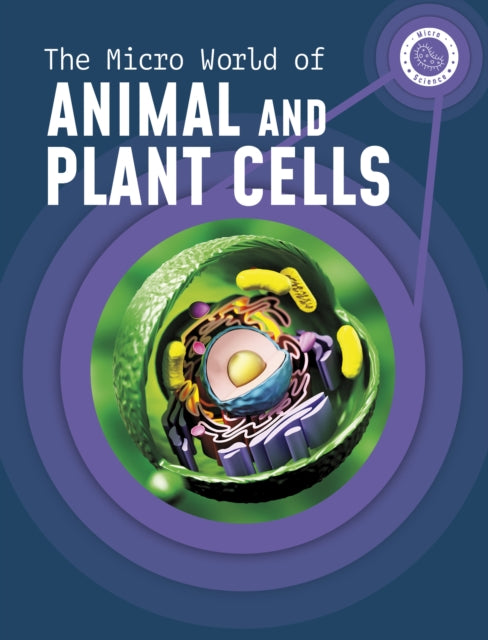
This book teaches readers about the parts of cells, how they work, and the differences between animal and plant cells. Cells are tiny and can only be seen with a microscope.
Format: Paperback / softback
Length: 32 pages
Publication date: 14 September 2023
Publisher: Capstone Global Library Ltd
A tree and your pet may appear vastly different on the surface, but they share a remarkable similarity – they are both composed of cells. Cells, in their minuscule size, can only be observed with the aid of a microscope. Within the pages of this book, readers will embark on a journey to explore the intricate components of cells, understand their functions, and discern the distinct differences between animal and plant cells.
Cells, the fundamental building blocks of life, are incredibly small and require specialized equipment for proper examination. These tiny entities, which can range in size from a few micrometers to several centimeters, possess a remarkable complexity that defies comprehension.
Within a cell, numerous organelles and structures work in harmony to sustain its life and carry out its functions. These organelles include the nucleus, which houses the genetic material; the mitochondria, responsible for energy production; the endoplasmic reticulum, involved in protein synthesis; and the Golgi apparatus, responsible for protein modification and sorting.
One of the most significant differences between animal and plant cells lies in their structure and organization. Animal cells are typically larger and have a more complex structure, with a prominent nucleus and numerous organelles distributed throughout the cell. In contrast, plant cells are smaller and have a more uniform structure, with a central vacuole that helps maintain their shape and structure.
Another key difference between animal and plant cells is their mode of reproduction. Animal cells undergo mitosis, a process in which the cell divides into two identical daughter cells. Plant cells, on the other hand, undergo cell division through a process called meiosis, which results in four daughter cells that each possess half the genetic material of the parent cell.
In terms of function, animal and plant cells serve distinct purposes. Animal cells are primarily involved in metabolism, movement, and the synthesis of proteins and other cellular components. Plant cells, on the other hand, are primarily responsible for photosynthesis, the process by which they convert sunlight into energy and glucose.
Furthermore, animal and plant cells exhibit different responses to environmental stimuli. Animal cells can respond to external signals through the activation of specific receptors, leading to the activation of cellular processes. Plant cells, on the other hand, can respond to environmental stimuli through the activation of specific genes, which results in the expression of specific proteins and other cellular components.
In conclusion, cells, the smallest units of life, are the building blocks of both trees and pets. Despite their apparent differences, they share a fundamental similarity in their composition and structure. By exploring the parts of cells, how they work, and the distinctions between animal and plant cells, readers will gain a deeper understanding of the incredible complexity and diversity of life on our planet.
Weight: 104g
Dimension: 172 x 228 x 4 (mm)
ISBN-13: 9781398238602
This item can be found in:
UK and International shipping information
UK and International shipping information
UK Delivery and returns information:
- Delivery within 2 - 3 days when ordering in the UK.
- Shipping fee for UK customers from £2.39. Fully tracked shipping service available.
- Returns policy: Return within 30 days of receipt for full refund.
International deliveries:
Shulph Ink now ships to Australia, Belgium, Canada, France, Germany, Ireland, Italy, India, Luxembourg Saudi Arabia, Singapore, Spain, Netherlands, New Zealand, United Arab Emirates, United States of America.
- Delivery times: within 5 - 10 days for international orders.
- Shipping fee: charges vary for overseas orders. Only tracked services are available for most international orders. Some countries have untracked shipping options.
- Customs charges: If ordering to addresses outside the United Kingdom, you may or may not incur additional customs and duties fees during local delivery.