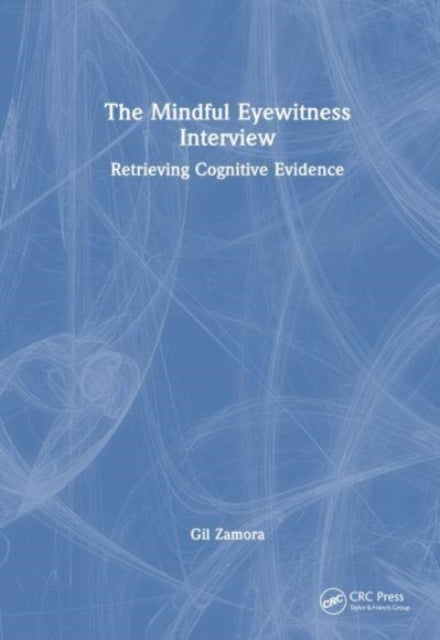
Gil Zamora
The Mindful Interview Method: Retrieving Cognitive Evidence
The Mindful Interview Method: Retrieving Cognitive Evidence
💎 Earn 811 Points (£8.11) on this item.
We can order this item for you. Delivery usually takes about 4 to 6 weeks.
This item is not held in our immediate stock. We will order it for you after checkout.
Estimated delivery: About 4 to 6 weeks
YOU SAVE £9.63
- Condition: Brand new
- UK Delivery times: Usually arrives within 2 - 3 working days
- UK Shipping: Fee starts at £3.89. Subject to product weight & dimension
Bulk ordering. Want 15 or more copies? Get a personalised quote and bigger discounts. Learn more about bulk orders.
Couldn't load pickup availability
- More about The Mindful Interview Method: Retrieving Cognitive Evidence
Cognitive evidence is reliable evidence retrieved through a mindful interviewing process, and this guide provides guidance for developing a mindful approach to conducting eyewitness interviews, analyzing interviews, and improving the interview process.
Format: Hardback
Length: 512 pages
Publication date: 19 July 2023
Publisher: Taylor & Francis Ltd
Cognitive evidence refers to the collection and analysis of information that is based on an individual's cognitive abilities and mental processes. It encompasses a wide range of sources, including eyewitness testimony, expert opinions, and physical evidence. The process of retrieving reliable evidence that maintains integrity throughout the interviewing process is crucial.
To develop a mindful approach to conducting eyewitness interviews, it is important to approach the interview with an open mind and a willingness to listen to the witness's perspective. This means avoiding preconceived notions and biases and focusing on the facts and evidence presented by the witness.
Guidance on developing a mindful approach to conducting eyewitness interviews includes:
• Avoiding leading questions: Leading questions can influence the witness's response and may lead to inaccurate information. Instead, use open-ended questions that allow the witness to provide their own narrative.
• Building rapport: Building rapport with the witness can help create a comfortable environment and increase the likelihood of accurate information. This can be achieved by showing empathy, listening actively, and maintaining a neutral tone.
• Using visual aids: Visual aids, such as photographs or diagrams, can help the witness visualize the event and provide more accurate information.
• Taking notes: Taking notes during the interview can help the interviewer remember important details and provide a record of the interview for future reference.
• Avoiding interruptions: Interrupting the witness can disrupt their flow of thought and may lead to inaccurate information. Allow the witness to complete their response before asking follow-up questions.
• Analyzing interviews: After the interview, it is important to analyze the information provided by the witness to identify any inconsistencies or errors. This can be achieved by comparing the witness's testimony with other evidence and witnesses.
Improving the interview process involves several steps, including:
• Training interviewers: Interviewers should receive training on how to conduct effective interviews and avoid biases. This training should include techniques for building rapport, avoiding leading questions, and analyzing interviews.
• Standardizing procedures: Standardizing procedures for conducting interviews can help ensure consistency and accuracy in the information collected. This can include using a standardized interview format, recording the interview, and providing feedback to interviewers.
• Using technology: Technology can be used to improve the interview process by providing tools for recording and analyzing interviews. For example, video recording can help ensure that the interview is recorded accurately and can be used for future reference.
• Collaborating with experts: Collaborating with experts in the field can help improve the accuracy and reliability of the evidence collected. Experts can provide insights into the behavior of witnesses and the likely accuracy of their testimony.
When interviewing an eyewitness for a criminal event, there are specific procedures that should be followed to ensure that the evidence collected is reliable and accurate. These procedures include:
• Identifying the witness: The interviewer should identify the witness and obtain their contact information.
• Explaining the purpose of the interview: The interviewer should explain the purpose of the interview and the importance of their testimony.
• Gaining consent: The interviewer should gain consent from the witness before beginning the interview.
• Avoiding suggestive questions: The interviewer should avoid asking questions that are suggestive or leading.
• Using open-ended questions: The interviewer should use open-ended questions that allow the witness to provide their own narrative.
• Taking notes: The interviewer should take notes during the interview to help them remember important details.
• Avoiding interruptions: The interviewer should avoid interrupting the witness and allow them to complete their response before asking follow-up questions.
• Providing feedback: The interviewer should provide feedback to the witness after the interview to help them improve their testimony.
In conclusion, cognitive evidence refers to the collection and analysis of information that is based on an individual's cognitive abilities and mental processes. The process of retrieving reliable evidence that maintains integrity throughout the interviewing process is crucial. To develop a mindful approach to conducting eyewitness interviews, it is important to approach the interview with an open mind and a willingness to listen to the witness's perspective. This includes avoiding leading questions, building rapport, using visual aids, taking notes, avoiding interruptions, analyzing interviews, training interviewers, standardizing procedures, using technology, and collaborating with experts. When interviewing an eyewitness for a criminal event, specific procedures should be followed to ensure that the evidence collected is reliable and accurate. These procedures include identifying the witness, explaining the purpose of the interview, gaining consent, avoiding suggestive questions, using open-ended questions, taking notes, avoiding interruptions, providing feedback, and identifying the witness. By following these procedures, it is possible to collect reliable evidence that can help solve crimes and bring justice to victims.
Weight: 1140g
Dimension: 254 x 178 (mm)
ISBN-13: 9781032203102
UK and International shipping information
UK and International shipping information
We deliver throughout the United Kingdom and to 128 countries and territories worldwide, including the United States, Australia, Canada, Germany, Spain and France.