Thomas K. Adamson
The Moon
The Moon
YOU SAVE £3.07
- Condition: Brand new
- UK Delivery times: Usually arrives within 2 - 3 working days
- UK Shipping: Fee starts at £3.89. Subject to product weight & dimension
Bulk ordering. Want 15 or more copies? Get a personalised quote and bigger discounts. Learn more about bulk orders.
Couldn't load pickup availability
- More about The Moon
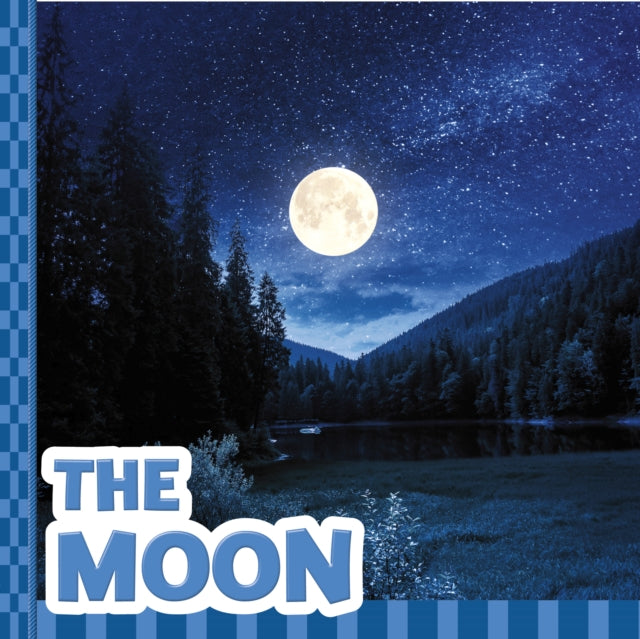
The moon is a natural satellite of the Earth that orbits around it and causes it to appear to change shape. It is visible at night because it reflects light from the Sun.
Format: Hardback
Length: 24 pages
Publication date: 19 January 2023
Publisher: Capstone Global Library Ltd
The moon is a celestial body that orbits the Earth, and its presence can be observed during both the day and night. It is the fifth-largest moon in the solar system and is known for its distinctive appearance, which is caused by a combination of factors such as its size, distance from the Earth, and rotation speed.
The moon is a magnificent celestial object that gracefully orbits our planet, captivating us with its captivating presence both during the day and night. It holds the distinction of being the fifth-largest moon in the vast expanse of our solar system, and its unique characteristics are a testament to the intricate interplay of various factors.
Firstly, the moon's size plays a significant role in shaping its appearance. With a diameter of approximately 3,474 kilometers, it is relatively large compared to many other moons in the solar system. This grandeur contributes to its striking visual impact, making it a prominent landmark in the night sky.
Secondly, the moon's distance from the Earth plays a crucial role in determining its appearance. At an average distance of approximately 384,400 kilometers, the moon is well within the Earth's gravitational influence, resulting in a stable orbit that allows us to observe it with regularity. This proximity also contributes to the moon's apparent size, as it appears larger in the sky relative to other celestial objects.
Furthermore, the moon's rotation speed plays a vital role in shaping its appearance. With a rotation period of approximately 27.3 days, the moon completes one full rotation around its axis roughly every 29.5 Earth days. This slow rotation causes the moon to exhibit a gradual change in its shape, with different parts of the moon being illuminated by the sun at different times.
The moon's phases are another fascinating aspect of its appearance. As the moon orbits the Earth, it undergoes a cycle of phases, each characterized by a different level of illumination. The phases are primarily caused by the moon's position relative to the sun and the Earth, with the new moon occurring when the moon is between the sun and the Earth, the full moon occurring when the moon is on the opposite side of the Earth from the sun, and the intermediate phases occurring when the moon is at various angles between these two positions.
The moon's impact on human culture and society is profound. Throughout history, the moon has been revered and celebrated in various cultures, serving as a source of inspiration, mythology, and symbolism. It has been used in religious ceremonies, navigation, and even as a marker of time. In modern times, the moon has played a crucial role in scientific research and exploration, with numerous missions and missions dedicated to studying its composition, structure, and history.
In conclusion, the moon is a remarkable celestial object that captivates us with its beauty, size, distance, and rotation speed. Its presence can be observed both during the day and night, and its distinctive appearance is a result of a complex interplay of factors. From its historical significance to its scientific importance, the moon continues to inspire and intrigue us, reminding us of the vastness and wonder of our universe.
The moon is a celestial body that orbits the Earth, and its presence can be observed during both the day and night. It is the fifth-largest moon in the solar system and is known for its distinctive appearance, which is caused by a combination of factors such as its size, distance from the Earth, and rotation speed.
The moon's size plays a significant role in shaping its appearance. With a diameter of approximately 3,474 kilometers, it is relatively large compared to many other moons in the solar system. This grandeur contributes to its striking visual impact, making it a prominent landmark in the night sky.
Secondly, the moon's distance from the Earth plays a crucial role in determining its appearance. At an average distance of approximately 384,400 kilometers, the moon is well within the Earth's gravitational influence, resulting in a stable orbit that allows us to observe it with regularity. This proximity also contributes to the moon's apparent size, as it appears larger in the sky relative to other celestial objects.
Furthermore, the moon's rotation speed plays a vital role in shaping its appearance. With a rotation period of approximately 27.3 days, the moon completes one full rotation around its axis roughly every 29.5 Earth days. This slow rotation causes the moon to exhibit a gradual change in its shape, with different parts of the moon being illuminated by the sun at different times.
The moon's phases are another fascinating aspect of its appearance. As the moon orbits the Earth, it undergoes a cycle of phases, each characterized by a different level of illumination. The phases are primarily caused by the moon's position relative to the sun and the Earth, with the new moon occurring when the moon is between the sun and the Earth, the full moon occurring when the moon is on the opposite side of the Earth from the sun, and the intermediate phases occurring when the moon is at various angles between these two positions.
The moon's impact on human culture and society is profound. Throughout history, the moon has been revered and celebrated in various cultures, serving as a source of inspiration, mythology, and symbolism. It has been used in religious ceremonies, navigation, and even as a marker of time. In modern times, the moon has played a crucial role in scientific research and exploration, with numerous missions and missions dedicated to studying its composition, structure, and history.
In conclusion, the moon is a remarkable celestial object that captivates us with its beauty, size, distance, and rotation speed. Its presence can be observed both during the day and night, and its distinctive appearance is a result of a complex interplay of factors. From its historical significance to its scientific importance, the moon continues to inspire and intrigue us, reminding us of the vastness and wonder of our universe.
Weight: 238g
Dimension: 210 x 206 x 12 (mm)
ISBN-13: 9781398247949
UK and International shipping information
UK and International shipping information
We deliver throughout the United Kingdom and to 128 countries and territories worldwide, including the United States, Australia, Canada, Germany, Spain and France.