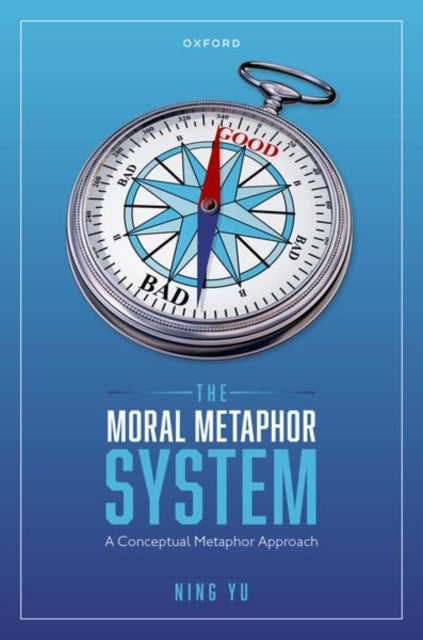
NingYu
The Moral Metaphor System: A Conceptual Metaphor Approach
The Moral Metaphor System: A Conceptual Metaphor Approach
💎 Earn 590 Points (£5.90) on this item.
- Condition: Brand new
- UK Delivery times: Usually arrives within 2 - 3 working days
- UK Shipping: Fee starts at £2.39. Subject to product weight & dimension
Bulk ordering. Want 15 or more copies? Get a personalised quote and bigger discounts. Learn more about bulk orders.
Couldn't load pickup availability
- More about The Moral Metaphor System: A Conceptual Metaphor Approach
This book explores moral metaphors in English and Chinese, applying conceptual metaphor theory to a comparative study of the linguistic manifestation of the moral metaphor system rooted in bodily and physical experience. It investigates moral cognition at the cultural level as reflected in language, based on linguistic evidence from both English and Chinese and multimodal evidence from the corresponding cultures. The moral metaphor system consists of three major subsystems: physical, visual, and spatial, which are clusters of conceptual metaphors formulated in contrastive categories with bipolar values for moral and immoral target concepts. The study is characterized by two keywords: system and systematicity, which refer to the interconnectedness of metaphors and the need to study them in networks.
Format: Hardback
Length: 336 pages
Publication date: 21 July 2022
Publisher: Oxford University Press
This book delves into the realm of moral metaphors in English and Chinese, employing conceptual metaphor theory to conduct a comparative analysis of the linguistic manifestation of the moral metaphor system, which is deeply rooted in the domains of bodily and physical experience. Ning Yu sheds valuable light on the metaphorical nature of moral cognition and explores how it systematically manifests itself in language. Through this exploration, she seeks to identify the potential commonalities that define moral cognition in general, as well as the distinct differences that characterize different cultures. The research undertakes a cultural exploration of moral cognition as reflected in language, drawing upon linguistic evidence from both English and Chinese, as well as limited multimodal evidence from the corresponding cultures. The moral metaphor system is conceptualized as comprising three major subsystems: physical, visual, and spatial. These subsystems are clusters of conceptual metaphors, originating from domains of embodied experiences in the physical world and formulated in contrastive categories with bipolar values for the target concepts of moral and immoral. The study is characterized by two key terms: system and systematicity. The former refers to the interconnectedness of metaphors (both conceptual and linguistic) within networks, while the latter emphasizes the importance of studying these metaphors within such networks.
The book begins by introducing the theoretical framework of conceptual metaphor theory, which posits that metaphors are cognitive structures that map one domain onto another. It further suggests that these mappings are grounded in the underlying cognitive processes of human beings, which involve the use of sensory and conceptual resources. The author then applies this theoretical framework to the study of moral metaphors, specifically focusing on their linguistic manifestation in English and Chinese.
In the first chapter, the author provides an overview of the moral metaphor system, its historical development, and its cultural variations. She argues that moral metaphors play a crucial role in shaping moral cognition and behavior, as they provide a means of expressing and understanding moral values and principles. The chapter also highlights the challenges that arise in studying moral metaphors, such as the differences in cultural norms and values, as well as the complexities of language translation.
The second chapter delves into the linguistic manifestation of moral metaphors in English and Chinese. The author analyzes the use of specific lexical items, such as verbs, adjectives, and nouns, to represent moral concepts and values. She demonstrates how these lexical items are mapped onto bodily and physical experiences, such as movement, touch, and perception. The chapter also explores the cultural differences in the use of moral metaphors, such as the emphasis on different moral virtues and values in different cultures.
In the third chapter, the author examines the potential commonalities that define moral cognition in general. She argues that there are certain cognitive processes that are universal to human beings, regardless of their cultural background. These processes include the use of metaphorical thinking, the perception of similarity, and the categorization of objects and events. The chapter also explores the ways in which these commonalities can be manifested in language, such as the use of universal moral idioms and the creation of moral analogies.
The fourth chapter explores the differences that characterize distinct cultures in their moral cognition. The author analyzes the use of moral metaphors in different cultural contexts, such as religious texts, philosophical writings, and popular media. She demonstrates how these metaphors are used to express and understand moral values and principles in different cultural traditions. The chapter also highlights the challenges that arise in cross-cultural communication and understanding, such as the differences in cultural norms and values, as well as the complexities of language translation.
In the fifth chapter, the author concludes the book by summarizing the key findings and implications of the study. She argues that the study of moral metaphors provides valuable insights into the nature of moral cognition and behavior, as well as into the cultural variations in moral values and principles. The author also suggests that the study of moral metaphors can be used to promote cross-cultural understanding and communication, as well as to develop more effective strategies for promoting moral behavior and values.
Overall, this book is a valuable contribution to the field of cognitive linguistics and cultural studies. It provides a comprehensive and systematic analysis of the linguistic manifestation of the moral metaphor system, drawing upon a wide range of linguistic evidence from both English and Chinese. The book offers valuable insights into the nature of moral cognition and behavior, as well as into the cultural variations in moral values and principles. It is a must-read for scholars and researchers interested in the fields of cognitive linguistics, cultural studies, and moral philosophy.
Weight: 666g
Dimension: 241 x 165 x 24 (mm)
ISBN-13: 9780192866325
This item can be found in:
UK and International shipping information
UK and International shipping information
UK Delivery and returns information:
- Delivery within 2 - 3 days when ordering in the UK.
- Shipping fee for UK customers from £2.39. Fully tracked shipping service available.
- Returns policy: Return within 30 days of receipt for full refund.
International deliveries:
Shulph Ink now ships to Australia, Belgium, Canada, France, Germany, Ireland, Italy, India, Luxembourg Saudi Arabia, Singapore, Spain, Netherlands, New Zealand, United Arab Emirates, United States of America.
- Delivery times: within 5 - 10 days for international orders.
- Shipping fee: charges vary for overseas orders. Only tracked services are available for most international orders. Some countries have untracked shipping options.
- Customs charges: If ordering to addresses outside the United Kingdom, you may or may not incur additional customs and duties fees during local delivery.