Youshaa Patel
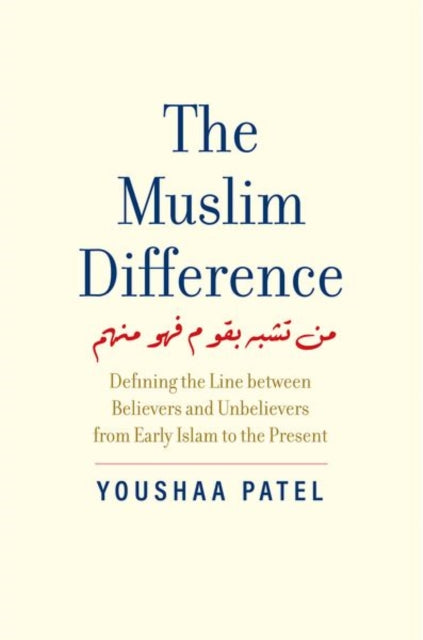
The Muslim Difference: Defining the Line between Believers and Unbelievers from Early Islam to the Present
The Muslim Difference: Defining the Line between Believers and Unbelievers from Early Islam to the Present
💎 Earn 141 Points (£1.41) on this item.
YOU SAVE £1.68
- Condition: Brand new
- UK Delivery times: Usually arrives within 2 - 3 working days
- UK Shipping: Fee starts at £2.39. Subject to product weight & dimension
Bulk ordering. Want 15 or more copies? Get a personalised quote and bigger discounts. Learn more about bulk orders.
Couldn't load pickup availability
- More about The Muslim Difference: Defining the Line between Believers and Unbelievers from Early Islam to the Present
Youshaa Patel's book explores the history of Muslim identity, tracing the origins of the doctrine against imitation to the Prophet Muhammad's advice to emulate Christians and Jews. It reveals how subsequent generations of Muslim scholars canonized this admonition into an influential doctrine against imitation, enjoining ordinary believers to embody and display their religious difference in public life. The book offers a panoramic view of Muslim identity, revealing unexpected intersections between religion and other markers of difference across ethnicity, gender, and status.
Format: Hardback
Length: 360 pages
Publication date: 06 January 2023
Publisher: Yale University Press
From its humble beginnings in the late antiquity, the Muslim identity has undergone a remarkable journey, spanning centuries and continents. It is a complex tapestry woven with the threads of history, culture, and religion, shaped by the diverse experiences of Muslims across time and place. In this essay, we will explore the fascinating history of Muslim identity, examining how Muslims have defined themselves and their neighbors throughout the ages.
The concept of Muslim identity has evolved over time, and it has been influenced by a myriad of factors, including geography, history, and cultural interactions. In the early days of Islam, the Prophet Muhammad advised his followers to emulate Christians and Jews, emphasizing the importance of living in harmony with their neighbors. However, as the Islamic empire expanded, the Prophet's message evolved, urging his followers to "be different!" He encouraged them to embrace their unique religious identity and to distinguish themselves from their non-Muslim counterparts.
This doctrine of religious difference became an influential part of Islamic scholarship, and it was canonized by subsequent generations of Muslim scholars. They interpreted the Prophet's admonition as a call to ordinary believers to embody and display their religious difference in public life. This was a departure from the traditional Islamic practice of assimilating into the local culture and adopting the customs and practices of the people around them.
The concept of religious difference was not limited to the Muslim world; it also played a significant role in the interactions between Muslims and their non-Muslim neighbors. Throughout history, Muslims have been known for their distinctive religious practices, such as the use of the hijab, the prayer ritual, and the fasting during the holy month of Ramadan. These practices have often been perceived as a threat by non-Muslims, leading to tensions and conflicts.
However, it is important to note that the concept of religious difference has not always been a source of conflict. In some cases, it has been a source of unity and cooperation. For example, during the medieval period, Muslims and Christians in the Middle East often lived in relative peace and harmony, sharing common cultural and intellectual traditions. This was due in part to the recognition of religious difference by both sides and the willingness to respect each other's beliefs and practices.
Today, the concept of Muslim identity continues to evolve and adapt to the changing world around us. The rise
The concept of Muslim identity has evolved over time, and it has been influenced by a myriad of factors, including geography, history, and cultural interactions. In the early days of Islam, the Prophet Muhammad advised his followers to emulate Christians and Jews, emphasizing the importance of living in harmony with their neighbors. However, as the Islamic empire expanded, the Prophet's message evolved, urging his followers to "be different!" He encouraged them to embrace their unique religious identity and to distinguish themselves from their non-Muslim counterparts.
This doctrine of religious difference became an influential part of Islamic scholarship, and it was canonized by subsequent generations of Muslim scholars. They interpreted the Prophet's admonition as a call to ordinary believers to embody and display their religious difference in public life. This was a departure from the traditional Islamic practice of assimilating into the local culture and adopting the customs and practices of the people around them.
The concept of religious difference was not limited to the Muslim world; it also played a significant role. Throughout history, Muslims have been known for their distinctive religious practices, such as the use of the hijab, the prayer ritual, and the fasting during the holy month of Ramadan. These practices have often been perceived as a threat by non-Muslims, leading to tensions and conflicts.
However, it is important to note that the concept of religious difference has not always been a source of conflict. In some cases, it has been a source of unity and cooperation. For example, during the medieval period, Muslims and Christians in the Middle East often lived in relative peace and harmony, sharing common cultural and intellectual traditions. This was due in part to the recognition of religious difference by both sides and the willingness to respect each other's beliefs and practices.
Today, the concept of Muslim identity continues to evolve and adapt to the changing world around us. The rise. The debates in the West over visible expressions of Islam, from headscarves and beards to minarets and mosques, are just the latest iterations in a long history of how small differences have defined Muslim interreligious encounters. These debates often reflect the broader social and political context in which they occur, with some arguing that these expressions of Islam are a form of cultural appropriation and integration, while others argue that they are a threat to Western values and traditions.
In conclusion, the history of Muslim identity is a complex and multifaceted journey that has been shaped by a myriad of factors, including geography, history, culture, and religion. From its humble beginnings in the late antiquity, Muslim identity has evolved, and it has been influenced by a diverse range of experiences and perspectives. The concept of religious difference has played a significant role in shaping Muslim interreligious encounters throughout history, and it continues to be a topic of debate and discussion in the modern world. As Muslims continue to navigate the challenges and opportunities of the 21st century, it is important to recognize the rich and diverse history of Muslim identity and to work towards a future that is inclusive and respectful of all faiths and cultures.
Dimension: 235 x 156 (mm)
ISBN-13: 9780300248968
UK and International shipping information
UK and International shipping information
UK Delivery and returns information:
- Delivery within 2 - 3 days when ordering in the UK.
- Shipping fee for UK customers from £2.39. Fully tracked shipping service available.
- Returns policy: Return within 30 days of receipt for full refund.
International deliveries:
Shulph Ink now ships to Australia, Belgium, Canada, France, Germany, Ireland, Italy, India, Luxembourg Saudi Arabia, Singapore, Spain, Netherlands, New Zealand, United Arab Emirates, United States of America.
- Delivery times: within 5 - 10 days for international orders.
- Shipping fee: charges vary for overseas orders. Only tracked services are available for most international orders. Some countries have untracked shipping options.
- Customs charges: If ordering to addresses outside the United Kingdom, you may or may not incur additional customs and duties fees during local delivery.