Dr AmarSohal
The Muslim Secular: Parity and the Politics of India's Partition
The Muslim Secular: Parity and the Politics of India's Partition
💎 Earn 493 Points (£4.93) on this item.
We can order this item for you. Delivery usually takes about 4 to 6 weeks.
This item is not held in our immediate stock. We will order it for you after checkout.
Estimated delivery: About 4 to 6 weeks
- Condition: Brand new
- UK Delivery times: Usually arrives within 2 - 3 working days
- UK Shipping: Fee starts at £2.39. Subject to product weight & dimension
Bulk ordering. Want 15 or more copies? Get a personalised quote and bigger discounts. Learn more about bulk orders.
Couldn't load pickup availability
- More about The Muslim Secular: Parity and the Politics of India's Partition
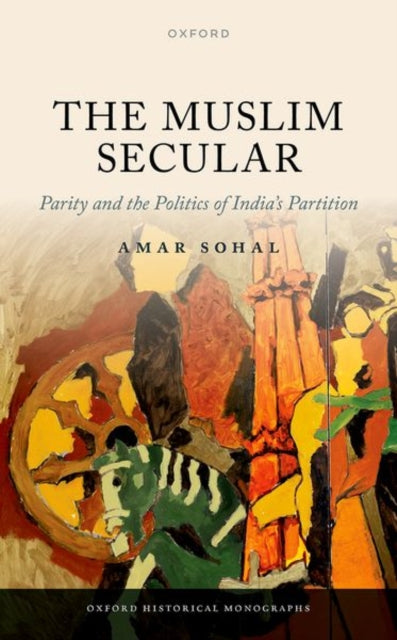
Muslim political thought in modern South Asia has been associated with religious nationalism and the creation of Pakistan. The Muslim Secular complicates that story by reconstructing the ideas of three prominent thinker-actors of the Indian freedom struggle: Abul Kalam Azad, Sheikh Abdullah, and Abdul Ghaffar Khan. It argues that these three men collectively produced a distinct Muslim secularity from within the grander family of secular Indian nationalism, which has retained religion within the public space while preventing it from defining either national membership or the state. They mobilized notions of federation and popular sovereignty to replace older monarchical and communitarian forms of power, and redefined equality itself with their own rendition of Indian parity to evoke commonality and distinction between Hindu and Muslim peers. This notion of equality-as-parity challenged both Gandhi and Nehru's abstractions and Mohammad Ali Jinnah's demand for Pakistan.
Format: Hardback
Length: 352 pages
Publication date: 31 August 2023
Publisher: Oxford University Press
In the context of modern South Asia, Muslim political thought has frequently been linked to religious nationalism and the establishment of Pakistan, particularly concerning the fate of minority communities. However, the Muslim Secular challenges this narrative by reinterpreting the ideas of three prominent figures who played significant roles in the Indian freedom struggle: Abul Kalam Azad, Sheikh Abdullah, and Abdul Ghaffar Khan. Contrary to the common perception that these individuals were mere followers of their celebrated Hindu colleagues, M.K. Gandhi and Jawaharlal Nehru, this book argues that they collectively forged a distinct Muslim secularity within the broader framework of secular Indian nationalism. This intellectual tradition has maintained religion within the public sphere while preventing it from defining national membership or the state.
At a time when many countries in the process of decolonization were grappling with the notion of identity-based majorities and minorities, Azad, Abdullah, and Ghaffar Khan approached the problem of religious pluralism in a postcolonial democracy differently. They believed that the minority could view the majority not merely as an antagonistic force but as a community to which they could belong and contribute uniquely. Drawing upon the universalism of Islam, proponents of the Muslim secular movement mobilized concepts of federation and popular sovereignty to replace older forms of power, such as monarchical and communitarian systems.
However, their vision of a united India went beyond mere political consolidation. These thinkers reimagined equality itself, rejecting the liberal definition that prioritized individual rights and freedoms. Instead, they advocated for a more inclusive and equitable society that recognized the diverse identities and contributions of all communities. They recognized the historical and social factors that had contributed to the marginalization of Muslims and worked towards rectifying these imbalances.
The Muslim Secular offers a valuable contribution to our understanding of the complex relationship between religion, nationalism, and minority rights in modern South Asia. It challenges the simplistic narratives that often prevail in the media and academic discourse and provides a nuanced and empathetic perspective on the challenges faced by minority communities. By reconstructing the ideas of these three influential figures, the book sheds light on the ways in which Muslims have contributed to the development of secular India and the ongoing struggle for social justice and equality.
Weight: 536g
Dimension: 144 x 223 x 26 (mm)
ISBN-13: 9780198887638
This item can be found in:
UK and International shipping information
UK and International shipping information
UK Delivery and returns information:
- Delivery within 2 - 3 days when ordering in the UK.
- Shipping fee for UK customers from £2.39. Fully tracked shipping service available.
- Returns policy: Return within 30 days of receipt for full refund.
International deliveries:
Shulph Ink now ships to Australia, Belgium, Canada, France, Germany, Ireland, Italy, India, Luxembourg Saudi Arabia, Singapore, Spain, Netherlands, New Zealand, United Arab Emirates, United States of America.
- Delivery times: within 5 - 10 days for international orders.
- Shipping fee: charges vary for overseas orders. Only tracked services are available for most international orders. Some countries have untracked shipping options.
- Customs charges: If ordering to addresses outside the United Kingdom, you may or may not incur additional customs and duties fees during local delivery.