Shulph Ink
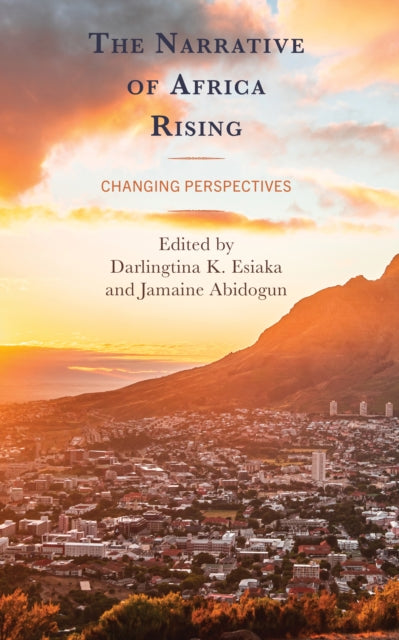
The Narrative of Africa Rising: Changing Perspectives
The Narrative of Africa Rising: Changing Perspectives
💎 Earn 451 Points (£4.51) on this item.
We can order this item for you. Delivery usually takes about 4 to 6 weeks.
This item is not held in our immediate stock. We will order it for you after checkout.
Estimated delivery: About 4 to 6 weeks
- Condition: Brand new
- UK Delivery times: Usually arrives within 2 - 3 working days
- UK Shipping: Fee starts at £3.89. Subject to product weight & dimension
Bulk ordering. Want 15 or more copies? Get a personalised quote and bigger discounts. Learn more about bulk orders.
Couldn't load pickup availability
- More about The Narrative of Africa Rising: Changing Perspectives
African civilizations have successfully navigated challenges and maintained cultural continuity through trade, foreign invasion, and colonialism, with indigenous socio-political economic processes playing a crucial role. Despite uneven development, Africa's rise in the twenty-first century is marked by efforts to undo colonialism and fight neocolonial exploitation, with African civilizations' sophisticated societal institutions striving for the wellbeing of their citizens.
Format: Hardback
Length: 192 pages
Publication date: 15 July 2024
Publisher: Lexington Books
African civilizations have demonstrated remarkable resilience and adaptability in the face of numerous challenges throughout history. Despite the expansion of trade, foreign invasions, and the imposition of colonial and neocolonial states, these societies have managed to maintain their cultural continuity and ensure the survival of their communities. The Narrative of Africa Rising: Changing Perspectives provides a comprehensive and nuanced analysis of Africa's struggles to rise above challenges and conflict in the twenty-first century. Through representative case studies, the editors, Darlingtina K. Esiaka and Jamaine Abidogun, examine the complex and uneven development of Africa over time, using empirical data and field observations to gain insights into how Africans across the continent utilize indigenous socio-political-economic processes in the face of neocolonial "nation-state" systems that often fail them. Africa's twenty-first-century rise is characterized by erratic progress as it grapples with the legacy of colonialism and fights against neocolonial exploitation. However, what remains steadfast is the enduring strength of African civilizations' sophisticated societal institutions, which continue to strive for the well-being of their citizens.
One of the key factors that have contributed to Africa's resilience is its diverse cultural heritage. Africa is home to a wide range of ethnic groups, each with its own unique customs, languages, and traditions. This diversity has provided a rich source of resilience, as it has enabled communities to adapt to changing circumstances and resist external pressures. For example, during the colonial period, African societies were able to maintain their languages and customs despite the imposition of European languages and religions. This cultural resilience has also been evident in the face of foreign invasions and neocolonialism. African societies have been able to resist attempts to impose their own cultural values and systems and have instead maintained their own unique identities.
Another factor that has contributed to Africa's resilience is its strong sense of community. African societies are characterized by strong social bonds and a sense of belonging. This sense of community has been instrumental in promoting social cohesion and stability, even in the face of adversity. For example, during the Ebola outbreak in West Africa, communities came together to support each other and to prevent the spread of the disease. This sense of community has also been evident in the fight against poverty and inequality. African societies have been able to mobilize resources and to work together to address these challenges.
However, Africa's resilience has also been challenged by a range of factors. One of the most significant challenges is poverty. Africa is one of the poorest regions in the world, with over 40% of its population living in extreme poverty. This poverty has led to a range of social and economic problems, including malnutrition, disease, and unemployment. Despite efforts to address poverty, the problem remains persistent.
Another challenge is political instability. Africa has been plagued by political instability for many years, with many countries experiencing civil wars, coups, and other forms of political violence. This instability has led to a range of social and economic problems, including displacement, human rights abuses, and economic decline. Despite efforts to promote political stability, the problem remains persistent.
In addition to these challenges, Africa has also been affected by climate change. Climate change has led to a range of environmental problems, including drought, floods, and desertification. These problems have had a significant impact on African societies, particularly those that rely on agriculture for their livelihoods. Despite efforts to address climate change, the problem remains persistent.
Despite these challenges, Africa has made significant progress in recent years. For example, Africa has experienced rapid economic growth in recent years, with many countries becoming major players in the global economy. This growth has led to a range of social and economic benefits, including improved access to healthcare, education, and infrastructure. However, this growth has also been accompanied by a range of social and environmental problems, including environmental degradation and social inequality.
To address these challenges, Africa needs to adopt a comprehensive and sustainable development strategy. This strategy should focus on promoting economic growth, reducing poverty, and promoting social and environmental sustainability. It should also involve the participation of all stakeholders, including governments, businesses, and civil society organizations.
One of the key challenges in implementing a comprehensive and sustainable development strategy is the lack of resources. Africa is one of the poorest regions in the world, and many countries lack the resources necessary to implement development programs. This lack of resources has been exacerbated by the impact of climate change, which has led to a range of environmental problems that require significant investment.
To address this challenge, Africa needs to increase its investment in infrastructure. Infrastructure development can provide access to healthcare, education, and other essential services, and can also promote economic growth. However, infrastructure development can also have negative environmental impacts, and it is important to ensure that infrastructure development is sustainable.
In addition to infrastructure development, Africa needs to promote sustainable agriculture. Sustainable agriculture can provide food security, reduce poverty, and promote environmental sustainability. However, sustainable agriculture requires significant investment in research and development, and it is important to ensure that farmers have access to the necessary resources.
Another key challenge in implementing a comprehensive and sustainable development strategy is the impact of climate change. Climate change has led to a range of environmental problems, including drought, floods, and desertification. These problems have had a significant impact on African societies, particularly those that rely on agriculture for their livelihoods.
To address this challenge, Africa needs to implement climate change mitigation and adaptation measures. Climate change mitigation measures include reducing greenhouse gas emissions, while climate change adaptation measures include building resilience to the impacts of climate change.
In addition to these measures, Africa needs to promote social and environmental sustainability. Social and environmental sustainability involves promoting social justice, human rights, and environmental protection. This involves promoting gender equality, reducing inequality, and protecting the environment.
Despite these challenges, Africa has made significant progress in recent years. For example, Africa has experienced rapid economic growth in recent years, with many countries becoming major players in the global economy. This growth has led to a range of social and economic benefits, including improved access to healthcare, education, and infrastructure. However, this growth has also been accompanied by a range of social and environmental problems, including environmental degradation and social inequality.
To address these challenges, Africa needs to adopt a comprehensive and sustainable development strategy. This strategy should focus on promoting economic growth, reducing poverty, and promoting social and environmental sustainability. It should also involve the participation of all stakeholders, including governments, businesses, and civil society organizations.
In conclusion, African civilizations have demonstrated remarkable resilience and adaptability in the face of numerous challenges throughout history. Despite the expansion of trade, foreign invasions, and the imposition of colonial and neocolonial states, these societies have managed to maintain their cultural continuity and ensure the survival of their communities. The Narrative of Africa Rising: Changing Perspectives provides a comprehensive and nuanced analysis of Africa's struggles to rise above challenges and conflict in the twenty-first century. Through representative case studies, the editors examine the complex and uneven development of Africa over time, using empirical data and field observations to gain insights into how Africans across the continent utilize indigenous socio-political-economic processes in the face of neocolonial "nation-state" systems that often fail them. Africa's twenty-first-century rise is characterized by erratic progress as it grapples with the legacy of colonialism and fights against neocolonial exploitation. However, what remains steadfast is the enduring strength of African civilizations' sophisticated societal institutions, which continue to strive for the well-being of their citizens. By adopting a comprehensive and sustainable development strategy, Africa can address these challenges and achieve long-term prosperity and stability.
Weight: 485g
Dimension: 236 x 160 x 21 (mm)
ISBN-13: 9781666958515
UK and International shipping information
UK and International shipping information
We deliver throughout the United Kingdom and to 128 countries and territories worldwide, including the United States, Australia, Canada, Germany, Spain and France.