James Mills
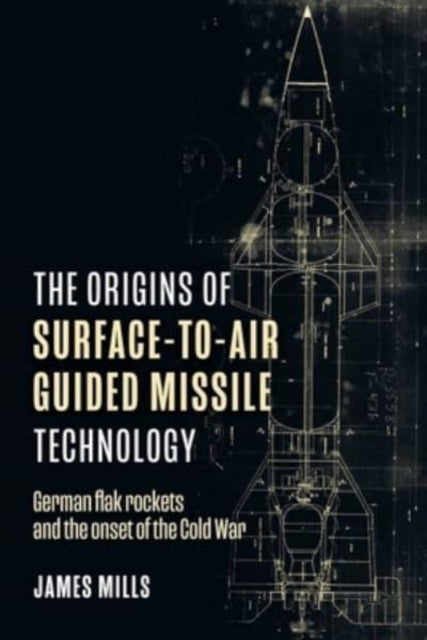
The Origins of Surface-to-Air Guided Missile Technology: German Flak Rockets and the Onset of the Cold War
The Origins of Surface-to-Air Guided Missile Technology: German Flak Rockets and the Onset of the Cold War
💎 Earn 106 Points (£1.06) on this item.
YOU SAVE £8.75
- Condition: Brand new
- UK Delivery times: Usually arrives within 2 - 3 working days
- UK Shipping: Fee starts at £2.39. Subject to product weight & dimension
Bulk ordering. Want 15 or more copies? Get a personalised quote and bigger discounts. Learn more about bulk orders.
Couldn't load pickup availability
- More about The Origins of Surface-to-Air Guided Missile Technology: German Flak Rockets and the Onset of the Cold War
During World War II, German scientists and engineers developed advanced surface-to-air guided missile systems, which were ahead of comparable research in the United Kingdom and the United States. This book presents the first complete history of Germanys wartime development of SAM technology, how the Allies acquired this secret research, and how they exploited this knowledge.
Format: Hardback
Length: 240 pages
Publication date: 15 September 2022
Publisher: Casemate Publishers
World War II was a transformative era in the history of warfare, witnessing the emergence of numerous revolutionary armaments on both sides. These advancements included jet aircraft, ballistic missiles, and the atomic bomb, which fundamentally altered the nature of conflict. Moreover, the war saw the birth of the first surface-to-air guided missile systems, a technological marvel pioneered by German scientists and engineers through an extensive development program that spanned from 1942 to 1945. While the program aimed to introduce a functional weapon system into the Luftwaffe air defense network, German research and development in most aspects of the technology were ahead of comparable research in the United Kingdom and the United States.
However, the focus on the transfers of the V-1 and V-2 guided missiles has somewhat overshadowed the story of Germanys wartime development of SAM technology. This book aims to rectify that by presenting the first comprehensive history of Germanys wartime development of surface-to-air missile (SAM) technology. It delves into how the Allies acquired this secret research towards the end of World War II in Europe and in the early postwar period, and how they subsequently exploited this knowledge.
The development of SAM technology in Germany began in the early 1930s, driven by the need for a defense against aerial threats. The Luftwaffe, the German air force, played a crucial role in this endeavor, investing significant resources in research and development. The first SAM systems were developed in the late 1930s, and they saw limited use during the Spanish Civil War in 1936-1939. However, the war provided a valuable opportunity for the German military to refine and improve their SAM technology.
During World War II, the German military developed a range of SAM systems, including the Wasserfall (Waterfall), FlaK (Flak), and Me 262 jet fighter. These systems were designed to intercept and destroy incoming enemy aircraft, and they played a significant role in the German air defense strategy. The Wasserfall was the first operational SAM system, and it was deployed in 1940. It was a ground-based system that used radar to detect and track incoming aircraft and then fired a rocket-propelled projectile to intercept them. The FlaK was a mobile anti-aircraft system that was deployed in 1941 and used a combination of radar and gunnery to engage enemy aircraft. The Me 262 was the most advanced SAM system of the war, and it was deployed in 1944. It was a jet fighter that was equipped with a radar-guided missile system that could reach speeds of up to 700 miles per hour.
The Allies were aware of the importance of SAM technology and began to invest in their own research and development programs. In 1940, the United States began developing the radar, which was a critical component of SAM systems. The British also developed their own radar systems, including the Chain Home and Chain Home Low systems, which were deployed in 1941 and 1942, respectively.
The Allies also began to acquire German SAM technology through espionage and other means. In 1943, the United States and the United Kingdom established the Combined Operations Headquarters (COHQ) in London, which was responsible for coordinating the Allied intelligence effort. The COHQ was able to gather information on German SAM technology, including the design and specifications of various systems.
The Allies also used captured German SAM systems to improve their own technology. For example, the United States used captured FlaK systems to develop the M1942 Quad Gun Motor Carriage, which was a mobile anti-aircraft system that was deployed in the Pacific Theater of Operations. The British also used captured Me 262 jet fighters to develop the Meteor jet fighter, which was the first jet fighter to be equipped with a radar-guided missile system.
The Allies also developed their own SAM systems, including the Sidewinder missile, the Redstone missile, and the Nike Ajax missile. The Sidewinder was the first operational American SAM system, and it was deployed in 1958. It was a surface-to-air missile that used infrared technology to detect and track incoming aircraft. The Redstone was a mobile anti-aircraft system that was deployed in 1959 and used a combination of radar and gunnery to engage enemy aircraft. The Nike Ajax was a ground-based SAM system that was deployed in 1961 and used a combination of radar and gunnery to engage enemy aircraft.
The transfer of German SAM technology to the Allies after 1945 was a significant event in the history of warfare. The Allies were able to use this technology to improve their own SAM systems and to develop new ones that were even more advanced than the German systems. The development of SAM technology also had a significant impact on the development of other technologies, such as radar and infrared technology.
In conclusion, World War II was a transformative era in the history of warfare, witnessing the emergence of numerous revolutionary armaments on both sides. The development of the first surface-to-air guided missile systems was a significant milestone in this era, and Germanys wartime development of SAM technology was a crucial part of this story. This book presents the first comprehensive history of Germanys wartime development of SAM technology, how the Allies acquired this secret research towards the end of World War II in Europe and in the early postwar period, and how they then exploited this knowledge. The transfer of German SAM technology to the Allies after 1945 was a significant event in the history of warfare, and it helped to shape the future of air defense technology.
Weight: 546g
Dimension: 162 x 237 x 24 (mm)
ISBN-13: 9781636242774
This item can be found in:
UK and International shipping information
UK and International shipping information
UK Delivery and returns information:
- Delivery within 2 - 3 days when ordering in the UK.
- Shipping fee for UK customers from £2.39. Fully tracked shipping service available.
- Returns policy: Return within 30 days of receipt for full refund.
International deliveries:
Shulph Ink now ships to Australia, Belgium, Canada, France, Germany, Ireland, Italy, India, Luxembourg Saudi Arabia, Singapore, Spain, Netherlands, New Zealand, United Arab Emirates, United States of America.
- Delivery times: within 5 - 10 days for international orders.
- Shipping fee: charges vary for overseas orders. Only tracked services are available for most international orders. Some countries have untracked shipping options.
- Customs charges: If ordering to addresses outside the United Kingdom, you may or may not incur additional customs and duties fees during local delivery.