ChelsiMueller
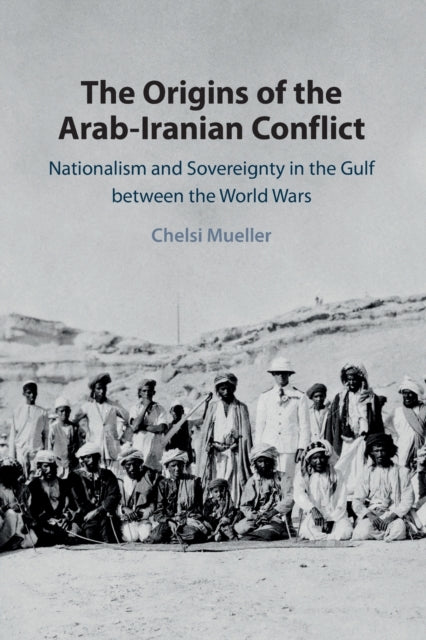
The Origins of the Arab-Iranian Conflict: Nationalism and Sovereignty in the Gulf between the World Wars
The Origins of the Arab-Iranian Conflict: Nationalism and Sovereignty in the Gulf between the World Wars
💎 Earn 122 Points (£1.22) on this item.
We can order this item for you. Delivery usually takes about 4 to 6 weeks.
This item is not held in our immediate stock. We will order it for you after checkout.
Estimated delivery: About 4 to 6 weeks
YOU SAVE £1.46
- Condition: Brand new
- UK Delivery times: Usually arrives within 2 - 3 working days
- UK Shipping: Fee starts at £2.39. Subject to product weight & dimension
Bulk ordering. Want 15 or more copies? Get a personalised quote and bigger discounts. Learn more about bulk orders.
Couldn't load pickup availability
- More about The Origins of the Arab-Iranian Conflict: Nationalism and Sovereignty in the Gulf between the World Wars
During the interwar period, the Gulf society transitioned from symbiosis and interdependency to national divisions, sectarian suspicions, rivalries, and political tension. Chelsi Mueller's study examines the triangular relationship between Iran, Britain, and the Gulf Arab shaykhdoms, revealing how the revival of Iranian national ambitions affected Arab-Iranian relations. It fills a gap in the literature on the history of Arab-Iranian relations in the Gulf and Iran's Persian Gulf policy during the Reza Shah period.
Format: Paperback / softback
Length: 290 pages
Publication date: 16 June 2022
Publisher: Cambridge University Press
The interwar period witnessed a significant shift in the Gulf region, transitioning from a society characterized by symbiosis and interdependence to one marked by national divisions, sectarian suspicions, rivalries, and political tension. In this comprehensive study, Chelsi Mueller delves into the intricate triangular relationship between Iran, Britain, and the Gulf Arab shaykhdoms during this pivotal period. Through her analysis, Mueller sheds light on how the revival of Iranian national ambitions in the Gulf had a profound impact on the intricate web of Arab-Iranian relations. This study, which pays particular attention to Bahrain and the Trucial states (United Arab Emirates), fills a significant gap in the literature on the history of Arab-Iranian relations in the Gulf and Iran's Persian Gulf policy during the Reza Shah period.
The interwar period in the Gulf marked a transformative shift from a society characterized by symbiosis and interdependence to one defined by national divisions, sectarian suspicions, rivalries, and political tension. This period witnessed the emergence of new political dynamics and power struggles that would shape the region's future.
One of the key factors that contributed to this shift was the revival of Iranian national ambitions in the Gulf. Iran had long been a dominant power in the region, but during the interwar period, it began to assert its influence more assertively. The Iranian government sought to expand its influence in the Gulf through various means, including political and economic engagement.
At the same time, Britain, as the colonial power in the region, also played a significant role in shaping the interwar period. Britain's interests in the Gulf were primarily driven by its strategic location and its desire to maintain stability in the region. However, Britain's policies in the Gulf often conflicted with those of Iran, leading to tensions and rivalries.
The Gulf Arab shaykhdoms, which were ruled by local rulers, also played a crucial role in the interwar period. These shaykhdoms were often influenced by the regional power dynamics, and they sought to maintain their independence and autonomy. However, they also faced challenges from both Iran and Britain, which sought to exert their influence over the region.
The triangular relationship between Iran, Britain, and the Gulf Arab shaykhdoms was complex and multifaceted. It was characterized by mutual suspicion, rivalry, and competition for influence. This relationship was further complicated by the regional political and economic dynamics, which were shaped by factors such as oil wealth, regional security, and sectarianism.
One of the most significant effects of the revival of Iranian national ambitions in the Gulf was the intensification of sectarian tensions. The Gulf region was home to a diverse population, including Shia Muslims, Sunni Muslims, and other religious and ethnic groups. The Iranian government, which was predominantly Shia, sought to expand its influence in the Gulf by supporting Shia groups and promoting Shia ideology. This led to tensions with Sunni groups, who felt marginalized and threatened by the Iranian presence.
The triangular relationship between Iran, Britain, and the Gulf Arab shaykhdoms also had significant economic implications. The Gulf region was rich in oil resources, and the competition for control over these resources led to tensions and rivalries. Iran, as the dominant power in the region, sought to control the oil industry and export oil to its allies. Britain, on the other hand, sought to maintain its control over the oil industry and prevent Iran from gaining too much influence.
The interwar period in the Gulf was also marked by political instability and violence. The region was plagued by conflicts between different factions and groups, and these conflicts often spilled over into neighboring countries. The rise of extremist groups, such as al-Qaeda and the Islamic State, also posed a significant threat to regional security and stability.
In conclusion, the interwar period in the Gulf marked a significant transition from a society characterized by symbiosis and interdependence to one defined by national divisions, sectarian suspicions, rivalries, and political tension. The revival of Iranian national ambitions in the Gulf had a profound impact on the intricate web of Arab-Iranian relations, leading to intensification of sectarian tensions, economic competition, and political instability. This study provides valuable insights into the history of Arab-Iranian relations in the Gulf and sheds light on the challenges that the region continues to face today.
ISBN-13: 9781108733410
UK and International shipping information
UK and International shipping information
UK Delivery and returns information:
- Delivery within 2 - 3 days when ordering in the UK.
- Shipping fee for UK customers from £2.39. Fully tracked shipping service available.
- Returns policy: Return within 30 days of receipt for full refund.
International deliveries:
Shulph Ink now ships to Australia, Belgium, Canada, France, Germany, Ireland, Italy, India, Luxembourg Saudi Arabia, Singapore, Spain, Netherlands, New Zealand, United Arab Emirates, United States of America.
- Delivery times: within 5 - 10 days for international orders.
- Shipping fee: charges vary for overseas orders. Only tracked services are available for most international orders. Some countries have untracked shipping options.
- Customs charges: If ordering to addresses outside the United Kingdom, you may or may not incur additional customs and duties fees during local delivery.