Asafa Jalata
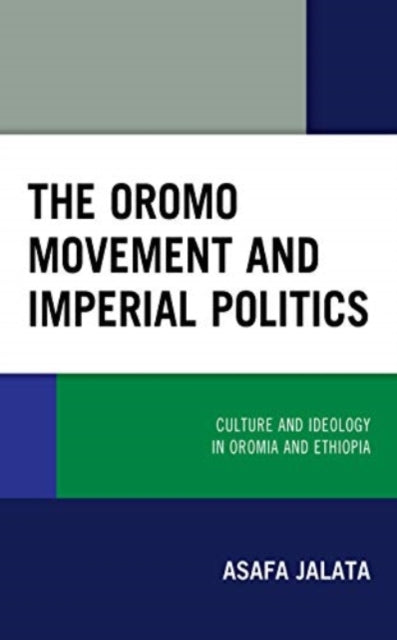
The Oromo Movement and Imperial Politics: Culture and Ideology in Oromia and Ethiopia
The Oromo Movement and Imperial Politics: Culture and Ideology in Oromia and Ethiopia
💎 Earn 191 Points (£1.91) on this item.
We can order this item for you. Delivery usually takes about 4 to 6 weeks.
This item is not held in our immediate stock. We will order it for you after checkout.
Estimated delivery: About 4 to 6 weeks
- Condition: Brand new
- UK Delivery times: Usually arrives within 2 - 3 working days
- UK Shipping: Fee starts at £2.39. Subject to product weight & dimension
Bulk ordering. Want 15 or more copies? Get a personalised quote and bigger discounts. Learn more about bulk orders.
Couldn't load pickup availability
- More about The Oromo Movement and Imperial Politics: Culture and Ideology in Oromia and Ethiopia
This book explores the historical and sociological factors that have contributed to the development of Oromo nationalism and the Oromo national movement in Ethiopia. It demonstrates how the movement has challenged Ethiopian imperial politics and seeks to establish Oromo statehood and democracy. The Oromo are the largest ethno-national group and political minority in Ethiopia, having been colonized and incorporated into the empire in the late 19th century.
Format: Paperback / softback
Length: 210 pages
Publication date: 15 March 2022
Publisher: Lexington Books
This book delves into the intricate interplay between Ethiopian colonialism and Oromo culture, epistemology, politics, and ideology, in the backdrop of the accumulated collective grievances of the Oromo nation. Specifically, it identifies the sociological and historical factors that facilitated the emergence of Oromummaa (Oromo nationalism) and the Oromo national movement. It showcases how the Oromo national movement has posed challenges to Ethiopian imperial politics, traces the diverse forms and phases of the movement, and charts its future trajectory.
Currently, the Oromo constitute the largest ethno-national group and political minority within the Ethiopian Empire. Their colonization and incorporation into Ethiopia occurred in the late 19th century through the alliance of Abyssinian/Ethiopian colonialism and European imperialism. Throughout their history, the Oromo people have been subjected to discrimination, economic exploitation, and cultural and political suppression, resulting in their being treated as second-class citizens. Despite the existence of Oromo resistance to Ethiopian colonialism during the process of their subjugation, it was only in the 1960s and 1970s that Oromo nationalists initiated organized efforts to liberate their people. Presently, Oromo nationalism holds a pivotal position in Ethiopian politics.
The book explores the complex relationship between Ethiopian colonialism and Oromo culture, examining how the latter has been shaped and influenced by the former. It identifies the historical and sociological factors that contributed to the development of Oromummaa, including the experiences of marginalization, oppression, and resistance. The book also explores the various manifestations of the Oromo national movement, including armed resistance, political activism, and cultural expression. It analyzes the strategies employed by Oromo nationalists to challenge Ethiopian imperialism and advocate for their rights and self-determination.
Furthermore, the book examines the impact of Oromo nationalism on Ethiopian society and politics. It explores how the movement has mobilized Oromo communities, challenged dominant power structures, and contributed to the broader Ethiopian nationalist movement. It also examines the challenges and complexities faced by Oromo nationalists in their pursuit of liberation and statehood, including internal divisions, political polarization, and external pressures.
In conclusion, this book provides a comprehensive and insightful analysis of the Oromo national struggle for liberation, statehood, and democracy. It sheds light on the historical and sociological factors that have shaped the Oromo people and their struggle for self-determination. It also highlights the challenges and complexities faced by Oromo nationalists in their pursuit of liberation and statehood. By examining the dialectical relationship between Ethiopian colonialism and Oromo culture, epistemology, politics, and ideology, the book offers valuable insights into the ongoing struggle for social justice and equality in Ethiopia and beyond.
Dimension: 229 x 152 (mm)
ISBN-13: 9781793603395
UK and International shipping information
UK and International shipping information
UK Delivery and returns information:
- Delivery within 2 - 3 days when ordering in the UK.
- Shipping fee for UK customers from £2.39. Fully tracked shipping service available.
- Returns policy: Return within 30 days of receipt for full refund.
International deliveries:
Shulph Ink now ships to Australia, Belgium, Canada, France, Germany, Ireland, Italy, India, Luxembourg Saudi Arabia, Singapore, Spain, Netherlands, New Zealand, United Arab Emirates, United States of America.
- Delivery times: within 5 - 10 days for international orders.
- Shipping fee: charges vary for overseas orders. Only tracked services are available for most international orders. Some countries have untracked shipping options.
- Customs charges: If ordering to addresses outside the United Kingdom, you may or may not incur additional customs and duties fees during local delivery.