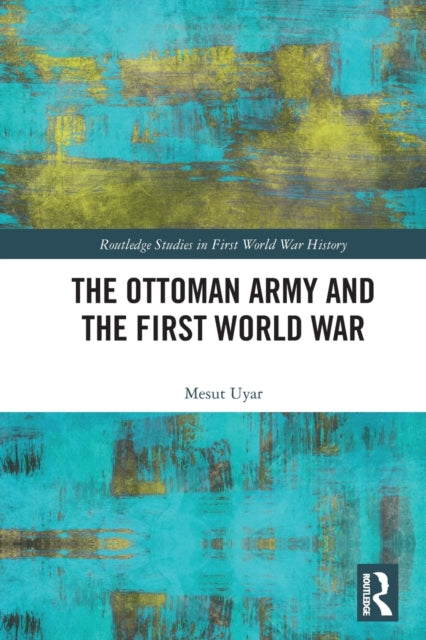
Mesut Uyar
The Ottoman Army and the First World War
The Ottoman Army and the First World War
YOU SAVE £4.22
- Condition: Brand new
- UK Delivery times: Usually arrives within 2 - 3 working days
- UK Shipping: Fee starts at £3.89. Subject to product weight & dimension
Bulk ordering. Want 15 or more copies? Get a personalised quote and bigger discounts. Learn more about bulk orders.
Couldn't load pickup availability
- More about The Ottoman Army and the First World War
This book provides a comprehensive new operational military history of the Ottoman army during the First World War, highlighting its successes and sacrifices in diverting and mobilizing resources to support its allies.
Format: Paperback / softback
Length: 466 pages
Publication date: 01 August 2022
Publisher: Taylor & Francis Ltd
This is a comprehensive new operational military history of the Ottoman army during the First World War. Drawing from archives, official military histories, personal war narratives, and sizable Turkish secondary literature, it tells the incredible story of the Ottoman army's struggle from the Caucasus mountains to the deserts of Arabia and the bloody shores of Gallipoli. The Ottoman army, by opening new fronts, diverted and kept sizeable units of British, Russian, and French forces away from the main theatres and even sent reinforcements to Austro-Hungary and Bulgaria. Against all odds, the Ottoman army ultimately achieved some striking successes, not only on the battlefield but also in their total mobilization of the empire's meager human and economic resources. However, even by the terrible standards of the First World War, these achievements came at a terrible price in casualties and, ultimately, loss of territory. Thus, instead of improving the integrity and security of the empire, the war effectively dismantled it and created situations and problems hitherto undreamed of by a besieged Ottoman leadership. In a unique account, Uyar revises our understanding of the war in the Middle East.
The Ottoman army, during the First World War, underwent a significant transformation in its operational strategy. Recognizing the limitations of its traditional tactics, the army sought to open new fronts and divert enemy forces away from the main theatres of war. This approach was aimed at mitigating the impact of the conflict on the empire's fragile resources and manpower.
One of the key strategies employed by the Ottomans was the opening of new fronts in the Caucasus and the Middle East. By launching offensives in these regions, the army aimed to divert British, Russian, and French forces away from the critical battlefields in Europe. This strategy was particularly effective in the early stages of the war, as the Ottoman forces managed to inflict significant casualties on the enemy and gain valuable territory.
However, the opening of new fronts also presented the Ottoman army with significant challenges. The terrain in the Caucasus and the Middle East was rugged and difficult to navigate, making it challenging for the army to maintain its supply lines and move troops efficiently. Additionally, the enemy forces, aware of the Ottomans' new offensive strategy, were quick to respond and launch counteroffensives to reclaim lost territory.
Despite these challenges, the Ottoman army achieved some notable successes during the First World War. One of the most significant was its successful campaign in the Arabian Peninsula. The army managed to capture key ports and cities, such as Medina and Taif, which provided a strategic foothold in the region and allowed the Ottomans to threaten the Suez Canal, a vital trade route for the British Empire.
Another notable achievement was the Ottoman army's ability to mobilize its resources effectively. Despite facing significant shortages of manpower and equipment, the army was able to mobilize its meager resources to support its offensive campaigns. This was achieved through a combination of strict discipline and efficient command structures, which allowed the army to maximize the use of its available resources.
However, the cost of these achievements was high. The Ottoman army suffered heavy casualties during the war, with millions of soldiers and civilians dying as a result of combat, disease, and starvation. Additionally, the war led to the loss of significant amounts of territory, particularly in the Middle East and the Caucasus, which weakened the empire's geopolitical position and left it vulnerable to external threats.
In conclusion, the First World War was a transformative period for the Ottoman army. By opening new fronts and diverting enemy forces, the army was able to achieve some notable successes, such as capturing key ports and cities and threatening the Suez Canal. However, these achievements came at a terrible price, with the army suffering heavy casualties and losing significant amounts of territory. The war effectively dismantled the empire, leaving it vulnerable to external threats and creating situations and problems that had hitherto been undreamed of by the Ottoman leadership.
Weight: 900g
Dimension: 234 x 156 (mm)
ISBN-13: 9780367675349
UK and International shipping information
UK and International shipping information
We deliver throughout the United Kingdom and to 128 countries and territories worldwide, including the United States, Australia, Canada, Germany, Spain and France.