Shulph Ink
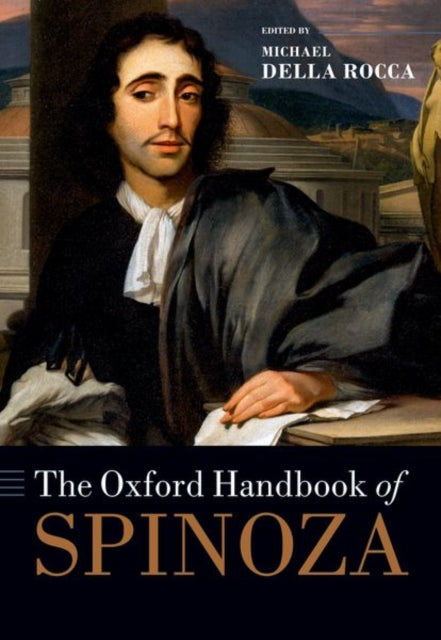
The Oxford Handbook of Spinoza
The Oxford Handbook of Spinoza
💎 Earn 228 Points (£2.28) on this item.
We can order this item for you. Delivery usually takes about 4 to 6 weeks.
This item is not held in our immediate stock. We will order it for you after checkout.
Estimated delivery: About 4 to 6 weeks
- Condition: Brand new
- UK Delivery times: Usually arrives within 2 - 3 working days
- UK Shipping: Fee starts at £2.39. Subject to product weight & dimension
Bulk ordering. Want 15 or more copies? Get a personalised quote and bigger discounts. Learn more about bulk orders.
Couldn't load pickup availability
- More about The Oxford Handbook of Spinoza
Spinoza's standing in Anglophone studies of philosophy has recently increased due to the revival of metaphysics and the recognition of his role as a pivotal figure in the development of Enlightenment thinking. This volume of essays by leading Spinoza specialists explores his important arguments, influences, and significance for contemporary philosophy and humanity.
Format: Paperback / softback
Length: 712 pages
Publication date: 22 December 2022
Publisher: Oxford University Press Inc
Spinoza's reputation in Anglophone philosophy has historically been relatively modest, with some scholars even dismissing him as a "dead dog" in the eyes of Friedrich Heinrich Jacobi. However, a recent surge of exceptional scholarship on Spinoza has emerged, exerting a dominant influence on the study of early modern philosophy. This resurgence can be attributed in part to the renewed interest in metaphysics within contemporary philosophy and the growing recognition of Spinoza's pivotal role as an unconventional and indispensable figure in the development of Enlightenment thought. Spinoza's profound expression of extreme rationalism renders him a challenging philosopher who poses profound and foresighted challenges to all subsequent, inevitably less radical approaches to philosophy. While the twenty-six essays included in this volume, authored by numerous esteemed experts on Spinoza, directly address his most significant arguments, they also endeavor to identify and elucidate Spinoza's indebtedness to previous philosophical traditions, his impact on subsequent thinkers, and his relevance to contemporary philosophy and humanity.
Introduction:
Spinoza's standing in Anglophone studies of philosophy has undergone a remarkable transformation in recent years. Historically, his reputation has been relatively low, with some scholars even dismissing him as a "dead dog" in the eyes of Friedrich Heinrich Jacobi. However, a recent outburst of excellent scholarship on Spinoza has emerged, exerting a dominant influence on the study of early modern philosophy. This resurgence can be attributed in part to the renewed interest in metaphysics within contemporary philosophy and the growing recognition of Spinoza's pivotal role as an unconventional and indispensable figure in the development of Enlightenment thought.
Spinoza's Unique Contributions:
Spinoza's philosophy is characterized by its extreme rationalism, which sets it apart from other philosophical traditions. He believed that the ultimate source of knowledge is reason, and that everything in the universe can be understood through the lens of rational thought. Spinoza's philosophy offers profound and challenging insights into the nature of reality, the human mind, and the relationship between individuals and society.
Recent Scholarship on Spinoza:
The recent resurgence of scholarship on Spinoza has been remarkable. A growing number of scholars have dedicated their research to exploring the depths of Spinoza's thought, and their findings have shed new light on his philosophy and its significance for contemporary philosophy. This scholarship has been driven by a range of factors, including the renewed interest in metaphysics within contemporary philosophy, the increased appreciation of Spinoza's role as an unorthodox and pivotal figure in the development of Enlightenment thinking, and the growing recognition of the importance of historically marginalized voices in philosophical discourse.
Debt to Previous Philosophy:
One of the key themes of recent scholarship on Spinoza is his debt to previous philosophical traditions. Spinoza's philosophy is deeply rooted in the works of ancient Greek and Roman philosophers, such as Plato, Aristotle, and Stoicism. He drew upon their ideas to develop his own unique perspective on the nature of reality and the human mind. However, Spinoza also made significant departures from these traditions, particularly in his rejection of the concept of divine revelation and his emphasis on the importance of reason and empirical evidence.
Influence on Later Philosophers:
Spinoza's philosophy has had a profound influence on later philosophers, particularly in the fields of metaphysics, epistemology, and ethics. His ideas have been adopted by a wide range of thinkers, from Immanuel Kant and John Locke to Karl Marx and Friedrich Nietzsche. Spinoza's emphasis on the importance of reason and the rejection of supernaturalism have influenced the development of modern philosophical thought in profound ways.
Significance for Contemporary Philosophy:
Spinoza's philosophy remains relevant and important for contemporary philosophy in a number of ways. First, his emphasis on the importance of reason and the rejection of supernaturalism offers a critical challenge to contemporary religious and philosophical beliefs that rely on supernatural explanations for the world. Second, his ideas about the nature of reality and the human mind offer insights into the challenges posed by contemporary social and political issues, such as inequality, discrimination, and climate change. Third, his philosophy provides a framework for developing a more ethical and egalitarian society, based on the recognition of the inherent worth and dignity of all individuals.
Conclusion:
In conclusion, Spinoza's standing in Anglophone studies of philosophy has undergone a remarkable transformation in recent years. His philosophy, characterized by its extreme rationalism and its profound insights into the nature of reality, the human mind, and the relationship between individuals and society, has gained renewed attention and appreciation. The recent surge of scholarship on Spinoza has shed new light on his philosophy and its significance for contemporary philosophy. While his ideas may challenge traditional beliefs and perspectives, they offer a valuable contribution to the ongoing dialogue between philosophy and other disciplines, and they have the potential to shape our understanding of the world in profound ways.
Weight: 1152g
Dimension: 249 x 533 x 41 (mm)
ISBN-13: 9780197677070
This item can be found in:
UK and International shipping information
UK and International shipping information
UK Delivery and returns information:
- Delivery within 2 - 3 days when ordering in the UK.
- Shipping fee for UK customers from £2.39. Fully tracked shipping service available.
- Returns policy: Return within 30 days of receipt for full refund.
International deliveries:
Shulph Ink now ships to Australia, Belgium, Canada, France, Germany, Ireland, Italy, India, Luxembourg Saudi Arabia, Singapore, Spain, Netherlands, New Zealand, United Arab Emirates, United States of America.
- Delivery times: within 5 - 10 days for international orders.
- Shipping fee: charges vary for overseas orders. Only tracked services are available for most international orders. Some countries have untracked shipping options.
- Customs charges: If ordering to addresses outside the United Kingdom, you may or may not incur additional customs and duties fees during local delivery.