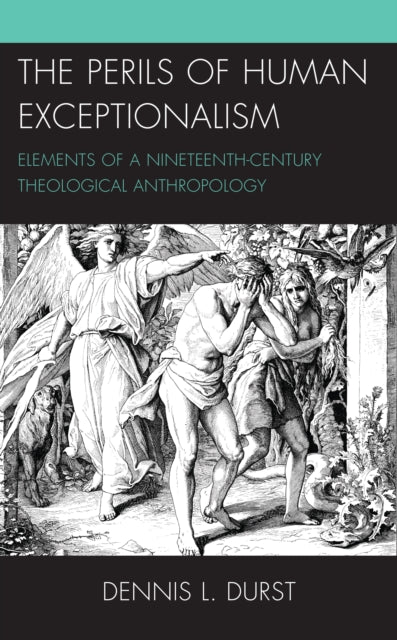
Dennis L. Durst
The Perils of Human Exceptionalism: Elements of a Nineteenth-Century Theological Anthropology
The Perils of Human Exceptionalism: Elements of a Nineteenth-Century Theological Anthropology
💎 Earn 451 Points (£4.51) on this item.
We can order this item for you. Delivery usually takes about 4 to 6 weeks.
This item is not held in our immediate stock. We will order it for you after checkout.
Estimated delivery: About 4 to 6 weeks
- Condition: Brand new
- UK Delivery times: Usually arrives within 2 - 3 working days
- UK Shipping: Fee starts at £2.39. Subject to product weight & dimension
Bulk ordering. Want 15 or more copies? Get a personalised quote and bigger discounts. Learn more about bulk orders.
Couldn't load pickup availability
- More about The Perils of Human Exceptionalism: Elements of a Nineteenth-Century Theological Anthropology
Transatlantic intellectuals revised theological anthropology in the 19th century, shifting focus from classic confessional themes to natural theology and intuitionism. This led to a revised articulation of the human soul and sinfulness in terms shaped by the cultural authority of science, and a subjective approach to human nature emerged, with religious experiences assuming prominence as the central measures of religious life.
Format: Hardback
Length: 278 pages
Publication date: 15 July 2022
Publisher: Lexington Books
During the nineteenth century, a profound transformation occurred in the realm of theological anthropology, as transatlantic intellectuals embarked on a gradual revision of this doctrine. This intellectual movement sought to understand humanity in light of the divine, challenging traditional notions and shifting the center of attention towards a more naturalistic perspective. The elite discourse of the time gradually demoted humanity from its exalted position, placing it within a framework that emphasized its resemblance to animal fauna as the primary criterion for evaluation.
In his insightful analysis, Durst argues that theological anthropologies across various disciplines experienced a significant shift in focus. They moved away from classical confessional themes such as the soul and the image of God, instead embracing the methods of natural theology and intuitionism. This shift manifested itself through challenges to theology in fields such as biology, phrenology, transcendentalism, anti-theology, Christian socialism, intuitionism, and religious experience. Furthermore, the human soul and human sinfulness underwent a revised articulation, influenced by the growing cultural authority of science.
A notable aspect of this transformation was the emergence of a subjective approach to human nature. Religious experiences, rather than theological claims to truth, assumed paramount importance as the central measures of religious life. The nineteenth century witnessed a growing emphasis on personal experiences, introspection, and the subjective interpretation of spiritual phenomena. This shift marked a departure from the traditional objective and rationalistic approaches to religion, paving the way for a more individualized and experiential understanding of faith.
The impact of these developments was far-reaching. They challenged the established hierarchies of knowledge and authority, democratizing the study of religion and spirituality. They also facilitated a deeper exploration of human nature, including its emotional, psychological, and spiritual dimensions. Moreover, they opened up new avenues for interfaith dialogue and collaboration, as individuals from different religious traditions began to share their insights and experiences in a more open and inclusive manner.
In conclusion, the nineteenth century witnessed a profound transformation in theological anthropology, as transatlantic intellectuals sought to understand humanity in light of the divine. This movement led to a shift in focus towards a more naturalistic perspective, emphasizing the resemblance to animal fauna as the central evaluative lens. It also resulted in a subjective approach to human nature, with religious experiences assuming prominence as the central measures of religious life. These developments challenged established hierarchies, democratized the study of religion, and facilitated interfaith dialogue, leading to a richer and more nuanced understanding of human spirituality and its relationship with the divine.
Dimension: 229 x 152 (mm)
ISBN-13: 9781666900194
UK and International shipping information
UK and International shipping information
UK Delivery and returns information:
- Delivery within 2 - 3 days when ordering in the UK.
- Shipping fee for UK customers from £2.39. Fully tracked shipping service available.
- Returns policy: Return within 30 days of receipt for full refund.
International deliveries:
Shulph Ink now ships to Australia, Belgium, Canada, France, Germany, Ireland, Italy, India, Luxembourg Saudi Arabia, Singapore, Spain, Netherlands, New Zealand, United Arab Emirates, United States of America.
- Delivery times: within 5 - 10 days for international orders.
- Shipping fee: charges vary for overseas orders. Only tracked services are available for most international orders. Some countries have untracked shipping options.
- Customs charges: If ordering to addresses outside the United Kingdom, you may or may not incur additional customs and duties fees during local delivery.