Sean J MacKenzie
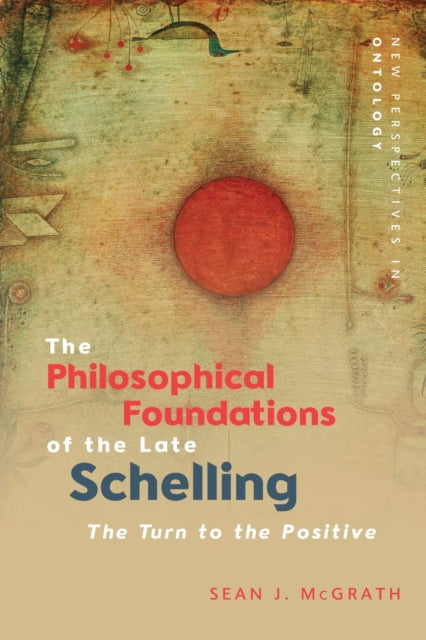
The Philosophical Foundations of the Late Schelling: The Turn to the Positive
The Philosophical Foundations of the Late Schelling: The Turn to the Positive
💎 Earn 107 Points (£1.07) on this item.
We can order this item for you. Delivery usually takes about 4 to 6 weeks.
This item is not held in our immediate stock. We will order it for you after checkout.
Estimated delivery: About 4 to 6 weeks
YOU SAVE £6.53
- Condition: Brand new
- UK Delivery times: Usually arrives within 2 - 3 working days
- UK Shipping: Fee starts at £2.39. Subject to product weight & dimension
Bulk ordering. Want 15 or more copies? Get a personalised quote and bigger discounts. Learn more about bulk orders.
Couldn't load pickup availability
- More about The Philosophical Foundations of the Late Schelling: The Turn to the Positive
A new book by McGrath argues that Schelling's philosophy of religion is rational and rigorous, and provides new resources for critiquing rationalism, reductive naturalism, and posthumanism. It appeals to scholars working on political eschatology in the works of Benjamin, Taubes, Rosenzweig, Derrida, i ek, Moltmann, and Levinas.
Format: Paperback / softback
Length: 296 pages
Publication date: 28 February 2023
Publisher: Edinburgh University Press
A robust defense of the rationality and rigor of the late Schelling's visionary philosophy of religion
A significant new endeavor to organize and assess Schelling's arguments for a Philosophy of Revelation and to demonstrate their relevance for contemporary debates
Uncovers in largely unexamined texts of the late Schelling new resources for critiquing rationalism, reductive naturalism, and posthumanism
Will appeal to the many scholars in various fields working on political eschatology in the works of Benjamin, Taubes, Rosenzweig, Derrida, i.e., Moltmann, and Levinas
Schelling's positive philosophy has long been recognized as the historical root of Marxism, existentialism, and other central trends in continental philosophy, but its main argument has never been fully elaborated as a tenable philosophical strategy for thinking Christianity forward into its future.
According to McGrath, Schelling's late turn to speculative theological realism (the positive) is neither fideistic nor arbitrary, but rather the consequence of the free decision of the philosopher who has soberly assessed the results of logic, nature-philosophy, historical-critical and systematic theology.
The positive philosophy of Schelling, which emerged in his later works, represents a profound and innovative approach to theology and philosophy. It is grounded in a deep understanding of the natural world and the human condition, and seeks to reconcile these two realms in a way that is both rational and spiritual.
One of the central themes of Schelling's philosophy is the idea of revelation. He argues that the divine is not a distant and abstract entity, but rather a living and dynamic force that is present in all of nature and in the human soul. Revelation, according to Schelling, is the process by which the divine reveals itself to humanity through the natural world and through human experience.
Schelling's philosophy of revelation is grounded in a number of key concepts. One of these is the idea of the Absolute, which is the ultimate source of all being and all knowledge. The Absolute is both transcendent and immanent, meaning that it is both beyond human comprehension and present within human experience.
Another key concept in Schelling's philosophy is the idea of the finite and the infinite. The finite is the realm of human experience and the natural world, while the infinite is the realm of the divine and the spiritual. Schelling argues that the finite and the infinite are not opposed to each other, but rather are two sides of the same coin.
Revelation, according to Schelling, is the process by which the infinite is revealed to the finite. This revelation takes place through a number of different means, including the natural world, human experience, and religious experience.
One of the key criticisms of Schelling's philosophy of revelation is that it is too speculative and abstract. Some critics argue that it is difficult to see how his ideas could be applied to real-world situations and that they are more suited to the realm of philosophy than to the practice of religion.
Despite these criticisms, Schelling's philosophy of revelation remains a powerful and influential force in contemporary theology and philosophy. His ideas have been widely studied and debated by scholars in a number of different fields, and his work has had a significant impact on the development of political eschatology, existentialism, and other central trends in continental philosophy.
In conclusion, Schelling's philosophy of revelation is a profound and innovative approach to theology and philosophy. It is grounded in a deep understanding of the natural world and the human condition, and seeks to reconcile these two realms in a way that is both rational and spiritual. While his ideas may be challenging to apply to real-world situations, they remain a powerful and influential force in contemporary theology and philosophy.
Weight: 440g
Dimension: 230 x 154 x 19 (mm)
ISBN-13: 9781399511193
UK and International shipping information
UK and International shipping information
UK Delivery and returns information:
- Delivery within 2 - 3 days when ordering in the UK.
- Shipping fee for UK customers from £2.39. Fully tracked shipping service available.
- Returns policy: Return within 30 days of receipt for full refund.
International deliveries:
Shulph Ink now ships to Australia, Belgium, Canada, France, Germany, Ireland, Italy, India, Luxembourg Saudi Arabia, Singapore, Spain, Netherlands, New Zealand, United Arab Emirates, United States of America.
- Delivery times: within 5 - 10 days for international orders.
- Shipping fee: charges vary for overseas orders. Only tracked services are available for most international orders. Some countries have untracked shipping options.
- Customs charges: If ordering to addresses outside the United Kingdom, you may or may not incur additional customs and duties fees during local delivery.