Shulph Ink
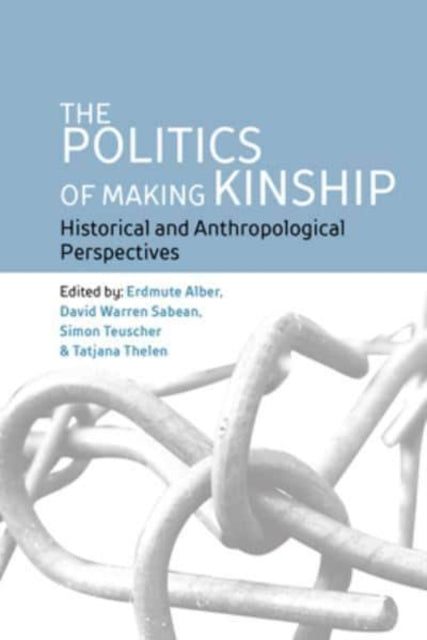
The Politics of Making Kinship: Historical and Anthropological Perspectives
The Politics of Making Kinship: Historical and Anthropological Perspectives
💎 Earn 536 Points (£5.36) on this item.
We can order this item for you. Delivery usually takes about 4 to 6 weeks.
This item is not held in our immediate stock. We will order it for you after checkout.
Estimated delivery: About 4 to 6 weeks
- Condition: Brand new
- UK Delivery times: Usually arrives within 2 - 3 working days
- UK Shipping: Fee starts at £2.39. Subject to product weight & dimension
Bulk ordering. Want 15 or more copies? Get a personalised quote and bigger discounts. Learn more about bulk orders.
Couldn't load pickup availability
- More about The Politics of Making Kinship: Historical and Anthropological Perspectives
The Politics of Making Kinship explores how political processes have shaped concepts of kinship and how political projects have been shaped by specific understandings, idioms, and uses of kinship. It reintegrates kinship with political theory, taking vantage points from the post-Roman era to early modernity and from colonial imperialism to the fall of the Berlin Wall.
Format: Hardback
Length: 448 pages
Publication date: 09 December 2022
Publisher: Berghahn Books
The long tradition of Western political thought included kinship in models of public order, but the social sciences excised it from theories of the state, public sphere, and democratic order. Kinship has, however, neither completely disappeared from the political cultures of the West nor played the determining social and political role ascribed to it elsewhere. Exploring the issues that arise once the divide between kinship and politics is no longer taken for granted, The Politics of Making Kinship demonstrates how political processes have shaped concepts of kinship over time and, conversely, how political projects have been shaped by specific understandings, idioms, and uses of kinship. Taking vantage points from the post-Roman era to early modernity, and from colonial imperialism to the fall of the Berlin Wall and beyond, this international set of scholars place kinship centerstage and reintegrate it with political theory.
The Long Tradition of Western Political Thought
Western political thought has a long tradition of including kinship in models of public order. However, the social sciences have excised kinship from theories of the state, public sphere, and democratic order. This has led to a significant gap between the political and social aspects of kinship, and has resulted in a limited understanding of its role in shaping society and politics.
Despite this exclusion, kinship has not completely disappeared from the political cultures of the West. It continues to play a significant role in shaping social and political relationships, and has been used as a tool for political mobilization and resistance. However, its role has been limited by the dominant political ideologies that have sought to marginalize it.
Exploring the Issues that Arise Once the Divide Between Kinship and Politics is No Longer Taken for Granted
The Politics of Making Kinship is a book that explores the issues that arise once the divide between kinship and politics is no longer taken for granted. It argues that political processes have shaped concepts of kinship over time, and that political projects have been shaped by specific understandings, idioms, and uses of kinship. The book takes vantage points from the post-Roman era to early modernity, and from colonial imperialism to the fall of the Berlin Wall and beyond, and places kinship centerstage in the study of political theory.
The book is written by a team of international scholars who bring a diverse range of perspectives to the topic. They include scholars from the fields of political science, sociology, anthropology, and history, and they draw on a wide range of empirical evidence to support their arguments. The book is divided into three main sections: "The Politics of Kinship," "The Politics of Kinship in the Post-Roman Era," and "The Politics of Kinship in Early Modernity."
The Politics of Kinship
The Politics of Kinship explores the ways in which political processes have shaped concepts of kinship over time. It argues that kinship has been used as a tool for political mobilization and resistance, and that it has been used to create and maintain social hierarchies. The book also explores the ways in which kinship has been used to justify political violence and oppression.
One of the key arguments of the book is that kinship has been used as a tool for political mobilization and resistance. Kinship has been used to create and maintain social hierarchies, and has been used to justify political violence and oppression. For example, in many societies, kinship is used to determine who has access to resources, such as land and water. This can lead to conflict and violence, as those who are excluded from these resources may feel that they have been treated unfairly.
The book also explores the ways in which kinship has been used to justify political violence and oppression. For example, in many societies, kinship is used to justify the use of violence against women and children. This can be seen in the practice of female genital mutilation, which is often justified by the belief that it is necessary to maintain the purity of the family line. The book also explores the ways in which kinship has been used to justify the use of violence against political opponents.
The Politics of Kinship in the Post-Roman Era
The Politics of Kinship in the Post-Roman Era explores the ways in which kinship has been shaped by the political and social changes that took place in the post-Roman era. It argues that kinship has become more complex and diverse, and that it has been used to create and maintain social hierarchies in new ways. The book also explores the ways in which kinship has been used to justify political violence and oppression in new ways.
One of the key arguments of the book is that kinship has become more complex and diverse. This has been due to the increasing mobility of people, the growth of cities, and the development of new technologies. These changes have led to the formation of new social groups and the breakdown of old social hierarchies. The book also explores the ways in which kinship has been used to justify political violence and oppression in new ways.
For example, in many societies, kinship is used to justify the use of violence against women and children. This can be seen in the practice of female genital mutilation, which is often justified by the belief that it is necessary to maintain the purity of the family line. The book also explores the ways in which kinship has been used to justify the use of violence against political opponents.
The Politics of Kinship in Early Modernity
The Politics of Kinship in Early Modernity explores the ways in which kinship has been shaped by the political and social changes that took place in the early modern period. It argues that kinship has become more complex and diverse, and that it has been used to create and maintain social hierarchies in new ways. The book also explores the ways in which kinship has been used to justify political violence and oppression in new ways.
One of the key arguments of the book is that kinship has become more complex and diverse. This has been due to the increasing mobility of people, the growth of cities, and the development of new technologies. These changes have led to the formation of new social groups and the breakdown of old social hierarchies. The book also explores the ways in which kinship has been used to justify political violence and oppression in new ways.
For example, in many societies, kinship is used to justify the use of violence against women and children. This can be seen in the practice of female genital mutilation, which is often justified by the belief that it is necessary to maintain the purity of the family line. The book also explores the ways in which kinship has been used to justify the use of violence against political opponents.
Conclusion
The Politics of Making Kinship is a book that explores the issues that arise once the divide between kinship and politics is no longer taken for granted. It argues that political processes have shaped concepts of kinship over time, and that political projects have been shaped by specific understandings, idioms, and uses of kinship. The book takes vantage points from the post-Roman era to early modernity, and from colonial imperialism to the fall of the Berlin Wall and beyond, and places kinship centerstage in the study of political theory. The book is written by a team of international scholars who bring a diverse range of perspectives to the topic, and it is divided into three main sections: "The Politics of Kinship," "The Politics of Kinship in the Post-Roman Era," and "The Politics of Kinship in Early Modernity."
Weight: 800g
Dimension: 159 x 235 x 34 (mm)
ISBN-13: 9781800738003
This item can be found in:
UK and International shipping information
UK and International shipping information
UK Delivery and returns information:
- Delivery within 2 - 3 days when ordering in the UK.
- Shipping fee for UK customers from £2.39. Fully tracked shipping service available.
- Returns policy: Return within 30 days of receipt for full refund.
International deliveries:
Shulph Ink now ships to Australia, Belgium, Canada, France, Germany, Ireland, Italy, India, Luxembourg Saudi Arabia, Singapore, Spain, Netherlands, New Zealand, United Arab Emirates, United States of America.
- Delivery times: within 5 - 10 days for international orders.
- Shipping fee: charges vary for overseas orders. Only tracked services are available for most international orders. Some countries have untracked shipping options.
- Customs charges: If ordering to addresses outside the United Kingdom, you may or may not incur additional customs and duties fees during local delivery.