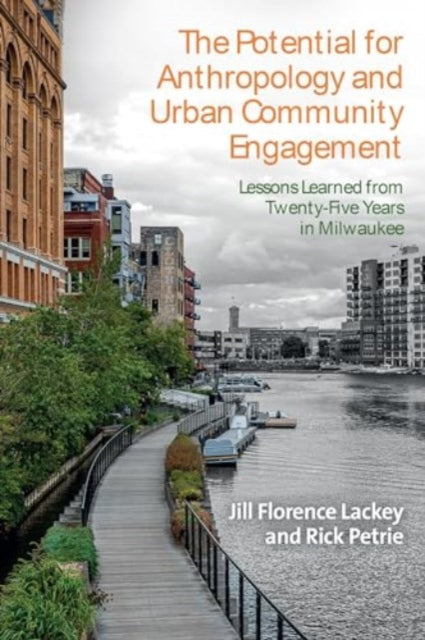
Jill Florence Lackey,Rick Petrie
The Potential for Anthropology and Urban Community Engagement: Lessons Learned from Twenty-Five Years in Milwaukee
The Potential for Anthropology and Urban Community Engagement: Lessons Learned from Twenty-Five Years in Milwaukee
💎 Earn 447 Points (£4.47) on this item.
We can order this item for you. Delivery usually takes about 4 to 6 weeks.
This item is not held in our immediate stock. We will order it for you after checkout.
Estimated delivery: About 4 to 6 weeks
YOU SAVE £2.44
- Condition: Brand new
- UK Delivery times: Usually arrives within 2 - 3 working days
- UK Shipping: Fee starts at £3.89. Subject to product weight & dimension
Bulk ordering. Want 15 or more copies? Get a personalised quote and bigger discounts. Learn more about bulk orders.
Couldn't load pickup availability
- More about The Potential for Anthropology and Urban Community Engagement: Lessons Learned from Twenty-Five Years in Milwaukee
The relationship between anthropology departments and urban communities has been limited, but The Potential for Anthropology and Urban Community Engagement explores the need for practicing anthropologists, asset-building programs, and partnering with urban neighborhoods.
Format: Hardback
Length: 194 pages
Publication date: 01 July 2024
Publisher: Berghahn Books
Anthropology departments have traditionally faced limitations in their engagement with surrounding urban communities due to various factors. However, the Potential for Anthropology and Urban Community Engagement seeks to overcome these limitations and establish a strong foundation for applied anthropology to support grassroots research and sustainable community programs. By examining two partnering Milwaukee organizations, this volume explores the need for practicing anthropologists in urban neighborhoods, the potential for developing a high volume of asset-building programs by anthropologists, and the effectiveness of anthropology departments in partnering with urban neighborhoods.
The Relationship between Anthropology Departments and Their Surrounding Urban Communities
Anthropology departments have traditionally faced limitations in their engagement with surrounding urban communities due to various factors. These limitations include a lack of resources, limited access to communities, and a lack of understanding of the unique challenges and opportunities that urban environments present. However, the Potential for Anthropology and Urban Community Engagement seeks to push past these limitations and develop a firm foundation from which applied anthropology can support grassroots research and lasting community programs.
The Need for Practicing Anthropologists in Urban Neighborhoods
One of the primary challenges facing urban neighborhoods is the lack of access to resources and services. This can lead to a range of social and economic problems, including poverty, crime, and poor health. Practicing anthropologists can help address these problems by conducting research and developing programs that address the specific needs of the community. For example, anthropologists can work with local organizations to develop community gardens, food banks, and job training programs. They can also work with community members to develop cultural programs and events that promote social cohesion and cultural awareness.
The Potential for Developing a High Volume of Asset-Building Programs by Practicing Anthropologists
Another challenge facing urban neighborhoods is the high volume of asset-building programs. These programs are designed to help individuals and families build assets, such as education, housing, and financial stability. However, many of these programs are not effective because they are not tailored to the specific needs of the community. Practicing anthropologists can help develop more effective asset-building programs by working with community members to identify the specific needs and challenges of the community. They can then develop programs that are designed to address these needs and challenges.
The Potential Efficacy of Anthropology Departments in Partnering with Urban Neighborhoods
Anthropology departments can play a critical role in partnering with urban neighborhoods. By providing resources, expertise, and support, anthropology departments can help develop and implement effective community programs. For example, anthropology departments can provide funding for research projects, provide training for community members, and provide technical assistance to local organizations. They can also work with local government agencies to develop policies and programs that address the specific needs of the community.
Two Partnering Milwaukee Organizations
To illustrate the potential for anthropology and urban community engagement, this volume examines two partnering Milwaukee organizations. The first organization is the Milwaukee Urban League, which is a non-profit organization that provides education, job training, and community development services to low-income individuals and families. The second organization is the Milwaukee Public Library, which is a public library that provides access to books, resources, and programs to the community.
The Need for Practicing Anthropologists in Urban Neighborhoods
One of the primary challenges facing urban neighborhoods is the lack of access to resources and services. This can lead to a range of social and economic problems, including poverty, crime, and poor health. Practicing anthropologists can help address these problems by conducting research and developing programs that address the specific needs of the community. For example, anthropologists can work with local organizations to develop community gardens, food banks, and job training programs. They can also work with community members to develop cultural programs and events that promote social cohesion and cultural awareness.
The Potential for Developing a High Volume of Asset-Building Programs by Practicing Anthropologists
Another challenge facing urban neighborhoods is the high volume of asset-building programs. These programs are designed to help individuals and families build assets, such as education, housing, and financial stability. However, many of these programs are not effective because they are not tailored to the specific needs of the community. Practicing anthropologists can help develop more effective asset-building programs by working with community members to identify the specific needs and challenges of the community. They can then develop programs that are designed to address these needs and challenges.
The Potential Efficacy of Anthropology Departments in Partnering with Urban Neighborhoods
Anthropology departments can play a critical role in partnering with urban neighborhoods. By providing resources, expertise, and support, anthropology departments can help develop and implement effective community programs. For example, anthropology departments can provide funding for research projects, provide training for community members, and provide technical assistance to local organizations. They can also work with local government agencies to develop policies and programs that address the specific needs of the community.
Two Partnering Milwaukee Organizations
To illustrate the potential for anthropology and urban community engagement, this volume examines two partnering Milwaukee organizations. The first organization is the Milwaukee Urban League, which is a non-profit organization that provides education, job training, and community development services to low-income individuals and families. The second organization is the Milwaukee Public Library, which is a public library that provides access to books, resources, and programs to the community.
The Need for Practicing Anthropologists in Urban Neighborhoods
One of the primary challenges facing urban neighborhoods is the lack of access to resources and services. This can lead to a range of social and economic problems, including poverty, crime, and poor health. Practicing anthropologists can help address these problems by conducting research and developing programs that address the specific needs of the community. For example, anthropologists can work with local organizations to develop community gardens, food banks, and job training programs. They can also work with community members to develop cultural programs and events that promote social cohesion and cultural awareness.
The Potential for Developing a High Volume of Asset-Building Programs by Practicing Anthropologists
Another challenge facing urban neighborhoods is the high volume of asset-building programs. These programs are designed to help individuals and families build assets, such as education, housing, and financial stability. However, many of these programs are not effective because they are not tailored to the specific needs of the community. Practicing anthropologists can help develop more effective asset-building programs by working with community members to identify the specific needs and challenges of the community. They can then develop programs that are designed to address these needs and challenges.
The Potential Efficacy of Anthropology Departments in Partnering with Urban Neighborhoods
Anthropology departments can play a critical role in partnering with urban neighborhoods. By providing resources, expertise, and support, anthropology departments can help develop and implement effective community programs. For example, anthropology departments can provide funding for research projects, provide training for community members, and provide technical assistance to local organizations. They can also work with local government agencies to develop policies and programs that address the specific needs of the community.
Two Partnering Milwaukee Organizations
To illustrate the potential for anthropology and urban community engagement, this volume examines two partnering Milwaukee organizations. The first organization is the Milwaukee Urban League, which is a non-profit organization that provides education, job training, and community development services to low-income individuals and families. The second organization is the Milwaukee Public Library, which is a public library that provides access to books, resources, and programs to the community.
Conclusion
The Potential for Anthropology and Urban Community Engagement has the potential to transform the way that anthropology departments engage with surrounding urban communities. By providing resources, expertise, and support, anthropology departments can help develop and implement effective community programs that address the specific needs of the community. This can lead to a range of social and economic benefits, including improved health, education, and economic stability. However, it is important to recognize that there are many challenges facing urban neighborhoods, and that anthropology departments must be prepared to address these challenges in order to be effective. By working together with local organizations and government agencies, anthropology departments can play a critical role in creating a more just and equitable society.
Dimension: 229 x 152 (mm)
ISBN-13: 9781805395829
UK and International shipping information
UK and International shipping information
We deliver throughout the United Kingdom and to 128 countries and territories worldwide, including the United States, Australia, Canada, Germany, Spain and France.