Uros Kovac
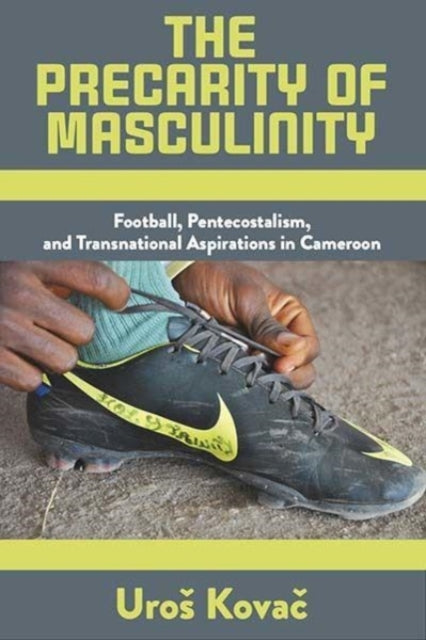
The Precarity of Masculinity: Football, Pentecostalism, and Transnational Aspirations in Cameroon
The Precarity of Masculinity: Football, Pentecostalism, and Transnational Aspirations in Cameroon
💎 Earn 496 Points (£4.96) on this item.
We can order this item for you. Delivery usually takes about 4 to 6 weeks.
This item is not held in our immediate stock. We will order it for you after checkout.
Estimated delivery: About 4 to 6 weeks
- Condition: Brand new
- UK Delivery times: Usually arrives within 2 - 3 working days
- UK Shipping: Fee starts at £2.39. Subject to product weight & dimension
Bulk ordering. Want 15 or more copies? Get a personalised quote and bigger discounts. Learn more about bulk orders.
Couldn't load pickup availability
- More about The Precarity of Masculinity: Football, Pentecostalism, and Transnational Aspirations in Cameroon
Young men in Cameroon have turned to Pentecostal Christianity to pursue their football dreams and migrate abroad, challenging traditional notions of masculinity and offering a moral and bodily regime that promises success. However, the transnational sports market is tough and unpredictable, demanding disciplined young bodies and introducing new forms of uncertainty.
Format: Hardback
Length: 220 pages
Publication date: 11 March 2022
Publisher: Berghahn Books
Since the 1990s, an increasing number of young men in Cameroon have aspired to pursue football as a career and a means to migrate abroad. The allure of migration through sports promises to fulfill their masculine dreams of sports stardom, as well as provide opportunities to earn a living that have been eroded by the country's protracted economic stalemate. These aspiring footballers are increasingly embracing Pentecostal Christianity, which offers them a platform to challenge prevailing stereotypes of young men as stubborn and promiscuous. At the same time, it provides a moral and bodily regime that promises success against all odds. However, the transnational sports market is notoriously challenging and unpredictable, demanding disciplined young bodies and introducing new forms of uncertainty.
This book aims to unpack the football dreams, Pentecostal faith, obligations to provide, and desires of young Cameroonians to highlight the precarious nature of masculinity in structurally adjusted Africa and neoliberal capitalism. It explores the ways in which these young men navigate the complexities of gender, religion, and economic pressures, seeking to fulfill their aspirations while also navigating the risks and uncertainties of the global sports industry.
The rise of football as a career option for young men in Cameroon can be traced back to the country's political and economic instability in the 1990s. With the decline of traditional industries and the absence of viable job opportunities, many young people turned to football as a means of escape and survival. The sport offered a glimmer of hope, with the possibility of earning a living through professional contracts and endorsements.
However, the journey to football stardom is not without its challenges. Young players must endure rigorous training and competition, often at the expense of their education and personal lives. They must also navigate the complex social and cultural dynamics of the football industry, which can be dominated by agents, coaches, and fans who prioritize profits over the well-being of the players.
Pentecostal Christianity has become a significant factor in the lives of many young Cameroonian footballers. The religion offers a moral and spiritual framework that provides comfort and guidance in the face of adversity. It also provides a sense of community and support, particularly for those who may feel isolated or marginalized in the football industry.
Pentecostal churches in Cameroon have become hubs for football training and development, offering young players a place to worship, learn, and socialize. The religion's emphasis on personal transformation and success through hard work and dedication has resonated with many young footballers, who see it as a means of achieving their goals and fulfilling their potential.
However, Pentecostal Christianity has also been criticized for its potential to exploit young players and promote unhealthy practices. Some pastors have been accused of using the religion to manipulate and control young players, demanding strict obedience and financial contributions in exchange for success. There have also been reports of young players being subjected to physical and emotional abuse, including forced marriages and sexual exploitation.
Despite these challenges, Pentecostal Christianity continues to play a significant role in the lives of young Cameroonian footballers. The religion offers a sense of purpose and identity that is often lacking in the football industry, and it provides a network of support and resources that can help players navigate the complexities of the sport and achieve their goals.
In addition to Pentecostal Christianity, other religious and cultural practices have also influenced the lives of young Cameroonian footballers. Traditional African religions, such as voodoo and animism, continue to be practiced by some players, who believe that they can provide spiritual protection and guidance during training and competition.
The transnational sports market has also played a significant role in shaping the dreams and aspirations of young Cameroonian footballers. The sport has become a global commodity, with millions of fans and billions of dollars invested in it. Young players are increasingly exposed to the opportunities and challenges of the global sports industry, including the possibility of migration and career advancement.
However, the transnational sports market is also characterized by its exploitative practices and inequalities. Young players from developing countries, such as Cameroon, are often subjected to low wages, poor working conditions, and discrimination. They may be forced to work long hours, travel to remote locations, and live in substandard accommodations, all in the name of pursuing their dreams of sports stardom.
To address these challenges, there have been efforts to promote fair labor practices and protect the rights of young players in the global sports industry. Organizations such as the International Labor Organization (ILO) and the Football Players' Association (FIFA) have worked to establish guidelines and regulations that ensure that players are paid fairly, treated with respect, and protected from exploitation.
Despite these efforts, there is still a long way to go in ensuring that young players from developing countries receive the support and opportunities they need to achieve their dreams. The transnational sports market is complex and dynamic, and it requires a concerted effort from governments, organizations, and players to address the challenges and inequalities that exist.
In conclusion, the dreams and aspirations of young Cameroonian footballers are shaped by a complex interplay of factors, including political instability, economic hardship
challenges, Pentecostal Christianity, the transnational sports market, and cultural practices. The sport offers a means of escape and survival, as well as a platform to challenge prevailing stereotypes and achieve success against all odds. However, the transnational sports market is characterized by its exploitative practices and inequalities, which require a concerted
concerted effort from governments, organizations, and players to address. By unpacking the football dreams, Pentecostal faith, obligations to provide, and desires of young Cameroonian footballers, this book highlights the precarious nature of masculinity in structurally adjusted Africa and neoliberal capitalism. It provides a valuable insight into the lives and experiences of these young men, and it calls for a more nuanced and empathetic understanding of the challenges they face in pursuing their dreams and aspirations.
Dimension: 229 x 152 (mm)
ISBN-13: 9781789209273
This item can be found in:
UK and International shipping information
UK and International shipping information
UK Delivery and returns information:
- Delivery within 2 - 3 days when ordering in the UK.
- Shipping fee for UK customers from £2.39. Fully tracked shipping service available.
- Returns policy: Return within 30 days of receipt for full refund.
International deliveries:
Shulph Ink now ships to Australia, Belgium, Canada, France, Germany, Ireland, Italy, India, Luxembourg Saudi Arabia, Singapore, Spain, Netherlands, New Zealand, United Arab Emirates, United States of America.
- Delivery times: within 5 - 10 days for international orders.
- Shipping fee: charges vary for overseas orders. Only tracked services are available for most international orders. Some countries have untracked shipping options.
- Customs charges: If ordering to addresses outside the United Kingdom, you may or may not incur additional customs and duties fees during local delivery.