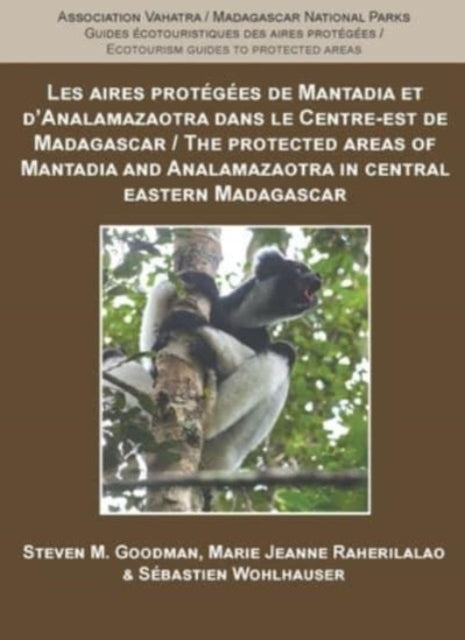
Steven M. Goodman,Marie Jeanne Raharilalao,Sebastien Wohlhauser
The Protected Areas of Mantadia and Analamazaotra in Central Eastern Madagascar
The Protected Areas of Mantadia and Analamazaotra in Central Eastern Madagascar
💎 Earn 76 Points (£0.76) on this item.
YOU SAVE £0.77
- Condition: Brand new
- UK Delivery times: Usually arrives within 2 - 3 working days
- UK Shipping: Fee starts at £2.39. Subject to product weight & dimension
Bulk ordering. Want 15 or more copies? Get a personalised quote and bigger discounts. Learn more about bulk orders.
Couldn't load pickup availability
- More about The Protected Areas of Mantadia and Analamazaotra in Central Eastern Madagascar
The latest research on the biodiversity of two protected areas in central eastern Madagascar is included in this bilingual French-English pocket guide. The Analamazaotra and Mantadia parks are close to Moramanga and near the main road linking Antananarivo to Toamasina. Visitors can discover and marvel at the regional ecological complexity and beauty, with easy road access, excellent local guides, and local accommodations.
Format: Paperback / softback
Length: 64 pages
Publication date: 13 September 2023
Publisher: Association Vahatra in Antananarivo
The latest research on the biodiversity of two protected areas in central eastern Madagascar has revealed a wealth of fascinating findings. These protected areas, located adjacent to each other in central eastern Madagascar, encompass the biotic diversity of the medium altitude moist evergreen forests that characterize the island. These sites include two national parks: the extensively visited Analamazaotra, where a range of lemur species are well-habituated to visitors, and the forests of Mantadia, a place where ecotourists can experience a largely untouched Malagasy forest ecosystem and all of its splendors. Both parks are relatively close to Moramanga and near the main road linking Antananarivo (Tananarive) to the coastal city of Toamasina (Tamatave).
Tourists visiting this fascinating area of Madagascar and interested in the natural world will be able to discover and marvel at the regional ecological complexity and beauty. The combination of easy road access, excellent local guides speaking many different European languages, and a range of local accommodations makes visiting these protected areas a convenient and enjoyable experience.
The research conducted in these protected areas has shed light on the diverse range of plant and animal species that call these ecosystems home. Analamazaotra is known for its rich lemur population, including the famous ring-tailed lemurs, red-bellied lemurs, and mouse lemurs. Mantadia, on the other hand, is home to a variety of bird species, including the endangered Vangasoa trogon, as well as chameleons, snakes, and spiders.
In addition to the biodiversity, these protected areas also play a crucial role in conserving the cultural heritage of Madagascar. The local communities that live in these areas have a deep connection to the natural world and rely on it for their livelihoods. The parks provide a buffer zone that helps to protect their traditional practices and knowledge, ensuring that they can continue to thrive in the face of modern development.
The research conducted in these protected areas has also had significant implications for conservation efforts in other parts of the world. The knowledge gained from studying the biodiversity of Madagascar's protected areas can help to inform conservation strategies and policies in other regions that are facing similar challenges. For example, the study of lemur behavior and ecology can provide insights into the conservation of similar species in other parts of the world, such as Africa and Asia.
Overall, the latest research on the biodiversity of two protected areas in central eastern Madagascar has revealed a wealth of fascinating findings that highlight the importance of conservation efforts in this region. These protected areas provide a unique opportunity to explore the natural world and witness the incredible diversity of life that exists on our planet. By continuing to support and promote conservation efforts in Madagascar, we can help to ensure that these incredible ecosystems and the species that rely on them will be preserved for generations to come.
The latest research on the biodiversity of two protected areas in central eastern Madagascar has revealed a wealth of fascinating findings. These protected areas, located adjacent to each other in central eastern Madagascar, encompass the biotic diversity of the medium altitude moist evergreen forests that characterize the island. These sites include two national parks: the extensively visited Analamazaotra, where a range of lemur species are well-habituated to visitors, and the forests of Mantadia, a place where ecotourists can experience a largely untouched Malagasy forest ecosystem and all of its splendors. Both parks are relatively close to Moramanga and near the main road linking Antananarivo (Tananarive) to the coastal city of Toamasina (Tamatave).
Tourists visiting this fascinating area of Madagascar and interested in the natural world will be able to discover and marvel at the regional ecological complexity and beauty. The combination of easy road access, excellent local guides speaking many different European languages, and a range of local accommodations makes visiting these protected areas a convenient and enjoyable experience.
The research conducted in these protected areas has shed light on the diverse range of plant and animal species that call these ecosystems home. Analamazaotra is known for its rich lemur population, including the famous ring-tailed lemurs, red-bellied lemurs, and mouse lemurs. Mantadia, on the other hand, is home to a variety of bird species, including the endangered Vangasoa trogon, as well as chameleons, snakes, and spiders.
In addition to the biodiversity, these protected areas also play a crucial role in conserving the cultural heritage of Madagascar. The local communities that live in these areas have a deep connection to the natural world and rely on it for their livelihoods. The parks provide a buffer zone that helps to protect their traditional practices and knowledge, ensuring that they can continue to thrive in the face of modern development.
The research conducted in these protected areas has also had significant implications for conservation efforts in other parts of the world. The knowledge gained from studying the biodiversity of Madagascar's protected areas can help to inform conservation strategies and policies in other regions that are facing similar challenges. For example, the study of lemur behavior and ecology can provide insights into the conservation of similar species in other parts of the world, such as Africa and Asia.
Overall, the latest research on the biodiversity of two protected areas in central eastern Madagascar has revealed a wealth of fascinating findings that highlight the importance of conservation efforts in this region. These protected areas provide a unique opportunity to explore the natural world and witness the incredible diversity of life that exists on our planet. By continuing to support and promote conservation efforts in Madagascar, we can help to ensure that these incredible ecosystems and the species that rely on them will be preserved for generations to come.
Dimension: 210 x 152 x 5 (mm)
ISBN-13: 9782957984916
Edition number: Bilingual edition
This item can be found in:
UK and International shipping information
UK and International shipping information
UK Delivery and returns information:
- Delivery within 2 - 3 days when ordering in the UK.
- Shipping fee for UK customers from £2.39. Fully tracked shipping service available.
- Returns policy: Return within 30 days of receipt for full refund.
International deliveries:
Shulph Ink now ships to Australia, Belgium, Canada, France, Germany, Ireland, Italy, India, Luxembourg Saudi Arabia, Singapore, Spain, Netherlands, New Zealand, United Arab Emirates, United States of America.
- Delivery times: within 5 - 10 days for international orders.
- Shipping fee: charges vary for overseas orders. Only tracked services are available for most international orders. Some countries have untracked shipping options.
- Customs charges: If ordering to addresses outside the United Kingdom, you may or may not incur additional customs and duties fees during local delivery.