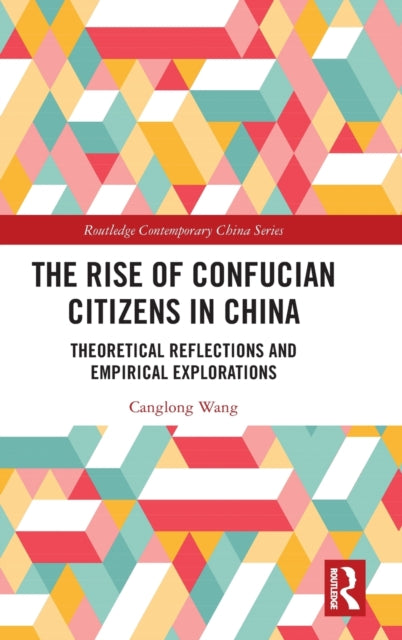
Canglong Wang
The Rise of Confucian Citizens in China: Theoretical Reflections and Empirical Explorations
The Rise of Confucian Citizens in China: Theoretical Reflections and Empirical Explorations
💎 Earn 811 Points (£8.11) on this item.
We can order this item for you. Delivery usually takes about 4 to 6 weeks.
This item is not held in our immediate stock. We will order it for you after checkout.
Estimated delivery: About 4 to 6 weeks
YOU SAVE £9.63
- Condition: Brand new
- UK Delivery times: Usually arrives within 2 - 3 working days
- UK Shipping: Fee starts at £3.89. Subject to product weight & dimension
Bulk ordering. Want 15 or more copies? Get a personalised quote and bigger discounts. Learn more about bulk orders.
Couldn't load pickup availability
- More about The Rise of Confucian Citizens in China: Theoretical Reflections and Empirical Explorations
This book explores the relationship between Confucianism and citizenship in contemporary China, challenging the popular characterization of their incompatibility and positing the rise of Confucian citizens. It combines theoretical and empirical approaches and offers new frameworks for examining the nuances and complexities of Confucianism and citizenship.
Format: Hardback
Length: 162 pages
Publication date: 07 July 2023
Publisher: Taylor & Francis Ltd
This captivating book delves into the intricate interplay between Confucianism and citizenship, shedding light on the emergence of Confucian citizens in contemporary China. Through a comprehensive blend of theoretical and empirical approaches, the author crafts novel frameworks to explore the rich tapestry of Confucianism and citizenship, unveiling the intricate processes of citizen-making through the lens of Confucian education. By re-evaluating the concept of citizenship as a Western construct, the book challenges the prevailing notion that Confucianism and citizenship are inherently incompatible, proposing the emergence of a new breed of citizens—the Confucian citizen—in the 21st century.
The book's lucid and accessible style makes it an indispensable resource for students, scholars, and enthusiasts alike, interested in citizenship, Confucianism, Chinese studies, religion, and philosophy. It offers a profound exploration of the complex dynamics between these cultural and philosophical frameworks, providing valuable insights into the evolving nature of citizenship and the role of Confucian values in shaping the lives of individuals and communities in China.
In the first chapter, the author establishes a solid foundation by providing a historical overview of Confucianism and its significance in Chinese society. They explore the core principles of Confucianism, such as benevolence, righteousness, propriety, wisdom, and fidelity, and how these values shape the behavior and character of Confucian citizens. The author also highlights the historical development of Confucian education, which has played a pivotal role in shaping the moral and ethical compass of Chinese individuals.
The second chapter delves into the relationship between Confucianism and citizenship. The author argues that Confucianism does not merely provide a set of ethical guidelines but rather offers a comprehensive framework for understanding and promoting citizenship. They explore how Confucian values such as respect for authority, loyalty to the community, and filial piety can contribute to the development of a sense of civic responsibility and social cohesion. The author also examines the challenges faced by Confucian citizens in contemporary China, such as the tension between traditional values and modern development, and how they navigate these challenges to uphold their Confucian principles.
In the third chapter, the author examines the role of Confucian education in citizen-making. They explore how Confucian schools and institutions promote the values of citizenship, such as respect for authority, empathy for others, and a commitment to social justice. The author also discusses the impact of Confucian education on the formation of a sense of identity and belonging among Confucian citizens, as well as the challenges faced by these institutions in maintaining their relevance in a rapidly changing society.
The fourth chapter explores the rise
The fourth chapter explores the role of Confucianism in promoting social harmony and stability in contemporary China. The author argues that Confucian values such as benevolence, righteousness, and propriety can contribute to the development of a sense of social responsibility and collective well-being, which are essential for building a harmonious and prosperous society. The author also discusses the challenges faced by Confucian citizens in promoting social harmony and stability, such as the influence of Western cultural values and the challenges of modernizing society while preserving traditional values.
In the fifth chapter, the author examines the relationship between Confucianism and the state in contemporary China. The author argues that Confucianism can serve as a valuable resource for the state in promoting social harmony and stability, as well as in addressing social and economic challenges. The author also discusses the challenges faced by the state in incorporating Confucian values into its policies and practices, such as the tension between centralization and decentralization, and the need for a balanced approach to governance.
In the final chapter, the author reflects on the implications of their findings for the future of Confucianism and citizenship in contemporary China. They argue that Confucianism has the potential to contribute to the development of a more inclusive and sustainable society, but that this requires a renewed commitment to promoting its values and principles. The author also suggests that the state can play a crucial role in promoting Confucianism and citizenship by incorporating them into its policies and practices, and by providing support for Confucian schools institutions and organizations.
In conclusion, this book offers a groundbreaking exploration of the complex relationship between Confucianism and citizenship in contemporary China. By combining theoretical and empirical approaches, the author crafts novel frameworks to examine the nuances and complexities of Confucianism and citizenship, unveiling the intricate processes of citizen-making through the lens of Confucian education. By re-evaluating the concept of citizenship as a Western construct and challenging the popular characterization of Confucianism and citizenship as incompatible, the book posits the emergence of a new type of citizen—the Confucian citizen—in the 21st century. The book's clear, accessible style makes it an indispensable resource for students, scholars, and enthusiasts alike, interested in citizenship, Confucianism, Chinese studies, religion, and philosophy. It offers a profound exploration of the complex dynamics between these cultural and philosophical frameworks, providing valuable insights into the evolving nature and the role of Confucian values in shaping the lives of individuals and communities in China.
Weight: 490g
Dimension: 234 x 156 (mm)
ISBN-13: 9781032380926
UK and International shipping information
UK and International shipping information
We deliver throughout the United Kingdom and to 128 countries and territories worldwide, including the United States, Australia, Canada, Germany, Spain and France.