Heine
The Rise Of Discourse Markers
The Rise Of Discourse Markers
💎 Earn 113 Points (£1.13) on this item.
We can order this item for you. Delivery usually takes about 4 to 6 weeks.
This item is not held in our immediate stock. We will order it for you after checkout.
Estimated delivery: About 4 to 6 weeks
YOU SAVE £1.34
- Condition: Brand new
- UK Delivery times: Usually arrives within 2 - 3 working days
- UK Shipping: Fee starts at £2.39. Subject to product weight & dimension
Bulk ordering. Want 15 or more copies? Get a personalised quote and bigger discounts. Learn more about bulk orders.
Couldn't load pickup availability
- More about The Rise Of Discourse Markers
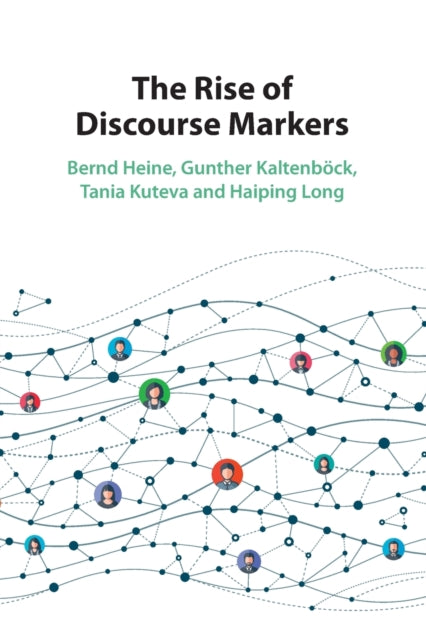
This study explores the structural characteristics of discourse markers and proposes a cross-linguistic survey to explain their similarities and differences across languages. It aims to provide a clear definition of discourse markers and guide future research in linguistics.
Format: Paperback
Length: 320 pages
Publication date: 03 August 2023
Publisher: Cambridge University Press
Discourse markers play a crucial role in linguistic communication, and over the past three decades, research on these markers has flourished. However, a challenge that has hindered this research is the complex structural characteristics of discourse markers, which have proven difficult to interpret using existing methodologies. This study aims to address this issue by conducting a comprehensive cross-linguistic survey of the development of discourse markers, their significant role in communication, and their relationship to the broader context of sociocultural behavior. The goal is to explain the similarities and differences observed across a diverse range of languages, providing a clear definition of discourse markers that can serve as a guide for future research. This study is of utmost importance to students and researchers in linguistics, as well as anyone interested in delving into the fascinating world of discourse markers.
Discourse markers are linguistic elements that serve to mark the boundaries between different parts of a sentence, indicating the shift in topic, emphasis, or speaker's attitude. They are essential in facilitating communication and enhancing understanding between speakers of different languages.
One of the key challenges in studying discourse markers is their structural complexity. Discourse markers often exhibit a combination of grammatical and non-grammatical features, making them difficult to classify as either fully grammatical or fully non-grammatical. For example, some discourse markers, such as hedges, can be used to express politeness, while others, such as interjections, can be used to express emotion.
Another challenge is the cross-linguistic variation in the use and development of discourse markers. Different languages may have different sets of discourse markers, or they may use the same markers in different ways. This variation can make it difficult to compare and analyze data across languages.
Despite these challenges, research on discourse markers has made significant progress in recent years. Scholars have developed new methodologies and approaches to studying these markers, such as corpus analysis, which allows for the systematic analysis of large amounts of text.
One of the key findings in research on discourse markers is that they play a crucial role in shaping the structure and organization of communication. Discourse markers can signal the start and end of a conversation, indicate the speaker's stance on a topic, or mark the transition between different parts of a sentence. They can also be used to express politeness, formality, or informality in communication.
Another important finding is that discourse markers can have significant effects on the listener's perception and interpretation of the message. For example, the use of hedges can signal the speaker's uncertainty or tentativeness, which can affect the listener's confidence in the speaker's message.
In addition to their role in communication, discourse markers can also be influenced by sociocultural factors. Different cultures may have different norms and expectations regarding the use of discourse markers, which can affect how they are used and interpreted. For example, some cultures may use more hedges than others, or they may use different types of hedges to express different attitudes or emotions.
Overall, research on discourse markers has provided valuable insights into the complex nature of linguistic communication. By studying the development and use of discourse markers across different languages and cultures, scholars have gained a deeper understanding of the ways in which language is used to convey meaning and communicate with others.
In conclusion, discourse markers are essential components of linguistic communication, and research on these markers has been a thriving field of study over the past three decades. Despite the challenges posed by their structural complexity and cross-linguistic variation, significant progress has been made in understanding the role
In conclusion, discourse markers are essential components of linguistic communication, and research on these markers has been a thriving field of study over the past three decades. Despite the challenges posed by their structural complexity and cross-linguistic variation, significant progress has been made in understanding the development and use of discourse markers across different languages and cultures. By studying the development and use of discourse markers across different languages and cultures, scholars have gained a deeper understanding of the ways in which language is used to convey meaning and communicate with others. As our understanding of discourse markers continues to evolve, it will be important to continue exploring their role in communication and their impact on language learning and usage.
Weight: 472g
Dimension: 152 x 228 x 19 (mm)
ISBN-13: 9781108987288
This item can be found in:
UK and International shipping information
UK and International shipping information
UK Delivery and returns information:
- Delivery within 2 - 3 days when ordering in the UK.
- Shipping fee for UK customers from £2.39. Fully tracked shipping service available.
- Returns policy: Return within 30 days of receipt for full refund.
International deliveries:
Shulph Ink now ships to Australia, Belgium, Canada, France, Germany, Ireland, Italy, India, Luxembourg Saudi Arabia, Singapore, Spain, Netherlands, New Zealand, United Arab Emirates, United States of America.
- Delivery times: within 5 - 10 days for international orders.
- Shipping fee: charges vary for overseas orders. Only tracked services are available for most international orders. Some countries have untracked shipping options.
- Customs charges: If ordering to addresses outside the United Kingdom, you may or may not incur additional customs and duties fees during local delivery.