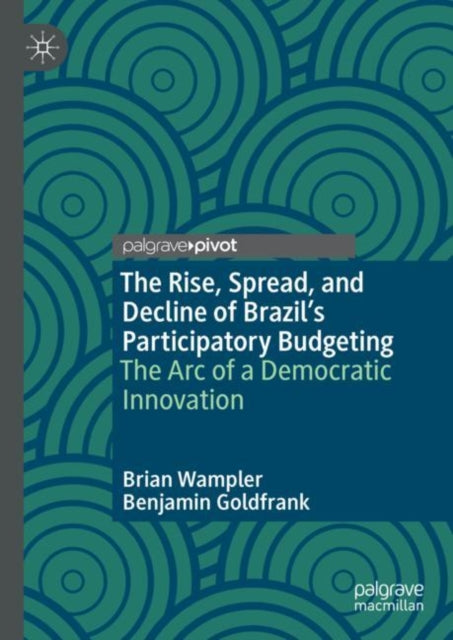
Brian Wampler,Benjamin Goldfrank
The Rise, Spread, and Decline of Brazil's Participatory Budgeting: The Arc of a Democratic Innovation
The Rise, Spread, and Decline of Brazil's Participatory Budgeting: The Arc of a Democratic Innovation
💎 Earn 227 Points (£2.27) on this item.
We can order this item for you. Delivery usually takes about 4 to 6 weeks.
This item is not held in our immediate stock. We will order it for you after checkout.
Estimated delivery: About 4 to 6 weeks
YOU SAVE £9.57
- Condition: Brand new
- UK Delivery times: Usually arrives within 2 - 3 working days
- UK Shipping: Fee starts at £2.39. Subject to product weight & dimension
Bulk ordering. Want 15 or more copies? Get a personalised quote and bigger discounts. Learn more about bulk orders.
Couldn't load pickup availability
- More about The Rise, Spread, and Decline of Brazil's Participatory Budgeting: The Arc of a Democratic Innovation
This book examines the rise, spread, and decline of participatory budgeting in Brazil, generating theory to account for its long-term viability and democratic impact. It explores whether other countries will face a similar fate or be able to sustain participatory budgeting for longer periods.
Format: Hardback
Length: 132 pages
Publication date: 04 January 2022
Publisher: Springer Nature Switzerland AG
This comprehensive book delves into the fascinating journey of participatory budgeting in Brazil, exploring its rise, expansion, and eventual decline over the past few decades. Initially hailed as a model of participatory democracy, Brazil's experience with participatory budgeting has captured the attention of activists, practitioners, and scholars worldwide. However, as we enter the twenty-first century, a concerning trend emerges: participatory budgeting is experiencing a rapid decline, teetering on the brink of disappearance from the Brazilian landscape.
To unravel the complexities behind this decline, the book draws upon a rich tapestry of literature from various fields, including institutional analysis, political choice theory, civil society studies, and public administration. Through a rigorous theoretical framework, the book seeks to understand the factors that contributed to the rise and fall of participatory budgeting in Brazil.
The creation of participatory budgeting in Brazil can be traced back to the late 1970s, during a period of political and social upheaval. At that time, citizens were increasingly dissatisfied with the traditional democratic processes, which often felt distant and disconnected from their concerns. Recognizing the need for a more inclusive and participatory approach to governance, policymakers and activists began experimenting with participatory budgeting as a means to engage citizens in decision-making processes.
The early successes of participatory budgeting in Brazil were remarkable. Citizens, through participatory budgeting processes, had the opportunity to directly influence the allocation of public resources and prioritize their community's needs. This not only increased the sense of ownership and responsibility among citizens but also helped to address social and economic inequalities in the country.
However, as the years went by, several challenges emerged that threatened the sustainability of participatory budgeting in Brazil. One of the primary factors was the political polarization and fragmentation of the country's political landscape. As political parties became increasingly focused on winning elections rather than addressing the needs of citizens, participatory budgeting processes were often marginalized and ignored.
Furthermore, the administrative and bureaucratic challenges associated with participatory budgeting also played a significant role in its decline. The process required a significant amount of resources, time, and expertise, which could be difficult for local governments to allocate. Additionally, the lack of clear guidelines and regulations surrounding participatory budgeting made it susceptible to manipulation and abuse, further undermining its credibility and legitimacy.
Despite these challenges, there were also efforts to revitalize participatory budgeting in Brazil. Some policymakers and activists recognized the importance of engaging citizens in decision-making processes and worked to strengthen the institutional framework supporting participatory budgeting. They also sought to address the political polarization and fragmentation by promoting dialogue and collaboration among different stakeholders.
However, the decline of participatory budgeting in Brazil has been a gradual and steady process, and it remains to be seen whether it can be reversed. While there are certainly lessons to be learned from Brazil's experience, it is important to recognize that every context is unique, and the success of participatory budgeting will depend on a variety of factors, including political will, institutional capacity, and citizen engagement.
As participatory budgeting continues to spread globally, it is crucial to examine its long-term viability and potential democratic impact. Will other countries follow the same inverted trajectory as Brazil, or will they be able to sustain participatory budgeting for greater periods of time? The answers to these questions will have significant implications for the future of democracy and governance in the world.
In conclusion, this book provides a comprehensive analysis of the rise, spread, and decline of participatory budgeting in Brazil. Through a multidisciplinary approach, it seeks to understand the factors that contributed to the success and failure of this innovative democratic institution. While the decline of participatory budgeting in Brazil is a cause for concern, it is important to remember that every context is unique, and there are still opportunities for participatory budgeting to thrive and have a positive democratic impact. By learning from Brazil's experience and building on its strengths, we can work towards creating a more inclusive and participatory world.
Weight: 331g
Dimension: 210 x 148 (mm)
ISBN-13: 9783030900571
Edition number: 1st ed. 2022
This item can be found in:
UK and International shipping information
UK and International shipping information
UK Delivery and returns information:
- Delivery within 2 - 3 days when ordering in the UK.
- Shipping fee for UK customers from £2.39. Fully tracked shipping service available.
- Returns policy: Return within 30 days of receipt for full refund.
International deliveries:
Shulph Ink now ships to Australia, Belgium, Canada, France, Germany, Ireland, Italy, India, Luxembourg Saudi Arabia, Singapore, Spain, Netherlands, New Zealand, United Arab Emirates, United States of America.
- Delivery times: within 5 - 10 days for international orders.
- Shipping fee: charges vary for overseas orders. Only tracked services are available for most international orders. Some countries have untracked shipping options.
- Customs charges: If ordering to addresses outside the United Kingdom, you may or may not incur additional customs and duties fees during local delivery.