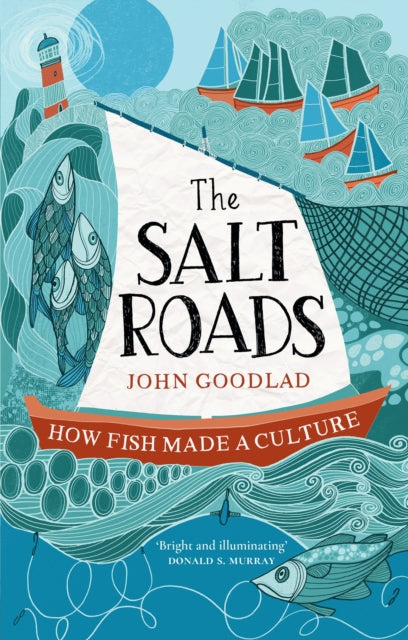
John Goodlad
The Salt Roads: How Fish Made a Culture
The Salt Roads: How Fish Made a Culture
💎 Earn 63 Points (£0.63) on this item.
YOU SAVE £5.26
- Condition: Brand new
- UK Delivery times: Usually arrives within 2 - 3 working days
- UK Shipping: Fee starts at £2.39. Subject to product weight & dimension
Bulk ordering. Want 15 or more copies? Get a personalised quote and bigger discounts. Learn more about bulk orders.
Couldn't load pickup availability
- More about The Salt Roads: How Fish Made a Culture
The story of how salt fish from Shetland became a staple food of Europe, powered an economic boom, and inspired artists, writers, and musicians is explored in John Goodlad's book, "The Salt Fish Trade: A History of Shetland and the North Atlantic." It follows the historical thread and addresses sustainability, climate change, and food choices in the twenty-first century.
Format: Hardback
Length: 272 pages
Publication date: 01 September 2022
Publisher: Birlinn General
The remarkable tale of how saltfish from Shetland rose to prominence as a staple food in Europe, propelling an economic boom and inspiring artists, writers, and musicians is presented here. This captivating journey spans from the untamed North Atlantic, the icy fjords of Greenland, and the secluded islands of Faroe to the elegant dining tables of London's middle classes, the renowned bacalao restaurants of Spain, and the Jewish shtetls of Eastern Europe. In addition to tracing the historical trajectory and delving into how diverse cultures were interconnected through the saltfish trade, John Goodlad also engages with individuals whose lives revolve around the industry in the twenty-first century, addressing contemporary issues such as sustainability, climate change, and food choices.
The saltfish trade played a pivotal role in shaping the culinary landscape of Europe, particularly during the Middle Ages. The demand for saltfish grew as it became a staple food in many regions, particularly in northern Europe. The fishing industry in Shetland, located in the North Atlantic, thrived due to the abundance of saltfish in the surrounding waters.
Shetland's saltfish was known for its high quality and flavor, making it a sought-after commodity. The fishermen in Shetland were skilled in catching and processing the fish, and they developed innovative techniques to preserve the meat and extend its shelf life. The saltfish was then transported across the Atlantic Ocean to Europe, where it was sold in markets and restaurants.
The saltfish trade not only brought economic prosperity to Shetland but also influenced the cultural and artistic traditions of Europe. The fish was a symbol of wealth and prosperity, and it was often depicted in art and literature as a luxury item. Writers and musicians also drew inspiration from the saltfish trade, using it as a theme in their works.
One of the most famous works that references saltfish is the novel "The Old Man and the Sea" by Ernest Hemingway. In the novel, an old fisherman named Santiago struggles to catch a giant marlin, but instead catches a saltfish that brings him immense wealth and fame. The novel is a testament to the resilience and determination of the fishermen in Shetland and the challenges they faced in their pursuit of livelihood.
The saltfish trade also had a significant impact on the culinary traditions of Europe. The fish was used in a variety of dishes, including stews, soups, and casseroles. It was also used as a source of protein in many diets, particularly in areas where other meat sources were scarce.
In addition to its culinary significance, the saltfish trade also played a role in shaping the cultural identity of Shetland. The fishing industry was a vital part of Shetland's economy, and it was a source of pride and identity for the people of the island. The trade also brought a sense of community and cooperation among the fishermen, as they worked together to catch and process the fish.
Today, the saltfish trade continues to be an important part of Shetland's economy, although it has faced challenges in recent years. The fishing industry has been affected by changes in the global market, including fluctuations in fish prices and environmental concerns. However, the people of Shetland continue to work hard to maintain the industry and preserve the traditions associated with saltfish.
In conclusion, the saltfish trade played a significant role in shaping the culinary and cultural landscape of Europe. It brought economic prosperity to Shetland, influenced the artistic and literary traditions of Europe, and played a role in shaping the cultural identity of the island. The trade continues to be an important part of Shetland's economy and culture, and it serves as a reminder of the interconnected
saltfish trade played a significant role in shaping the culinary and cultural landscape of Europe. It brought economic prosperity to Shetland, influenced the artistic and literary traditions of Europe, and played a role in shaping the cultural identity of the island. The trade continues to be an important part of Shetland's economy and culture, and it serves as a reminder of the resilience and determination of the people who have been involved in it for centuries.
Weight: 402g
Dimension: 145 x 222 x 31 (mm)
ISBN-13: 9781780277912
This item can be found in:
UK and International shipping information
UK and International shipping information
UK Delivery and returns information:
- Delivery within 2 - 3 days when ordering in the UK.
- Shipping fee for UK customers from £2.39. Fully tracked shipping service available.
- Returns policy: Return within 30 days of receipt for full refund.
International deliveries:
Shulph Ink now ships to Australia, Belgium, Canada, France, Germany, Ireland, Italy, India, Luxembourg Saudi Arabia, Singapore, Spain, Netherlands, New Zealand, United Arab Emirates, United States of America.
- Delivery times: within 5 - 10 days for international orders.
- Shipping fee: charges vary for overseas orders. Only tracked services are available for most international orders. Some countries have untracked shipping options.
- Customs charges: If ordering to addresses outside the United Kingdom, you may or may not incur additional customs and duties fees during local delivery.