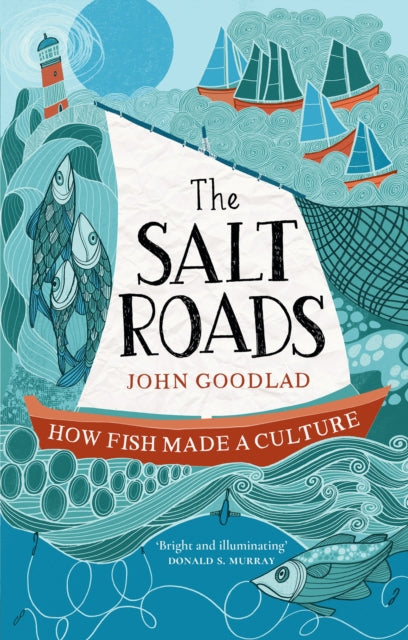
John Goodlad
The Salt Roads: How Fish Made a Culture
The Salt Roads: How Fish Made a Culture
💎 Earn 35 Points (£0.35) on this item.
YOU SAVE £2.92
- Condition: Brand new
- UK Delivery times: Usually arrives within 2 - 3 working days
- UK Shipping: Fee starts at £3.89. Subject to product weight & dimension
Bulk ordering. Want 15 or more copies? Get a personalised quote and bigger discounts. Learn more about bulk orders.
Couldn't load pickup availability
- More about The Salt Roads: How Fish Made a Culture
The story of how salt fish from Shetland became a staple food of Europe, powered an economic boom, and inspired artists, writers, and musicians is explored in John Goodlad's book, "The Salt Fish Trade: A History of Shetland and the World." It follows the historical thread and addresses sustainability, climate change, and food choices in the twenty-first century.
Format: Paperback / softback
Length: 272 pages
Publication date: 03 August 2023
Publisher: Birlinn General
The remarkable tale of how saltfish from Shetland rose to prominence as a staple food in Europe, propelling an economic boom and inspiring artists, writers, and musicians is presented here. This captivating journey spans from the untamed North Atlantic, the icy fjords of Greenland, and the secluded islands of Faroe to the elegant dining tables of London's middle classes, the renowned bacalao restaurants of Spain, and the Jewish shtetls of Eastern Europe. In addition to tracing the historical trajectory and delving into how diverse cultures were interconnected through the saltfish trade, John Goodlad also encounters individuals whose lives revolve around the industry in the twenty-first century. He addresses contemporary issues such as sustainability, climate change, and food choices, shedding light on the enduring impact of this culinary heritage.
The Saltfish Trade:
The saltfish trade played a pivotal role in shaping the culinary landscape of Europe. It began in the 17th century, when Shetland, located in the North Atlantic, became a major hub for the fishing and processing of saltfish. The island's rugged terrain and abundant marine resources made it an ideal location for the industry. Shetland's saltfish, known for its high protein content and long shelf life, quickly gained popularity among sailors and merchants who traversed the North Atlantic.
As the trade expanded, saltfish became a staple food in many European countries. It was particularly prized in Scotland, where it was used in a variety of dishes, including stews, soups, and pies. In Ireland, it was commonly served with mashed potatoes and cabbage. In France, it was used in bouillabaisse, a seafood stew, and in Spain, it was a key ingredient in bacalao, a famous dish made with dried and salted cod.
The saltfish trade not only brought economic prosperity to Shetland but also influenced the cultural and artistic traditions of the region. The fishing industry became a source of pride for the Shetland people, and their skills and knowledge in fishing and processing were celebrated in literature, music, and art.
The Impact of the Saltfish Trade:
The saltfish trade had a significant impact on the economies of Europe. It created job opportunities in Shetland and other fishing communities, and it helped to establish trade routes between different regions. The demand for saltfish also led to the development of new technologies and equipment in the fishing industry, which improved efficiency and productivity.
In addition to its economic benefits, the saltfish trade also had cultural and social implications. It brought people from different backgrounds and cultures together, and it helped to promote understanding and appreciation of different culinary traditions. The trade also played a role in shaping the identity of Shetland and its people, as it became a symbol of their resilience and determination in the face of challenging conditions.
The Modern Saltfish Industry:
Today, the saltfish industry continues to play an important role in the economies of Scotland and other countries. However, it faces several challenges, including environmental concerns and competition from other seafood species. Efforts are being made to promote sustainable fishing practices and to develop new markets for saltfish.
In conclusion, the saltfish trade is a remarkable tale of how a humble food item from Shetland became a staple food in Europe, propelling an economic boom and inspiring artists, writers, and musicians. It spans from the wild waters of the North Atlantic to the dining tables of Londons middle classes, and it has had a lasting impact on the cultural and culinary traditions of the region. While the industry faces challenges, it remains a symbol of Shetland's resilience and determination in the face of adversity.
Weight: 260g
Dimension: 129 x 197 x 23 (mm)
ISBN-13: 9781780278285
Edition number: New in Paperback
UK and International shipping information
UK and International shipping information
We deliver throughout the United Kingdom and to 128 countries and territories worldwide, including the United States, Australia, Canada, Germany, Spain and France.