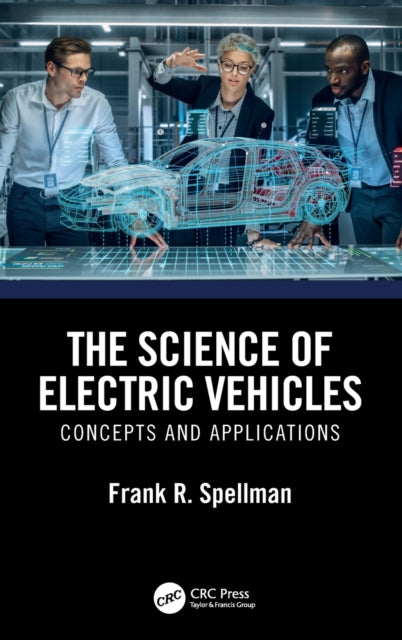
Frank R.Spellman
The Science of Electric Vehicles: Concepts and Applications
The Science of Electric Vehicles: Concepts and Applications
💎 Earn 490 Points (£4.90) on this item.
We can order this item for you. Delivery usually takes about 4 to 6 weeks.
This item is not held in our immediate stock. We will order it for you after checkout.
Estimated delivery: About 4 to 6 weeks
YOU SAVE £5.83
- Condition: Brand new
- UK Delivery times: Usually arrives within 2 - 3 working days
- UK Shipping: Fee starts at £3.89. Subject to product weight & dimension
Bulk ordering. Want 15 or more copies? Get a personalised quote and bigger discounts. Learn more about bulk orders.
Couldn't load pickup availability
- More about The Science of Electric Vehicles: Concepts and Applications
This course covers the basics of electric vehicles, including electrical principles, physics, and chemistry, as well as battery types, energy efficiency, and storage.
Format: Hardback
Length: 240 pages
Publication date: 29 March 2023
Publisher: Taylor & Francis Ltd
Electric vehicles are a rapidly growing sector of the automotive industry, offering a sustainable and environmentally friendly alternative to traditional gasoline-powered vehicles. They rely on a combination of electrical components, including batteries, motors, and controllers, to power their wheels and move them forward. In this article, we will explore the basic electrical principles, physics, and chemistry involved in the manufacture of electric vehicles.
We will also discuss various battery types, energy efficiency, storage, and other key aspects of electric vehicle technology.
Electric vehicles are powered by batteries, which store energy and convert it into electric current to drive the vehicle's motors. There are several types of batteries used in electric vehicles, including lithium-ion, nickel-metal hydride, and lead-acid batteries. Lithium-ion batteries are the most common type used in electric vehicles today, due to their high energy density, long lifespan, and low self-discharge rate.
Energy efficiency is a critical aspect of electric vehicle technology. Electric vehicles are more energy-efficient than gasoline-powered vehicles, as they convert a higher percentage of the energy stored in the battery into electric power that drives the vehicle's wheels. This means that electric vehicles can travel longer distances on a single charge and emit fewer greenhouse gases than gasoline-powered vehicles.
Storage is another key aspect of electric vehicle technology. Electric vehicles require large amounts of energy storage to power their motors and drive them over long distances. There are several types of storage technologies used in electric vehicles, including lithium-ion batteries, thermal storage systems, and hydrogen fuel cells.
Lithium-ion batteries are the most common type of battery used in electric vehicles today, due to their high energy density, long lifespan, and low self-discharge rate. Lithium-ion batteries can be charged and discharged thousands of times without losing significant capacity, making them ideal for use in electric vehicles.
Thermal storage systems use heat to store energy and convert it into electricity. These systems are typically used in electric vehicles that travel long distances or in areas with limited access to charging infrastructure. Thermal storage systems can store energy for long periods of time and can be used to power electric vehicles during periods of low sunlight or high demand for electricity.
Hydrogen fuel cells are a promising technology for electric vehicles, as they convert hydrogen into electricity and emit only water vapor as a byproduct. Hydrogen fuel cells are efficient, quiet, and have a long lifespan, making them ideal for use in electric vehicles.
In conclusion, electric vehicles are a rapidly growing sector of the automotive industry, offering a sustainable and environmentally friendly alternative to traditional gasoline-powered vehicles. They rely on a combination of electrical components, including batteries, motors, and controllers, to power their wheels and move them forward. Electric vehicles are more energy-efficient than gasoline-powered vehicles, as they convert a higher percentage of the energy stored in the battery into electric power that drives the vehicle's wheels. Storage is another key aspect of electric vehicle technology, with lithium-ion batteries being the most common type of battery used in electric vehicles today. Thermal storage systems and hydrogen fuel cells are promising technologies for electric vehicles, as they can store energy for long periods of time and can be used to power electric vehicles during periods of low sunlight or high demand for electricity.
Weight: 470g
Dimension: 240 x 162 x 19 (mm)
ISBN-13: 9781032366289
UK and International shipping information
UK and International shipping information
We deliver throughout the United Kingdom and to 128 countries and territories worldwide, including the United States, Australia, Canada, Germany, Spain and France.