Shulph Ink
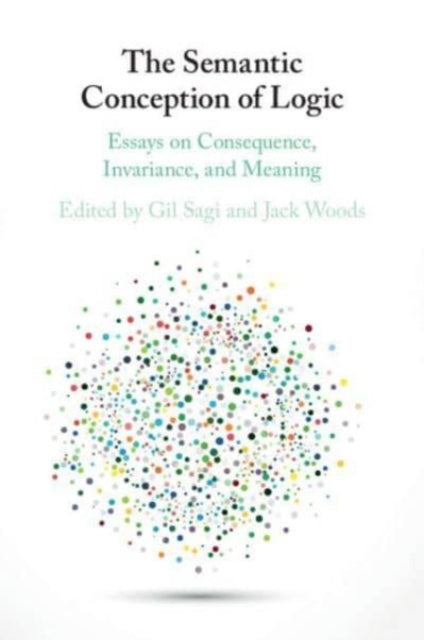
The Semantic Conception of Logic: Essays on Consequence, Invariance, and Meaning
The Semantic Conception of Logic: Essays on Consequence, Invariance, and Meaning
💎 Earn 122 Points (£1.22) on this item.
We can order this item for you. Delivery usually takes about 4 to 6 weeks.
This item is not held in our immediate stock. We will order it for you after checkout.
Estimated delivery: About 4 to 6 weeks
YOU SAVE £1.46
- Condition: Brand new
- UK Delivery times: Usually arrives within 2 - 3 working days
- UK Shipping: Fee starts at £2.39. Subject to product weight & dimension
Bulk ordering. Want 15 or more copies? Get a personalised quote and bigger discounts. Learn more about bulk orders.
Couldn't load pickup availability
- More about The Semantic Conception of Logic: Essays on Consequence, Invariance, and Meaning
This collection of essays explores the semantic conception of logic, invariance criteria, and logical truth, presenting cutting-edge research and revisiting central criticisms. It will be valuable to philosophers and logicians.
Format: Paperback / softback
Length: 304 pages
Publication date: 19 October 2023
Publisher: Cambridge University Press
This comprehensive collection of innovative essays delves into the intricate realm of the semantic conception of logic, exploring the principles of logicality, grammaticality, and logical truth. Contributors embark on a historical journey, tracing the roots of the semantic tradition back to the pioneering work of Tarski, while also examining its profound historical applications. At the same time, they critically reexamine central criticisms of the tradition, particularly the reliance on invariance criteria to explain logicality. Furthermore, the book delves into the latest critiques of the semantic approach, engaging scholars from mathematics and linguistics to shed light on its significance in their respective fields. As a valuable resource for philosophers and logicians, this book offers insightful perspectives and profound insights into the core concepts of logic and its applications.
The semantic conception of logic, which emerged in the early 20th century, is a philosophical framework that seeks to understand the meaning and interpretation of logical statements. It emphasizes the role of semantics in determining the truth-value of logical propositions and argues that logical validity is determined by the meanings of the logical symbols and the relations between them.
One of the key principles of the semantic conception of logic is the idea of semantic invariance. According to this principle, logical validity is unaffected by changes in the interpretation of the logical symbols or the relations between them. This means that a logical proposition remains valid regardless of whether it is interpreted in a different semantic context or in a different language.
However, the semantic conception of logic has faced criticism from various quarters. One of the main criticisms is that it fails to account for the intuitionistic nature of many logical concepts. Intuitionism is a philosophical approach that emphasizes the role of intuition and experience in determining the truth-value of logical propositions. Intuitionists argue that logical validity is determined by the way we perceive and understand logical concepts, rather than by the meanings of the logical symbols and the relations between them.
Another criticism of the semantic conception of logic is that it is too abstract and theoretical. Some philosophers argue that it is difficult to apply the semantic conception of logic to real-world situations and that it lacks practical relevance. They argue that logical validity should be determined by the way we use logical statements in our everyday lives and that the semantic conception of logic fails to provide a sufficient account of this use.
Despite these criticisms, the semantic conception of logic remains a significant and influential philosophical framework. It has been used to develop a wide range of logical theories and systems, including modal logic, set theory, and logic programming. It has also been used to address practical problems in fields such as computer science, artificial intelligence, and law.
In conclusion, the semantic conception of logic is a philosophical framework that seeks to understand the meaning and interpretation of logical statements. It emphasizes the role of semantics in determining the truth-value of logical propositions and argues that logical validity is determined by the meanings of the logical symbols and the relations between them. While the semantic conception of logic has faced criticism, it remains a significant and influential philosophical framework that continues to be studied and debated by philosophers and logicians.
Weight: 445g
ISBN-13: 9781108435543
This item can be found in:
UK and International shipping information
UK and International shipping information
UK Delivery and returns information:
- Delivery within 2 - 3 days when ordering in the UK.
- Shipping fee for UK customers from £2.39. Fully tracked shipping service available.
- Returns policy: Return within 30 days of receipt for full refund.
International deliveries:
Shulph Ink now ships to Australia, Belgium, Canada, France, Germany, Ireland, Italy, India, Luxembourg Saudi Arabia, Singapore, Spain, Netherlands, New Zealand, United Arab Emirates, United States of America.
- Delivery times: within 5 - 10 days for international orders.
- Shipping fee: charges vary for overseas orders. Only tracked services are available for most international orders. Some countries have untracked shipping options.
- Customs charges: If ordering to addresses outside the United Kingdom, you may or may not incur additional customs and duties fees during local delivery.