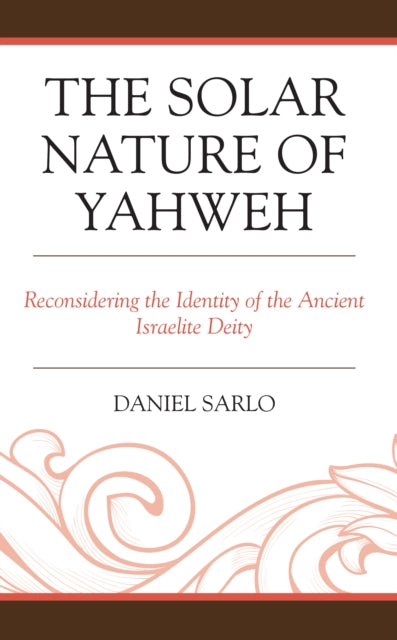
Daniel Sarlo
The Solar Nature of Yahweh: Reconsidering the Identity of the Ancient Israelite Deity
The Solar Nature of Yahweh: Reconsidering the Identity of the Ancient Israelite Deity
💎 Earn 451 Points (£4.51) on this item.
We can order this item for you. Delivery usually takes about 4 to 6 weeks.
This item is not held in our immediate stock. We will order it for you after checkout.
Estimated delivery: About 4 to 6 weeks
- Condition: Brand new
- UK Delivery times: Usually arrives within 2 - 3 working days
- UK Shipping: Fee starts at £2.39. Subject to product weight & dimension
Bulk ordering. Want 15 or more copies? Get a personalised quote and bigger discounts. Learn more about bulk orders.
Couldn't load pickup availability
- More about The Solar Nature of Yahweh: Reconsidering the Identity of the Ancient Israelite Deity
The author of "The Solar Nature of Yahweh: Reconsidering the Identity of the Ancient Israelite Deity" argues that Yahweh was a solar deity rather than a storm god, challenging the current belief and suggesting that he was a significant god from the beginning or at least before the inception of the United Monarchy.
Format: Hardback
Length: 240 pages
Publication date: 15 October 2022
Publisher: Rowman & Littlefield
In his groundbreaking work, "The Solar Nature of Yahweh: Reconsidering the Identity of the Ancient Israelite Deity," Daniel Sarlo takes a daring and provocative approach to reexamining the enigmatic identity of the ancient Israelite god, Yahweh. By delving into the rich tapestry of biblical texts and comparing them with ancient Near Eastern texts, Sarlo challenges the prevailing notion that Yahweh was initially a storm god. Instead, he presents a compelling argument that Yahweh was, in fact, a solar deity.
This groundbreaking research has far-reaching implications, suggesting that Yahweh was not merely a minor god who gradually accumulated characteristics to become the head of the ancient Israelite pantheon. Rather, he emerged as a significant deity, perhaps even before the inception of the United Monarchy.
Sarlo's meticulous analysis of the biblical texts and his comparison with ancient Near Eastern sources shed new light on the origins and evolution of the Israelite religion. He demonstrates how the concept of Yahweh as a solar deity was deeply rooted in the cultural and religious practices of the ancient Israelites and how it gradually evolved to become the dominant god of their pantheon.
One of the key insights of Sarlo's work is his recognition of the importance of the sun in ancient Near Eastern religions. He argues that the sun was not just a symbol of power and fertility but also a central deity in its own right. By examining the biblical texts in light of this perspective, Sarlo demonstrates how Yahweh was syncretized with the sun god, Ra, to form a composite deity that was both powerful and revered by the ancient Israelites.
This syncretism was not a superficial or arbitrary process, but rather a reflection of the complex and multifaceted nature of the Israelite religion. Sarlo shows how the Israelites incorporated elements of other religions and cultures into their worship of Yahweh, creating a rich and diverse religious tradition that was uniquely suited to their needs and beliefs.
In addition to his analysis of the biblical texts, Sarlo also explores the historical and cultural context in which the Israelite religion developed. He discusses the influence of neighboring empires, such as the Egyptians and the Mesopotamians, on the Israelite people and how they incorporated their religious practices and beliefs into their own. This provides a valuable insight into the development of the Israelite religion and how it evolved over time.
Overall, "The Solar Nature of Yahweh: Reconsidering the Identity of the Ancient Israelite Deity" is a groundbreaking work that challenges our understanding of the ancient Israelite god and his role in the religion of the Israelites. By examining the relevant biblical texts and comparing them with ancient Near Eastern sources, Sarlo presents a compelling argument that Yahweh was a solar deity, and that this identity was central to the development of the Israelite religion. This research has the potential to reshape our understanding of the ancient world and the role of religion in shaping human societies.
In his groundbreaking work, "The Solar Nature of Yahweh: Reconsidering the Identity of the Ancient Israelite Deity," Daniel Sarlo takes a daring and provocative approach to reexamining the enigmatic identity of the ancient Israelite god, Yahweh. By delving into the rich tapestry of biblical texts and comparing them with ancient Near Eastern texts, Sarlo challenges the prevailing notion that Yahweh was initially a storm god. Instead, he presents a compelling argument that Yahweh was, in fact, a solar deity.
This groundbreaking research has far-reaching implications, suggesting that Yahweh was not merely a minor god who gradually accumulated characteristics to become the head of the ancient Israelite pantheon. Rather, he emerged as a significant deity, perhaps even before the inception of the United Monarchy.
Sarlo's meticulous analysis of the biblical texts and his comparison with ancient Near Eastern sources shed new light on the origins and evolution of the Israelite religion. He demonstrates how the concept of Yahweh as a solar deity was deeply rooted in the cultural and religious practices of the ancient Israelites and how it gradually evolved to become the dominant god of their pantheon.
One of the key insights of Sarlo's work is his recognition of the importance of the sun in ancient Near Eastern religions. He argues that the sun was not just a symbol of power and fertility but also a central deity in its own right. By examining the biblical texts in light of this perspective, Sarlo demonstrates how Yahweh was syncretized with the sun god, Ra, to form a composite deity that was both powerful and revered by the ancient Israelites.
This syncretism was not a superficial or arbitrary process, but rather a reflection of the complex and multifaceted nature of the Israelite religion. Sarlo shows how the Israelites incorporated elements of other religions and cultures into their worship of Yahweh, creating a rich and diverse religious tradition that was uniquely suited to their needs and beliefs.
In addition to his analysis of the biblical texts, Sarlo also explores the historical and cultural context in which the Israelite religion developed. He discusses the influence of neighboring empires, such as the Egyptians and the Mesopotamians, on the Israelite people and how they incorporated their religious practices and beliefs into their own. This provides a valuable insight into the development of the Israelite religion and how it evolved over time.
Overall, "The Solar Nature of Yahweh: Reconsidering the Identity of the Ancient Israelite Deity" is a groundbreaking work that challenges our understanding of the ancient Israelite god and his role in the religion of the Israelites. By examining the relevant biblical texts and comparing them with ancient Near Eastern sources, Sarlo presents a compelling argument that Yahweh was a solar deity, and that this identity was central to the development of the Israelite religion. This research has the potential to reshape our understanding of the ancient world and the role of religion in shaping human history.
Dimension: 229 x 152 (mm)
ISBN-13: 9781978714311
UK and International shipping information
UK and International shipping information
UK Delivery and returns information:
- Delivery within 2 - 3 days when ordering in the UK.
- Shipping fee for UK customers from £2.39. Fully tracked shipping service available.
- Returns policy: Return within 30 days of receipt for full refund.
International deliveries:
Shulph Ink now ships to Australia, Belgium, Canada, France, Germany, Ireland, Italy, India, Luxembourg Saudi Arabia, Singapore, Spain, Netherlands, New Zealand, United Arab Emirates, United States of America.
- Delivery times: within 5 - 10 days for international orders.
- Shipping fee: charges vary for overseas orders. Only tracked services are available for most international orders. Some countries have untracked shipping options.
- Customs charges: If ordering to addresses outside the United Kingdom, you may or may not incur additional customs and duties fees during local delivery.