Shulph Ink
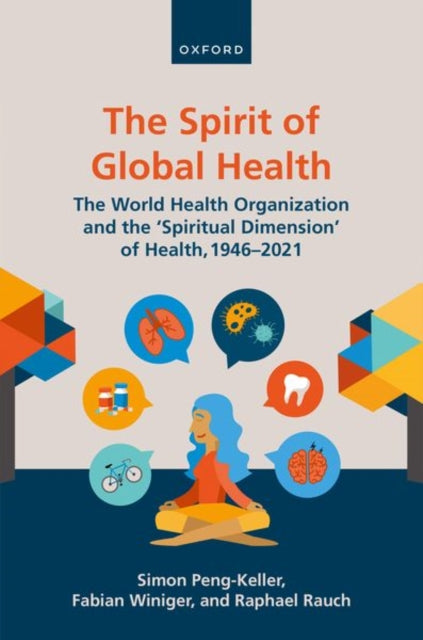
The Spirit of Global Health: The World Health Organization and the 'Spiritual Dimension' of Health, 1946-2021
The Spirit of Global Health: The World Health Organization and the 'Spiritual Dimension' of Health, 1946-2021
💎 Earn 515 Points (£5.15) on this item.
We can order this item for you. Delivery usually takes about 4 to 6 weeks.
This item is not held in our immediate stock. We will order it for you after checkout.
Estimated delivery: About 4 to 6 weeks
- Condition: Brand new
- UK Delivery times: Usually arrives within 2 - 3 working days
- UK Shipping: Fee starts at £2.39. Subject to product weight & dimension
Bulk ordering. Want 15 or more copies? Get a personalised quote and bigger discounts. Learn more about bulk orders.
Couldn't load pickup availability
- More about The Spirit of Global Health: The World Health Organization and the 'Spiritual Dimension' of Health, 1946-2021
The World Health Organization has grappled with the question of what a spiritual dimension of health looks like and how it can enrich its health policies. This study shows that spirituality has a longer and more complex history, being closely connected to the WHO's ethical aspirations, quest for more holistic and equitable healthcare, and struggle with the colonial legacy of international health organizations. The official relationship with spirituality advanced in fits and starts, marked by cycles of institutional forgetting and remembering.
Format: Hardback
Length: 256 pages
Publication date: 05 August 2022
Publisher: Oxford University Press
Since the establishment of the World Health Organization (WHO), numerous individuals within its workforce, regional offices, member states, and directors-general have engaged in a profound exploration of the concept of a spiritual dimension of health. Contrary to the prevailing notion that spirituality is primarily associated with palliative care and has relatively emerged within the organization, this study reveals that its historical roots are far more profound and intricate, intricately intertwined with the ethical aspirations, holistic healthcare pursuits, and the legacy of colonialism within international health organizations. While these ideals and struggles silently propelled many of the key actors and policies, such as the provision of universal primary healthcare, which have embodied the organization's loftiest aspirations for decades, the official relationship between the WHO and spirituality has experienced a dynamic and multifaceted trajectory. At times, it has showcased a creative and interdisciplinary approach, while at other times, it has been characterized by profound political complexities. This process has been marked by cycles of institutional forgetting and remembering, reflecting the organization's ongoing journey to grapple with its mandate of advancing health as a state of complete well-being accessible to all.
Rather than being perceived as a triumph of religious lobbyists, this book proposes a different perspective on the spiritual dimension of health. It suggests that it can be better understood as a ghost that has haunted and continues to haunt the WHO as it navigates its mission of promoting health as a state of holistic well-being for all. This haunting presence manifests in various ways, shaping the organization's policies, practices, and discourse on health. It prompts the WHO to confront the complex interplay between religion, spirituality, and health, challenging traditional assumptions and fostering a more inclusive and nuanced understanding of health and well-being.
One of the key findings of this study is that the spiritual dimension of health has a long and complex history within the WHO. It has been deeply intertwined with the organization's ethical aspirations, seeking to promote health and well-being on a holistic and equitable basis. This commitment has been evident in various initiatives and policies, such as the promotion of universal primary healthcare, which aims to provide access to quality healthcare services for all individuals, regardless of their socio-economic status or geographical location.
However, the official relationship between the WHO and spirituality has not always been smooth. There have been periods of institutional forgetting and remembering, reflecting the complex and multifaceted nature of this issue. At times, the WHO has been hesitant to acknowledge the spiritual dimension of health, viewing it as a niche or fringe concern that may not align with its core mission. This has led to debates and controversies within the organization, with some arguing that the promotion of spirituality should be limited to religious organizations or individuals.
On the other hand, there have been moments of creative and interdisciplinary collaboration between the WHO and spiritual and religious organizations. These partnerships have been instrumental in advancing the understanding and promotion of spiritual health within the organization. They have facilitated the exchange of knowledge, resources, and best practices, contributing to the development of more comprehensive and integrated healthcare approaches that consider the spiritual and emotional well-being of individuals.
Despite these positive developments, the spiritual dimension of health continues to be a complex and contentious issue within the WHO. There are ongoing debates and discussions about the appropriate role of spirituality in healthcare, the boundaries between religion and health, and the potential conflicts of interest between spiritual and medical perspectives. These challenges require careful consideration and management to ensure that the spiritual dimension of health is integrated into healthcare policies and practices in a respectful and inclusive manner.
In conclusion, the study of the spiritual dimension of health within the WHO reveals a rich and complex history that is closely intertwined with the organization's ethical aspirations, holistic healthcare pursuits, and the legacy of colonialism. While the official relationship with spirituality has experienced its share of challenges and controversies, it has also demonstrated moments of creativity and interdisciplinary collaboration. By acknowledging the spiritual dimension of health as a vital component of holistic well-being, the WHO can continue to evolve and adapt its policies and practices to better serve the needs of individuals and communities around the world.
Weight: 532g
Dimension: 240 x 160 x 19 (mm)
ISBN-13: 9780192865502
This item can be found in:
UK and International shipping information
UK and International shipping information
UK Delivery and returns information:
- Delivery within 2 - 3 days when ordering in the UK.
- Shipping fee for UK customers from £2.39. Fully tracked shipping service available.
- Returns policy: Return within 30 days of receipt for full refund.
International deliveries:
Shulph Ink now ships to Australia, Belgium, Canada, France, Germany, Ireland, Italy, India, Luxembourg Saudi Arabia, Singapore, Spain, Netherlands, New Zealand, United Arab Emirates, United States of America.
- Delivery times: within 5 - 10 days for international orders.
- Shipping fee: charges vary for overseas orders. Only tracked services are available for most international orders. Some countries have untracked shipping options.
- Customs charges: If ordering to addresses outside the United Kingdom, you may or may not incur additional customs and duties fees during local delivery.