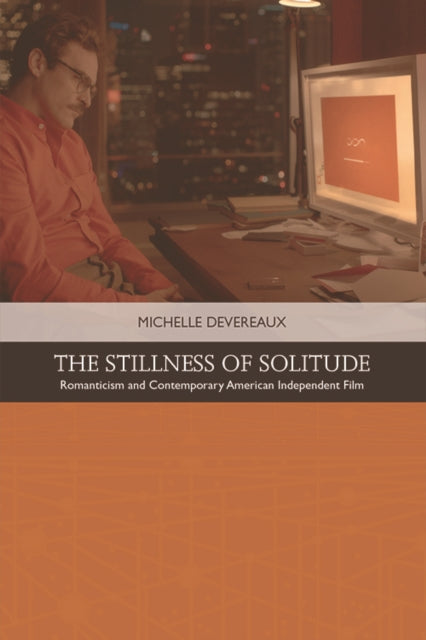
MichelleDevereaux
The Stillness of Solitude: Romanticism and Contemporary American Independent Film
The Stillness of Solitude: Romanticism and Contemporary American Independent Film
💎 Earn 92 Points (£0.92) on this item.
We can order this item for you. Delivery usually takes about 4 to 6 weeks.
This item is not held in our immediate stock. We will order it for you after checkout.
Estimated delivery: About 4 to 6 weeks
YOU SAVE £5.59
- Condition: Brand new
- UK Delivery times: Usually arrives within 2 - 3 working days
- UK Shipping: Fee starts at £2.39. Subject to product weight & dimension
Bulk ordering. Want 15 or more copies? Get a personalised quote and bigger discounts. Learn more about bulk orders.
Couldn't load pickup availability
- More about The Stillness of Solitude: Romanticism and Contemporary American Independent Film
Michelle Devereaux's book explores Romanticism in American film, examining seven films by four filmmakers and addressing identity, imagination, and the relationship between self and world, while highlighting contemporary anxieties.
Format: Paperback / softback
Length: 224 pages
Publication date: 31 May 2021
Publisher: Edinburgh University Press
Romanticism in American Film: A Study of Seven Films by Michelle Devereaux
Romanticism in American film has been explored in a book-length study by Michelle Devereaux, who draws on established theories of contemporary American independent cinema as a point of entry. Devereaux examines the philosophical and aesthetic Romantic connections between a selection of seven films from four popular filmmakers: Wes Anderson, Sofia Coppola, Spike Jonze, and Charlie Kaufman. The films primarily deal with questions of identity, imagination, and the relation between self and world, while also emphasising the anxieties of our own time, such as nostalgia for an imaginary past and fear of an uncertain future.
The study begins with an overview of Romanticism and its historical context, tracing its origins in the late 18th century and its influence on various artistic movements throughout the 19th and 20th centuries. Devereaux then introduces the seven films, each of which is discussed in detail.
The first film, "The Grand Budapest Hotel" (2014), directed by Wes Anderson, is a whimsical and visually stunning tale set in a fictional European country during the early 20th century. The film explores the themes of nostalgia, identity, and the power of storytelling, as well as the relationship between the protagonist, a hotel concierge, and a wealthy elderly woman.
The second film, "Lost in Translation" (2003), directed by Sofia Coppola, is a poignant and introspective drama set in Tokyo. The film follows a young American woman who travels to Japan to work as a translator and becomes entangled in a complex relationship with a Japanese man. The film explores the themes of loneliness, cultural displacement, and the search for meaning in life.
The third film, "Her" (2013), directed by Spike Jonze, is a futuristic drama set in a near-future Los Angeles. The film follows a man who falls in love with a computer operating system, and the ethical and philosophical implications of this relationship. The film explores the themes of love, technology, and the nature of consciousness.
The fourth film, "The Tree of Life" (2011), directed by Terrence Malick, is a visually stunning and philosophical drama set in the American South during the 1950s. The film explores the themes of nature, spirituality, and the meaning of life, and features a cast of non-professional actors.
The fifth film, "The Master" (2012), directed by Paul Thomas Anderson, is a psychological drama set in the 1950s and 1960s. The film follows a man who becomes involved with a charismatic cult leader and the psychological consequences of this relationship. The film explores the themes of power, control, and the nature of identity.
The sixth film, "The Social Network" (2010), directed by David Fincher, is a biographical drama set in the early 2000s. The film follows the creation of the social networking site Facebook and the impact it had on society. The film explores the themes of social media, technology, and the nature of human connection.
The seventh film, "The Wolf of Wall Street" (2013), directed by Martin Scorsese, is a biographical drama set in the 1980s and 1990s. The film follows the rise and fall of a Wall Street trader and the ethical and moral implications of his actions. The film explores the themes of greed, power, and the consequences of unchecked ambition.
Throughout the study, Devereaux highlights the ways in which Romanticism has influenced American film, particularly in terms of its themes, aesthetics, and narrative structure. She argues that Romanticism has provided a rich source of inspiration for filmmakers, allowing them to explore complex and nuanced themes in a visually compelling and emotionally resonant way.
One of the key themes that Devereaux explores in her study is the idea of identity. She argues that Romanticism has played a significant role in shaping our understanding of identity, particularly in the context of American film. She notes that many of the films discussed in her study explore the idea of identity as a fluid and evolving concept, rather than a fixed and static entity.
For example, in "The Grand Budapest Hotel," the protagonist, a hotel concierge, is presented as a complex and multifaceted character who is constantly evolving and adapting to the changing world around him. Devereaux argues that this character's identity is shaped by a variety of factors, including his experiences, his relationships with others, and his own sense of self.
Similarly, in "Lost in Translation," the protagonist, a young American woman, is presented as a complex and multifaceted character who is struggling to find her place in the world. Devereaux argues that this character's identity is shaped by her experiences in Japan, as well as her relationship with a Japanese man.
In addition to the theme of identity, Devereaux also explores the theme of imagination in American film. She argues that Romanticism has provided a rich source of inspiration for filmmakers to explore the power of imagination and the ways in which it can shape our understanding of the world.
For example, in "Her," the protagonist, a man who falls in love with a computer operating system, is presented as a character who is deeply imaginative and who uses his imagination to explore the nature of consciousness and the meaning of life. Devereaux argues that this character's imagination is a powerful tool for understanding the world and for finding meaning in life.
Another theme that Devereaux explores in her study is the relation between self and world. She argues that Romanticism has provided a rich source of inspiration for filmmakers to explore the ways in which we relate to the world around us.
For example, in "The Tree of Life," the protagonist, a man who is struggling to find meaning in life, is presented as a character who is deeply connected to the natural world. Devereaux argues that this character's connection to the natural world is a powerful source of inspiration for understanding the world and for finding meaning in life.
In addition to these themes, Devereaux also explores the ways in which Romanticism has influenced the narrative structure of American film. She argues that Romanticism has provided a rich source of inspiration for filmmakers to create complex and nuanced narratives that explore the complexities of human experience.
For example, in "The Master," the narrative structure is complex and nonlinear, and the film explores the relationship between the protagonist and the cult leader in a deeply psychological and emotional way. Devereaux argues that this narrative structure is a powerful tool for exploring the complexities of human experience and for creating a sense of empathy for the characters.
In conclusion, Michelle Devereaux's book-length study of Romanticism in relation to American film is a fascinating and insightful exploration of the philosophical and aesthetic Romantic connections between a selection of seven films from four popular filmmakers. The films primarily deal with questions of identity, imagination, and the relation between self and world, while also emphasising the anxieties of our own time, such as nostalgia for an imaginary past and fear of an uncertain future. Devereaux highlights the ways in which Romanticism has influenced American film, particularly in terms of its themes, aesthetics, and narrative structure, and argues that Romanticism has provided a rich source of inspiration for filmmakers to explore complex and nuanced themes in a visually compelling and emotionally resonant way.
Weight: 354g
Dimension: 156 x 233 x 18 (mm)
ISBN-13: 9781474446051
This item can be found in:
UK and International shipping information
UK and International shipping information
UK Delivery and returns information:
- Delivery within 2 - 3 days when ordering in the UK.
- Shipping fee for UK customers from £2.39. Fully tracked shipping service available.
- Returns policy: Return within 30 days of receipt for full refund.
International deliveries:
Shulph Ink now ships to Australia, Belgium, Canada, France, Germany, Ireland, Italy, India, Luxembourg Saudi Arabia, Singapore, Spain, Netherlands, New Zealand, United Arab Emirates, United States of America.
- Delivery times: within 5 - 10 days for international orders.
- Shipping fee: charges vary for overseas orders. Only tracked services are available for most international orders. Some countries have untracked shipping options.
- Customs charges: If ordering to addresses outside the United Kingdom, you may or may not incur additional customs and duties fees during local delivery.