Lloyd Alter
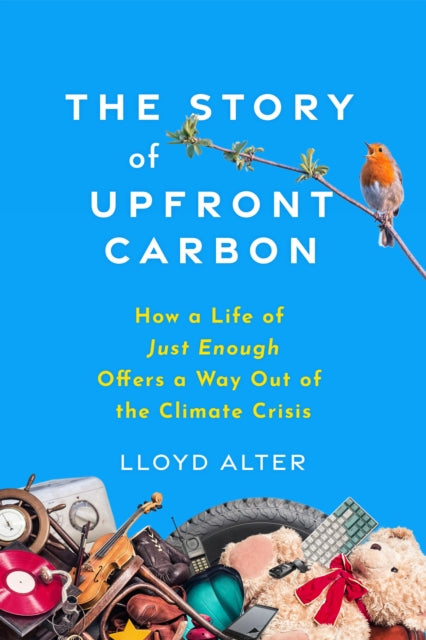
The Story of Upfront Carbon: How a Life of Just Enough Offers a Way Out of the Climate Crisis
The Story of Upfront Carbon: How a Life of Just Enough Offers a Way Out of the Climate Crisis
💎 Earn 65 Points (£0.65) on this item.
YOU SAVE £3.96
- Condition: Brand new
- UK Delivery times: Usually arrives within 2 - 3 working days
- UK Shipping: Fee starts at £2.39. Subject to product weight & dimension
Bulk ordering. Want 15 or more copies? Get a personalised quote and bigger discounts. Learn more about bulk orders.
Couldn't load pickup availability
- More about The Story of Upfront Carbon: How a Life of Just Enough Offers a Way Out of the Climate Crisis
Upfront carbon, the invisible emissions involved in making everyday objects, is a critical factor in addressing climate change. The Story of Upfront Carbon explores why we focus on energy efficiency rather than carbon, why carbon calculations are difficult, and how sufficiency for individuals and economies can help avert climate catastrophe. It offers practical strategies for minimizing the ecological footprint of transportation, agriculture, consumer goods, and the built environment, and is essential reading for a world on the brink of climate disaster.
Format: Paperback / softback
Length: 192 pages
Publication date: 21 May 2024
Publisher: New Society Publishers
Upfront carbon is the total amount of emissions released during the production of a product, including the extraction, processing, and transportation of raw materials. It is a critical factor in determining the environmental impact of a product and is often overlooked in discussions about climate change. Upfront carbon emissions are responsible for a significant portion of global greenhouse gas emissions and are growing rapidly.
One of the main reasons upfront carbon is so important is that it is difficult to reduce once a product has been produced. Unlike operating emissions, which can be reduced by improving energy efficiency or switching to renewable energy sources, upfront carbon emissions are inherent to the production process and cannot be eliminated without changing the way products are made. This means that even if we switch to electric cars or heat pumps, we will still be releasing significant amounts of carbon into the atmosphere.
To address this issue, The Story of Upfront Carbon offers a comprehensive guide to understanding and reducing upfront carbon emissions. The book begins by exploring why we are fixated on energy efficiency rather than carbon and why this needs to change. It then delves into the complexities of carbon calculations and explains why they are so difficult to understand.
One of the key strategies for reducing upfront carbon emissions is to focus on sufficiency for individuals and whole economies. This means that we should consume only what we need and produce only what we can use. This approach can help to reduce the amount of waste and pollution that is produced and can also help to reduce the amount of energy that is used.
Another important strategy for reducing upfront carbon emissions is to adopt a systemic approach to production. This means that we should look at the entire production process and identify ways to reduce emissions at each stage. This can include using renewable energy sources, improving energy efficiency, and reducing waste and pollution.
The Story of Upfront Carbon also provides concrete strategies for minimizing the ecological footprint of transportation, agriculture, consumer goods, and the built environment. For example, it suggests that we should switch to electric cars and heat pumps, use public transportation, and eat a plant-based diet. It also suggests that we should reduce our consumption of single-use plastics and reduce our energy use by turning off lights and appliances when they are not in use.
Despite the importance of upfront carbon emissions, they are often ignored in discussions about climate change. This is because they are difficult to measure and because they are not directly linked to the use of fossil fuels. However, upfront carbon emissions are a critical factor in determining the environmental impact of a product and are growing rapidly.
To address this issue, governments, businesses, and individuals need to take action. Governments can implement policies that promote energy efficiency and renewable energy sources, while businesses can implement policies that reduce waste and pollution. Individuals can make changes in their daily lives, such as switching to electric cars and heat pumps, using public transportation, and eating a plant-based diet.
In conclusion, upfront carbon is a critical factor in determining the environmental impact of a product and is often overlooked in discussions about climate change. By focusing on sufficiency for individuals and whole economies, adopting a systemic approach to production, and implementing concrete strategies for minimizing the ecological footprint of transportation, agriculture, consumer goods, and the built environment, we can help to reduce upfront carbon emissions and avert looming climate catastrophe. The Story of Upfront Carbon is a highly readable and accessible guide that is required reading for a world on the brink.
Weight: 300g
Dimension: 226 x 153 x 14 (mm)
ISBN-13: 9780865719927
UK and International shipping information
UK and International shipping information
UK Delivery and returns information:
- Delivery within 2 - 3 days when ordering in the UK.
- Shipping fee for UK customers from £2.39. Fully tracked shipping service available.
- Returns policy: Return within 30 days of receipt for full refund.
International deliveries:
Shulph Ink now ships to Australia, Belgium, Canada, France, Germany, Ireland, Italy, India, Luxembourg Saudi Arabia, Singapore, Spain, Netherlands, New Zealand, United Arab Emirates, United States of America.
- Delivery times: within 5 - 10 days for international orders.
- Shipping fee: charges vary for overseas orders. Only tracked services are available for most international orders. Some countries have untracked shipping options.
- Customs charges: If ordering to addresses outside the United Kingdom, you may or may not incur additional customs and duties fees during local delivery.