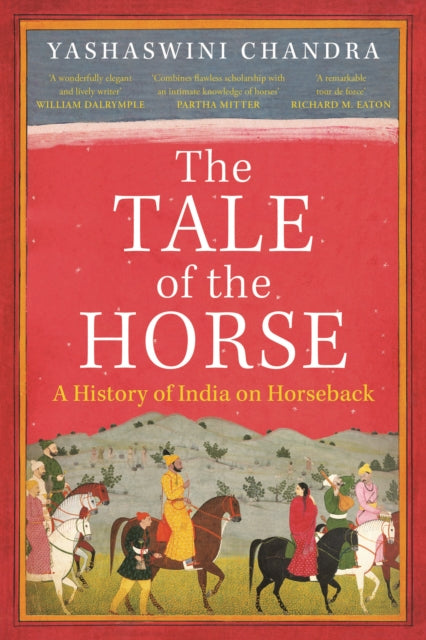
Yashaswini Chandra
The Tale of the Horse: A History of India on Horseback
The Tale of the Horse: A History of India on Horseback
💎 Earn 45 Points (£0.45) on this item.
YOU SAVE £3.80
- Condition: Brand new
- UK Delivery times: Usually arrives within 2 - 3 working days
- UK Shipping: Fee starts at £2.39. Subject to product weight & dimension
Bulk ordering. Want 15 or more copies? Get a personalised quote and bigger discounts. Learn more about bulk orders.
Couldn't load pickup availability
- More about The Tale of the Horse: A History of India on Horseback
The horse has played a significant role in India's history, contributing to its culture, economy, and society. It has been used for transportation, agriculture, and warfare and has deep cultural and spiritual significance for many Indian communities.
Format: Paperback / softback
Length: 300 pages
Publication date: 24 November 2022
Publisher: Holland House Books
The history of the horse in India is a captivating and intricate tale that spans centuries, intertwining the lives of humans and these majestic creatures. It is a testament to the profound bond that has existed between humans and horses throughout history, and it sheds light on the significant role that horses have played in shaping India's cultural, social, and economic landscape.
The arrival of horses in India can be traced back to ancient times, when they were first domesticated by nomadic tribes. These hardy animals were prized for their strength, agility, and endurance, and they played a crucial role in the development of agriculture, transportation, and warfare. Over time, horses became an integral part of Indian society, and they were used for a variety of purposes, including agriculture, transportation, sport, and entertainment.
One of the most significant contributions of horses to Indian history was their role in warfare. Horses were used by Indian armies for centuries, and they played a crucial role in many battles and conquests. The use of horses in battle allowed Indian armies to move quickly and efficiently, and they were able to conquer vast territories and establish powerful empires.
In addition to their military significance, horses also played a vital role in the cultural and social life of India. They were used for transportation, allowing people to travel long distances in a relatively short amount of time. They were also used for sport, particularly polo and horse racing, which became popular among the upper classes of Indian society.
Furthermore, horses played a significant role in the development of trade and commerce in India. They were used to transport goods and materials across long distances, and they helped to establish trade routes that connected different parts of the country. This increased economic activity and helped to promote the growth of cities and towns.
Despite their many contributions to Indian history, the horse population in India has faced many challenges over the years. The introduction of modern transportation methods, such as trains and buses, has reduced the demand for horses, and many have been abandoned or neglected. Additionally, the growth of urbanization and industrialization has led to the pollution and degradation of many horse habitats, which has further threatened their survival.
Despite these challenges, there are still efforts being made to preserve and protect the horse population in India. Many organizations and individuals are working to raise awareness about the importance of horses and to promote their conservation. They are also working to provide care and support for horses that are in need, and to establish protected areas where horses can thrive.
In conclusion, the history of the horse in India is a rich and fascinating tale that reflects the deep and enduring bond that has existed between humans and horses throughout history. These majestic creatures have played a crucial role in shaping India's cultural, social, and economic landscape, and their legacy continues to be felt today. It is essential that we continue to work to preserve and protect the horse population in India, so that we can continue to enjoy the benefits that they bring to our society.
The history of the horse in India is a captivating and intricate tale that spans centuries, intertwining the lives of humans and these majestic creatures. It is a testament to the profound bond that has existed between humans and horses throughout history, and it sheds light on the significant role that horses have played in shaping India's cultural, social, and economic landscape.
The arrival of horses in India can be traced back to ancient times, when they were first domesticated by nomadic tribes. These hardy animals were prized for their strength, agility, and endurance, and they played a crucial role in the development of agriculture, transportation, and warfare. Over time, horses became an integral part of Indian society, and they were used for a variety of purposes, including agriculture, transportation, sport, and entertainment.
One of the most significant contributions of horses to Indian history was their role in warfare. Horses were used by Indian armies for centuries, and they played a crucial role in many battles and conquests. The use of horses in battle allowed Indian armies to move quickly and efficiently, and they were able to conquer vast territories and establish powerful empires.
In addition to their military significance, horses also played a vital role in the cultural and social life of India. They were used for transportation, allowing people to travel long distances in a relatively short amount of time. They were also used for sport, particularly polo and horse racing, which became popular among the upper classes of Indian society.
Furthermore, horses played a significant role in the development of trade and commerce in India. They were used to transport goods and materials across long distances, and they helped to establish trade routes that connected different parts of the country. This increased economic activity and helped to promote the growth of cities and towns.
Despite their many contributions to Indian history, the horse population in India has faced many challenges over the years. The introduction of modern transportation methods, such as trains and buses, has reduced the demand for horses, and many have been abandoned or neglected. Additionally, the growth of urbanization and industrialization has led to the pollution and degradation of many horse habitats, which has further threatened their survival.
Despite these challenges, there are still efforts being made to preserve and protect the horse population in India. Many organizations and individuals are working to raise awareness about the importance of horses and to promote their conservation. They are also working to provide care and support for horses that are in need, and to establish protected areas where horses can thrive.
In conclusion, the history of the horse in India is a rich and fascinating tale that reflects the deep and enduring bond that has existed between humans and horses throughout history. These majestic creatures have played a crucial role in shaping India's cultural, social, and economic landscape, and their legacy continues to be felt today. It is essential that we continue to work to preserve and protect the horse population in India, so that we can continue to enjoy the benefits that they bring to our society.
Dimension: 234 x 156 (mm)
ISBN-13: 9781739104702
UK and International shipping information
UK and International shipping information
UK Delivery and returns information:
- Delivery within 2 - 3 days when ordering in the UK.
- Shipping fee for UK customers from £2.39. Fully tracked shipping service available.
- Returns policy: Return within 30 days of receipt for full refund.
International deliveries:
Shulph Ink now ships to Australia, Belgium, Canada, France, Germany, Ireland, Italy, India, Luxembourg Saudi Arabia, Singapore, Spain, Netherlands, New Zealand, United Arab Emirates, United States of America.
- Delivery times: within 5 - 10 days for international orders.
- Shipping fee: charges vary for overseas orders. Only tracked services are available for most international orders. Some countries have untracked shipping options.
- Customs charges: If ordering to addresses outside the United Kingdom, you may or may not incur additional customs and duties fees during local delivery.