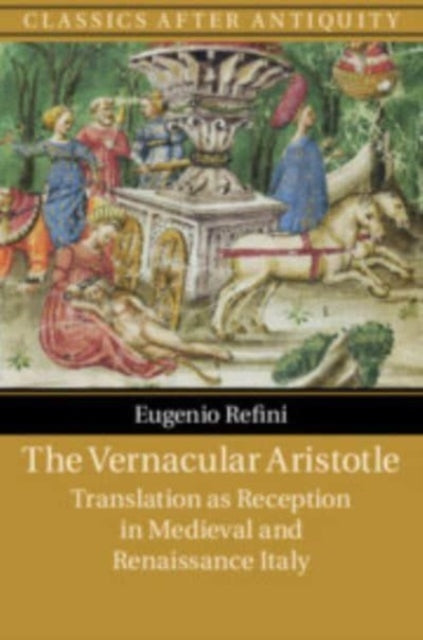
EugenioRefini
The Vernacular Aristotle: Translation as Reception in Medieval and Renaissance Italy
The Vernacular Aristotle: Translation as Reception in Medieval and Renaissance Italy
💎 Earn 127 Points (£1.27) on this item.
We can order this item for you. Delivery usually takes about 4 to 6 weeks.
This item is not held in our immediate stock. We will order it for you after checkout.
Estimated delivery: About 4 to 6 weeks
YOU SAVE £1.51
- Condition: Brand new
- UK Delivery times: Usually arrives within 2 - 3 working days
- UK Shipping: Fee starts at £2.39. Subject to product weight & dimension
Bulk ordering. Want 15 or more copies? Get a personalised quote and bigger discounts. Learn more about bulk orders.
Couldn't load pickup availability
- More about The Vernacular Aristotle: Translation as Reception in Medieval and Renaissance Italy
Explores the ways in which Aristotle's legacy was appropriated and reshaped by vernacular readers in Medieval and Renaissance Italy. Focusing on the ethical implications of the theory and practice of translation, it illuminates the cultural and social dynamics that legitimated the vernacular as a language of knowledge.
Format: Paperback / softback
Length: 296 pages
Publication date: 06 April 2023
Publisher: Cambridge University Press
This captivating book delves into the intricate ways in which Aristotle's legacy was appropriated and reshaped by vernacular readers in Medieval and Renaissance Italy. It encompasses a broad spectrum of translation practices, including commentaries, compendia, rewritings, and abridgments, alongside vernacular versions of Aristotle's works. By examining translation in this holistic context, the book establishes translation as an essential component of reception, emphasizing the dynamic cultural, social, and material factors that shaped the appropriation and transformation of Aristotle's masterwork by vernacular readers between 1250 and 1500. By challenging traditional narratives about this period, the book identifies translation as a transformative space that facilitated the interaction between lay readers and the academic context, while also fostering the legitimacy of the vernacular as a language capable of philosophical discourse.
The study explores the complex interplay between the written word and the vernacular in Medieval and Renaissance Italy, shedding light on the ways in which Aristotle's ideas were translated and adapted for a broader audience. It examines a range of textual sources, including commentaries, compendia, rewritings, and abridgments, alongside vernacular translations of Aristotle's works. Through this comprehensive analysis, the book reveals the profound impact of translation on the reception and interpretation of Aristotle's ideas in the Italian context.
One of the key themes of the study is the role of translation in the cultural and intellectual exchange between different regions and communities. It highlights how vernacular translations played a crucial role in bridging the gap between the academic world and the lay readership, allowing for the dissemination of Aristotle's ideas to a wider audience. The book also explores the ways in which vernacular translations were influenced by the cultural and linguistic context in which they were produced, emphasizing the importance of local traditions and customs in shaping the interpretation and reception of Aristotle's works.
Another important aspect of the study is the impact of translation on the development of philosophical discourse in Italy. It argues that vernacular translations of Aristotle's works facilitated the interaction between lay readers and the academic context, promoting the development of a more democratic and inclusive philosophical tradition. Vernacular translations also played a role in challenging traditional religious and intellectual beliefs, promoting a more secular and rational approach to knowledge.
The book also examines the theoretical and methodological challenges associated with translation, highlighting the complexities and nuances involved in translating philosophical ideas from one language to another. It discusses the role of translators, interpreters, and scholars in the process of translation, emphasizing the importance of accuracy, clarity, and fidelity in preserving the essence of Aristotle's ideas.
In conclusion, this book offers a rich and nuanced exploration of the ways in which Aristotle's legacy was appropriated and reshaped by vernacular readers in Medieval and Renaissance Italy. It provides a valuable contribution to the field of translation studies, highlighting the complex and multifaceted nature of the translation process and its profound impact on the cultural and intellectual landscape of the period.
ISBN-13: 9781108741439
This item can be found in:
UK and International shipping information
UK and International shipping information
UK Delivery and returns information:
- Delivery within 2 - 3 days when ordering in the UK.
- Shipping fee for UK customers from £2.39. Fully tracked shipping service available.
- Returns policy: Return within 30 days of receipt for full refund.
International deliveries:
Shulph Ink now ships to Australia, Belgium, Canada, France, Germany, Ireland, Italy, India, Luxembourg Saudi Arabia, Singapore, Spain, Netherlands, New Zealand, United Arab Emirates, United States of America.
- Delivery times: within 5 - 10 days for international orders.
- Shipping fee: charges vary for overseas orders. Only tracked services are available for most international orders. Some countries have untracked shipping options.
- Customs charges: If ordering to addresses outside the United Kingdom, you may or may not incur additional customs and duties fees during local delivery.