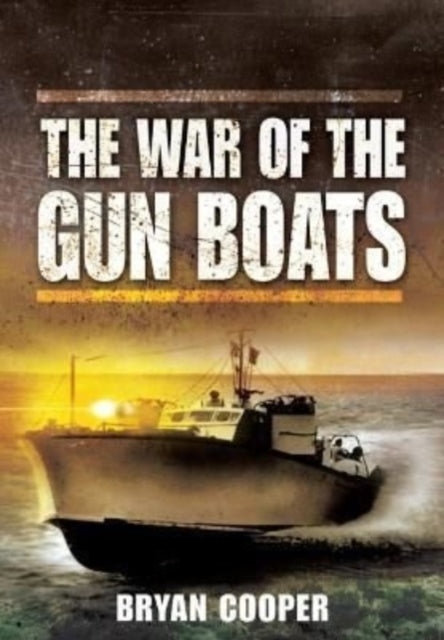
Bryan Cooper
The War of the Gunboats
The War of the Gunboats
YOU SAVE £4.74
- Condition: Brand new
- UK Delivery times: Usually arrives within 2 - 3 working days
- UK Shipping: Fee starts at £3.89. Subject to product weight & dimension
Bulk ordering. Want 15 or more copies? Get a personalised quote and bigger discounts. Learn more about bulk orders.
Couldn't load pickup availability
- More about The War of the Gunboats
Second World War saw the development of fast and highly manoeuvrable motor torpedo boats and gunboats, which acquired the buccaneering spirit of an earlier age. They fought in the narrow waters of the English Channel, the stormy North Sea, the Mediterranean, the Pacific, Hong Kong, and Singapore, and off Burma's Arakan coast. Bryan Cooper's book traces the history and development of these craft from their first limited use in the First World War to the fast motor boats designed in the 1930s for wealthy private clients and water speed record attempts.
Format: Paperback / softback
Length: 224 pages
Publication date: 30 July 2022
Publisher: Pen & Sword Books Ltd
The Second World War saw the emergence of a unique form of naval warfare, characterized by the deployment of small, fast, and highly maneuverable motor torpedo boats and gunboats. These vessels engaged in daring nightly raids against enemy coastal shipping, often engaging in fierce battles with much larger warships. With their daring exploits, they acquired the spirit of buccaneering of an earlier age.
The major naval powers, including Germany, Britain, the United States, and Japan, constructed large numbers of these small fighting boats. The Germans referred to them as Schnellboote (Fast Boats), while the British called them E-boats (E for Enemy). In the Royal Navy, they were known as MTBs and MGBs, while the American equivalent were PT boats (for Patrol Torpedo). These vessels fought in various theaters of war, including the English Channel, the North Sea, the Mediterranean, the Aegean, the Pacific, Hong Kong, Singapore, and the Arakan coast of Burma.
Bryan Cooper's book, "The Little Ships of the Second World War," provides a comprehensive history and development of these craft, tracing their origins from their limited use in the First World War to the fast motor boats designed in the 1930s for wealthy private clients and water speed record attempts. The book also delves into the battles that took place during the Second World War, when the importance of coastal waters came to be recognized. Cooper vividly captures the drama and individual nature of this form of combat, as well as the sea itself, which served as a common enemy to all who crewed these fragile craft.
The development of these small fighting boats was a response to the changing nature of warfare in the interwar period. With the rise of aircraft carriers and the increasing importance of naval power, the traditional battleship-based fleet became less effective. The need for smaller, faster, and more maneuverable vessels to engage in coastal warfare and support amphibious operations became apparent.
The design of these boats was influenced by a variety of factors, including the need for speed, maneuverability, and armament. Motor torpedo boats were equipped with powerful engines and torpedoes, allowing them to launch swift and devastating attacks on enemy ships. Gunboats, on the other hand, were designed to provide close-range support to larger ships and engage in shore-based combat.
One of the most notable features of these small fighting boats was their ability to operate in shallow waters, where larger ships could not venture. This allowed them to launch surprise attacks on enemy ports and coastal installations, as well as to support amphibious operations by transporting troops and supplies to the shore.
Despite their effectiveness, these small fighting boats were not without their limitations. They were vulnerable to enemy aircraft and artillery, and their crews were often exposed to extreme conditions and dangerous enemy fire. However, their speed and maneuverability allowed them to outmaneuver and outgun their opponents, and they played a crucial role in the success of many Allied campaigns.
In conclusion, the little ships of the Second World War, including motor torpedo boats and gunboats, developed a special kind of naval warfare that was characterized by daring raids, fierce battles, and the spirit of adventure. These vessels played a crucial role in the success of Allied campaigns, and their development and deployment marked a significant shift in naval strategy. Bryan Cooper's book provides a comprehensive and engaging account of the history and development of these craft, capturing the drama and individual nature of this form of combat.
Weight: 392g
Dimension: 156 x 234 x 21 (mm)
ISBN-13: 9781399019897
UK and International shipping information
UK and International shipping information
We deliver throughout the United Kingdom and to 128 countries and territories worldwide, including the United States, Australia, Canada, Germany, Spain and France.