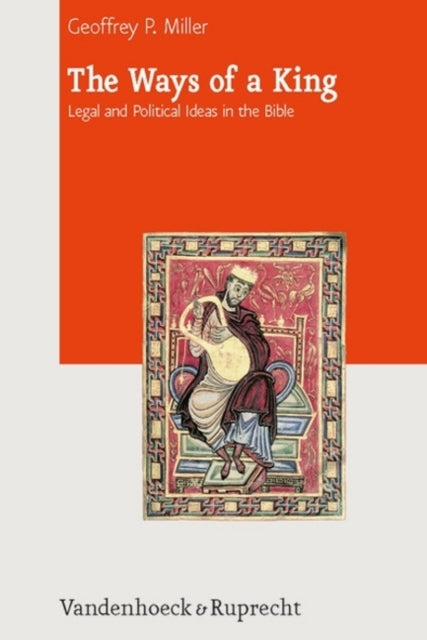
Geoffrey P. Miller
The Ways of a King: Legal and Political Ideas in the Bible
The Ways of a King: Legal and Political Ideas in the Bible
💎 Earn 722 Points (£7.22) on this item.
We can order this item for you. Delivery usually takes about 4 to 6 weeks.
This item is not held in our immediate stock. We will order it for you after checkout.
Estimated delivery: About 4 to 6 weeks
YOU SAVE £8.57
- Condition: Brand new
- UK Delivery times: Usually arrives within 2 - 3 working days
- UK Shipping: Fee starts at £2.39. Subject to product weight & dimension
Bulk ordering. Want 15 or more copies? Get a personalised quote and bigger discounts. Learn more about bulk orders.
Couldn't load pickup availability
- More about The Ways of a King: Legal and Political Ideas in the Bible
The Hebrew Bible presents a sophisticated argument for political obligation and limited monarchy as the best form of government. The Garden of Eden story identifies revelation, consent, utopia, natural law, ownership, power, patriarchy, and justice as bases for political obligation. The stories of life after the expulsion from Eden argue that government and law are essential for a decent life. The Exodus introduces the topic of political authority, arguing that nationhood strictly dominates over other forms of political organization. The Sinai narratives explore two important sources of authority: revelation and consent of the governed. The book of Judges examines two types of national government: military rule and confederacy. The books of Samuel and Kings consider theocracy and monarchy, and the bible endorses monarchy as the best available form of government provided that the king is constrained by appropriate checks and balances.
Format: Hardback
Length: 296 pages
Publication date: 01 January 2022
Publisher: Vandenhoeck & Ruprecht GmbH & Co KG
Geoffrey P. Miller contends that the narratives from Genesis to Second Kings present a sophisticated argument for political obligation and for limited monarchy as the best form of government. In this sense, the Hebrew Bible can be considered as one of the earliest political philosophies of the Western world. The Garden of Eden story identifies revelation, consent, utopia, natural law, ownership, power, patriarchy, and justice as bases for political obligation. The stories of life after the expulsion from Eden argue that government and law are essential for a decent life. The Genesis narratives recognize patriarchal authority but also identify limits based on kinship, higher authority, and power. The book of Exodus introduces the topic of political authority, arguing that nationhood strictly dominates over other forms of political organization. The Sinai narratives explore two important sources of authority: revelation and consent of the governed. The book of Joshua presents a theory of sovereignty conceived of as the exclusive and absolute control over territory. The book of Judges examines two types of national government: military rule and confederacy. It argues that military rule is inappropriate for peacetime conditions and that the confederate form is not strong enough to deliver the benefits of nationhood. The books of Samuel and Kings consider theocracy and monarchy. The bible endorses monarchy as the best available form of government provided that the king is constrained by appropriate checks and balances. Contrary to the view of some scholars, no text from Genesis to Second Kings disapproves of monarchy as a form of government.
Geoffrey P. Miller contends that the narratives from Genesis to Second Kings present a sophisticated argument for political obligation and for limited monarchy as the best form of government. In this sense, the Hebrew Bible can be considered as one of the earliest political philosophies of the Western world. The Garden of Eden story identifies revelation, consent, utopia, natural law, ownership, power, patriarchy, and justice as bases for political obligation. The stories of life after the expulsion from Eden argue that government and law are essential for a decent life. The Genesis narratives recognize patriarchal authority but also identify limits based on kinship, higher authority, and power. The book of Exodus introduces the topic of political authority, arguing that nationhood strictly dominates over other forms of political organization. The Sinai narratives explore two important sources of authority: revelation and consent of the governed. The book of Joshua presents a theory of sovereignty conceived of as the exclusive and absolute control over territory. The book of Judges examines two types of national government: military rule and confederacy. It argues that military rule is inappropriate for peacetime conditions and that the confederate form is not strong enough to deliver the benefits of nationhood. The books of Samuel and Kings consider theocracy and monarchy. The bible endorses monarchy as the best available form of government provided that the king is constrained by appropriate checks and balances. Contrary to the view of some scholars, no text from Genesis to Second Kings disapproves of monarchy as a form of government.
Weight: 616g
Dimension: 230 x 155 (mm)
ISBN-13: 9783525550342
This item can be found in:
UK and International shipping information
UK and International shipping information
UK Delivery and returns information:
- Delivery within 2 - 3 days when ordering in the UK.
- Shipping fee for UK customers from £2.39. Fully tracked shipping service available.
- Returns policy: Return within 30 days of receipt for full refund.
International deliveries:
Shulph Ink now ships to Australia, Belgium, Canada, France, Germany, Ireland, Italy, India, Luxembourg Saudi Arabia, Singapore, Spain, Netherlands, New Zealand, United Arab Emirates, United States of America.
- Delivery times: within 5 - 10 days for international orders.
- Shipping fee: charges vary for overseas orders. Only tracked services are available for most international orders. Some countries have untracked shipping options.
- Customs charges: If ordering to addresses outside the United Kingdom, you may or may not incur additional customs and duties fees during local delivery.