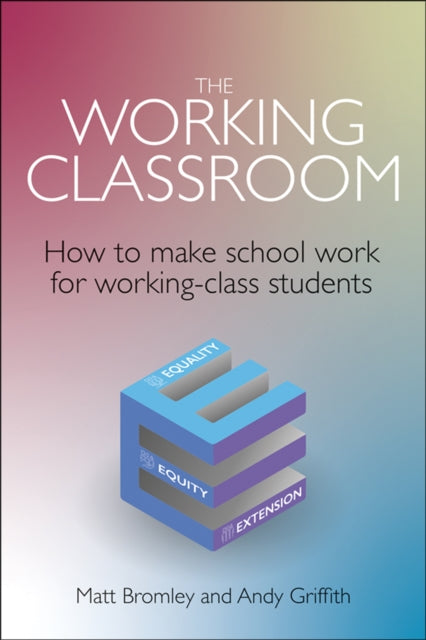
Matt Bromley,Andy Griffith
The Working Classroom: How to make school work for working-class students
The Working Classroom: How to make school work for working-class students
💎 Earn 67 Points (£0.67) on this item.
YOU SAVE £5.55
- Condition: Brand new
- UK Delivery times: Usually arrives within 2 - 3 working days
- UK Shipping: Fee starts at £2.39. Subject to product weight & dimension
Bulk ordering. Want 15 or more copies? Get a personalised quote and bigger discounts. Learn more about bulk orders.
Couldn't load pickup availability
- More about The Working Classroom: How to make school work for working-class students
The Working Classroom: How to make school work for working-class students provides practical strategies and tools to help secondary schools address the needs of working-class students, including building cultural capital and designing more engaging learning.
Format: Unspecified
Length: 220 pages
Publication date: 08 November 2023
Publisher: Crown House Publishing
The Working Classroom: How to make school work for working-class students is a comprehensive guide that provides practical strategies and tools to help secondary schools effectively address the unique needs of working-class students. Written by Matt Bromley and Andy Griffith, this book offers a wealth of insights and expertise on the topic, drawing on their extensive experience in education and research.
One of the key themes of The Working Classroom is the importance of building cultural capital among working-class students. Cultural capital refers to the knowledge, skills, and values that are essential for success in the academic and professional world. By developing cultural capital, students can gain the confidence and skills they need to succeed in their studies and future careers.
The book provides a range of practical strategies and tools for building cultural capital, including:
* Providing a supportive and inclusive learning environment: Schools can create a welcoming and supportive environment for working-class students by promoting diversity and inclusion, providing access to resources and support services, and addressing cultural biases and stereotypes.
* Focusing on academic skills development: Schools can focus on developing academic skills such as reading, writing, and critical thinking, which are essential for success in high school and beyond. This can be done through targeted interventions, such as tutoring and mentoring programs, as well as through curriculum design that emphasizes these skills.
* Engaging students through active learning: Active learning is a teaching approach that involves engaging students in hands-on, interactive activities that promote critical thinking and problem-solving skills. This can be done through project-based learning, inquiry-based learning, and other approaches that allow students to take ownership of their learning.
* Building relationships with students and families: Building strong relationships with students and their families is essential for supporting students' academic and social-emotional development. Schools can do this by providing regular communication and feedback, offering opportunities for family involvement in school activities, and addressing any barriers that may prevent students from accessing education.
In addition to building cultural capital, The Working Classroom also emphasizes the importance of designing more engaging learning experiences for working-class students. This can be done by incorporating real-world examples and applications into the curriculum, using technology to enhance learning, and providing opportunities for students to collaborate and work together.
Overall, The Working Classroom: How to make school work for working-class students is a valuable resource for educators and policymakers who are committed to improving the educational outcomes of working-class students. By implementing the strategies and tools outlined in this book, schools can create a more equitable and inclusive learning environment that supports the success of all students, regardless of their background or socioeconomic status.
Introduction:
The Working Classroom: How to make school work for working-class students is a comprehensive guide that provides practical strategies and tools to help secondary schools effectively address the unique needs of working-class students. Written by Matt Bromley and Andy Griffith, this book offers a wealth of insights and expertise on the topic, drawing on their extensive experience in education and research.
Building Cultural Capital:
One of the key themes of The Working Classroom is the importance of building cultural capital among working-class students. Cultural capital refers to the knowledge, skills, and values that are essential for success in the academic and professional world. By developing cultural capital, students can gain the confidence and skills they need to succeed in their studies and future careers.
The book provides a range of practical strategies and tools for building cultural capital, including:
- Providing a supportive and inclusive learning environment: Schools can create a welcoming and supportive environment for working-class students by promoting diversity and inclusion, providing access to resources and support services, and addressing cultural biases and stereotypes.
- Focusing on academic skills development: Schools can focus on developing academic skills such as reading, writing, and critical thinking, which are essential for success in high school and beyond. This can be done through targeted interventions, such as tutoring and mentoring programs, as well as through curriculum design that emphasizes these skills.
- Engaging students through active learning: Active learning is a teaching approach that involves engaging students in hands-on, interactive activities that promote critical thinking and problem-solving skills. This can be done through project-based learning, inquiry-based learning, and other approaches that allow students to take ownership of their learning.
- Building relationships with students and families: Building strong relationships with students and their families is essential for supporting students' academic and social-emotional development. Schools can do this by providing regular communication and feedback, offering opportunities for family involvement in school activities, and addressing any barriers that may prevent students from accessing education.
Weight: 552g
Dimension: 158 x 235 x 21 (mm)
ISBN-13: 9781785836985
UK and International shipping information
UK and International shipping information
UK Delivery and returns information:
- Delivery within 2 - 3 days when ordering in the UK.
- Shipping fee for UK customers from £2.39. Fully tracked shipping service available.
- Returns policy: Return within 30 days of receipt for full refund.
International deliveries:
Shulph Ink now ships to Australia, Belgium, Canada, France, Germany, Ireland, Italy, India, Luxembourg Saudi Arabia, Singapore, Spain, Netherlands, New Zealand, United Arab Emirates, United States of America.
- Delivery times: within 5 - 10 days for international orders.
- Shipping fee: charges vary for overseas orders. Only tracked services are available for most international orders. Some countries have untracked shipping options.
- Customs charges: If ordering to addresses outside the United Kingdom, you may or may not incur additional customs and duties fees during local delivery.