Daniel JosephMajchrowicz
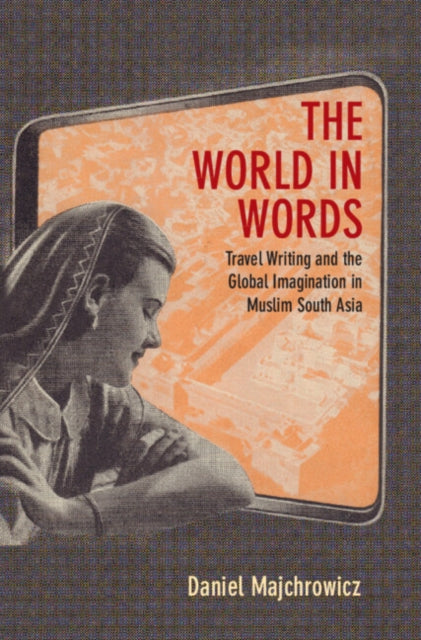
The World in Words: Travel Writing and the Global Imagination in Muslim South Asia
The World in Words: Travel Writing and the Global Imagination in Muslim South Asia
💎 Earn 420 Points (£4.20) on this item.
We can order this item for you. Delivery usually takes about 4 to 6 weeks.
This item is not held in our immediate stock. We will order it for you after checkout.
Estimated delivery: About 4 to 6 weeks
YOU SAVE £4.98
- Condition: Brand new
- UK Delivery times: Usually arrives within 2 - 3 working days
- UK Shipping: Fee starts at £2.39. Subject to product weight & dimension
Bulk ordering. Want 15 or more copies? Get a personalised quote and bigger discounts. Learn more about bulk orders.
Couldn't load pickup availability
- More about The World in Words: Travel Writing and the Global Imagination in Muslim South Asia
This book explores the social and literary history of Urdu travelogues from 1840 to 1990, highlighting the role of women writers in creating a global imagination. It traces the genre's development through six chronological chapters, examining how travel writers used it to interpret changing social and political realities.
Format: Hardback
Length: 300 pages
Publication date: 15 June 2023
Publisher: Cambridge University Press
This captivating book, based on extensive original archival research spanning over a decade, unveils the profound impact of Urdu travel writing on shaping a global imagination that resonated with the aspirations and ambitions of Indians and Pakistanis as they navigated the ever-evolving world of the nineteenth and twentieth centuries. Through an interdisciplinary lens, author Daniel Majchrowicz delves into the rich social and literary history of Urdu travelogues, spanning from 1840 to 1990, in six chronological chapters. Each chapter explores how travel writers employed this genre to impart meaning to the ever-shifting social and political landscapes of their colonial and postcolonial worlds.
One of the book's key strengths lies in its unwavering focus on the role of women writers in the creation of a global imagination in Urdu, particularly in the realm of travel writing on Asia and Africa. Majchrowicz sheds light on the ways in which these writers leveraged their experiences and perspectives to contribute to a broader narrative that transcended national boundaries.
The first chapter, titled "The Beginnings of Urdu Travel Writing," sets the stage for the subsequent chapters by tracing the early origins of Urdu travelogues. It explores the influence of British colonialism on the development of Urdu literature and the emergence of travel writing as a genre within it. The chapter also highlights the contributions of pioneering female writers such as Sarojini Naidu and Begum Rokeya, who played significant roles in shaping the trajectory of Urdu travel writing.
In the second chapter, "The Age of Empire and the Rise of Nationalism," Majchrowicz delves into the period when Urdu travel writing flourished under the influence of British imperialism. He examines how writers like Muhammad Iqbal and Syed Ahmad Khan used travelogues to promote national identity and pride and to showcase the cultural richness and diversity of their respective countries. The chapter also explores the impact of colonialism on the formation of Urdu literature and the challenges faced by writers in navigating the complex social and political terrain.
The third chapter, "The Decolonization Era and the Search for Identity," focuses on the post-independence era when Urdu travel writing underwent a significant transformation. The chapter explores how writers like Khwaja Ahmad Abbas and Muhammad Ali Jinnah used travelogues to articulate their vision for a new nation and to promote a sense of national belonging. It also examines the impact of decolonization on the social and cultural landscape of Pakistan and India and the ways in which travel writing contributed to the shaping of a shared cultural heritage.
The fourth chapter, "The Globalization Era and the Rise of Urdu Literature," explores the emergence of Urdu travel writing as a global genre in the late twentieth century. The chapter examines how writers like Abdulrazak Gurnah and Arundhati Roy used travelogues to transcend national boundaries and to engage with a broader international audience. It also explores the impact of globalization on the cultural exchange between Pakistan and India and the ways in which travel writing played a role in fostering cultural understanding and appreciation.
The fifth chapter, "The Role of Women Writers in Urdu Travel Writing," delves into the significant contributions of women writers to the development of Urdu travel writing. The chapter highlights the ways in which women writers used their experiences and perspectives to challenge traditional gender roles and to promote gender equality. It also examines the challenges faced by women writers in the male-dominated field of travel writing and the ways in which they overcame these obstacles to leave their mark on the genre.
The sixth and final chapter, "Conclusion," provides a summary of the key findings and implications of the book. It reflects on the enduring legacy of Urdu travel writing and its ability to capture the essence of the changing world around us. The chapter also explores the potential for further research in this field and the ways in which Urdu travel writing can continue to inspire and inform contemporary writers and readers.
In conclusion, this captivating book offers a profound exploration of the social and literary history of Urdu travel writing, shedding light on the ways in which it shaped a global imagination that reflected the aspirations and ambitions of Indians and Pakistanis as they negotiated their place in the ever-evolving world of the nineteenth and twentieth centuries. Through an interdisciplinary lens, author Daniel Majchrowicz has skillfully woven together a rich tapestry of historical, cultural, and literary insights, providing a valuable contribution to the field of Urdu studies and beyond. This book is a must-read for anyone interested in exploring the rich cultural heritage of South Asia and the ways in which it has been shaped by historical events and social movements.
Weight: 476g
Dimension: 161 x 238 x 22 (mm)
ISBN-13: 9781009340755
UK and International shipping information
UK and International shipping information
UK Delivery and returns information:
- Delivery within 2 - 3 days when ordering in the UK.
- Shipping fee for UK customers from £2.39. Fully tracked shipping service available.
- Returns policy: Return within 30 days of receipt for full refund.
International deliveries:
Shulph Ink now ships to Australia, Belgium, Canada, France, Germany, Ireland, Italy, India, Luxembourg Saudi Arabia, Singapore, Spain, Netherlands, New Zealand, United Arab Emirates, United States of America.
- Delivery times: within 5 - 10 days for international orders.
- Shipping fee: charges vary for overseas orders. Only tracked services are available for most international orders. Some countries have untracked shipping options.
- Customs charges: If ordering to addresses outside the United Kingdom, you may or may not incur additional customs and duties fees during local delivery.