The Rev. Professor PaulAvis
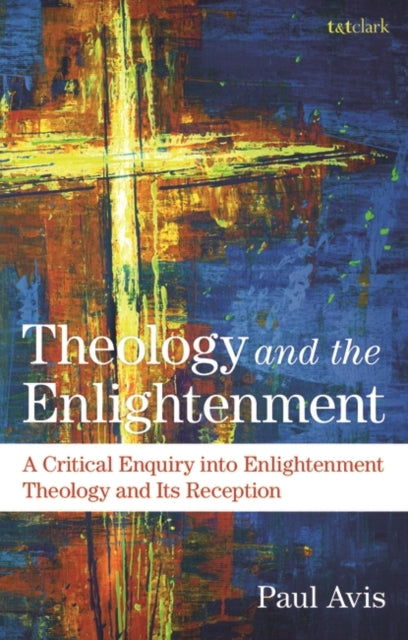
Theology and the Enlightenment: A Critical Enquiry into Enlightenment Theology and Its Reception
Theology and the Enlightenment: A Critical Enquiry into Enlightenment Theology and Its Reception
💎 Earn 123 Points (£1.23) on this item.
YOU SAVE £5.22
- Condition: Brand new
- UK Delivery times: Usually arrives within 2 - 3 working days
- UK Shipping: Fee starts at £2.39. Subject to product weight & dimension
Bulk ordering. Want 15 or more copies? Get a personalised quote and bigger discounts. Learn more about bulk orders.
Couldn't load pickup availability
- More about Theology and the Enlightenment: A Critical Enquiry into Enlightenment Theology and Its Reception
This book challenges the stereotype of 'Enlightenment rationalism' and argues that the Enlightenment was deeply affected by theological ideas, particularly in Anglican, Dissenting, Lutheran, and deistic traditions. It also highlights the biblical and ecclesial roots of the image of enlightenment and reclaims it for Christian faith.
Format: Paperback / softback
Length: 416 pages
Publication date: 15 December 2022
Publisher: Bloomsbury Publishing PLC
Challenging the prevalent notion that the late seventeenth and eighteenth centuries' Enlightenment was primarily secular, irreligious, and atheistic, this book offers a critical reevaluation of this standard interpretation. Building upon the insights of revisionist historians, this volume delves into the theological realm, encompassing Anglican, Dissenting, Lutheran, and deistic traditions, while also acknowledging the profound impact of the Enlightenment on Roman Catholic and Jewish theologies. It challenges the stereotype of 'Enlightenment rationalism' and, in the penultimate chapter, uncovers the biblical and ecclesial foundations of the Enlightenment image, reclaiming it for Christian faith.
The Enlightenment, a period of profound intellectual and cultural transformation that occurred in the late seventeenth and eighteenth centuries, is often portrayed as a secular, irreligious, and atheistic movement. This portrayal, however, is based on a narrow view of Enlightenment sources, which fails to recognize the significant theological dimensions of the movement.
Revisionist historians have challenged this conventional understanding by highlighting the role of religion in the Enlightenment. They argue that while the Enlightenment was certainly influenced by secular ideas and values, it was also deeply rooted in religious traditions, particularly Anglicanism, Dissenting Protestantism, Lutheranism, and deism.
This book takes the argument further into the theological domain, exploring the ways in which the Enlightenment influenced Anglican, Dissenting, Lutheran, and deistic theologies. It demonstrates that the Enlightenment was not an entirely secular movement but rather one that was shaped by religious beliefs and values.
One of the key themes of this book is the challenge to the stereotype of 'Enlightenment rationalism.' The Enlightenment is often portrayed as a movement that prioritized reason, science, and individualism over religious belief and tradition. However, the authors argue that this portrayal is incomplete and misleading.
While the Enlightenment did promote rationality and scientific inquiry, it also recognized the importance of religious faith and tradition. The Enlightenment thinkers, such as John Locke, Voltaire, and Jean-Jacques Rousseau, were deeply influenced by Christian theology and philosophy. They sought to reconcile these traditional sources of knowledge with the emerging scientific discoveries of their time.
In the penultimate chapter of the book, the authors explore the biblical and ecclesial roots of the image of enlightenment. They argue that the Enlightenment was not an entirely new or alien concept but rather a continuation of a long tradition of religious and intellectual inquiry. The Enlightenment thinkers, such as John Locke and Jean-Jacques Rousseau, drew upon the teachings of the Bible and the Church to justify their ideas about human rights, freedom, and democracy.
Furthermore, the authors argue that the Enlightenment image can be reclaimed for Christian faith. They suggest that the Christian tradition can provide a valuable framework for understanding the values and goals of the Enlightenment, particularly in terms of promoting human rights, freedom, and democracy.
In conclusion, this book offers a critical reevaluation of the conventional understanding of the Enlightenment as a secular, irreligious, and atheistic movement. It demonstrates that the Enlightenment was deeply rooted in religious traditions, particularly Anglicanism, Dissenting Protestantism, Lutheranism, and deism. By exploring the theological dimensions of the Enlightenment, the book challenges the stereotype of 'Enlightenment rationalism' and reclaims the Enlightenment image for Christian faith.
Weight: 524g
Dimension: 138 x 216 x 29 (mm)
ISBN-13: 9780567705648
UK and International shipping information
UK and International shipping information
UK Delivery and returns information:
- Delivery within 2 - 3 days when ordering in the UK.
- Shipping fee for UK customers from £2.39. Fully tracked shipping service available.
- Returns policy: Return within 30 days of receipt for full refund.
International deliveries:
Shulph Ink now ships to Australia, Belgium, Canada, France, Germany, Ireland, Italy, India, Luxembourg Saudi Arabia, Singapore, Spain, Netherlands, New Zealand, United Arab Emirates, United States of America.
- Delivery times: within 5 - 10 days for international orders.
- Shipping fee: charges vary for overseas orders. Only tracked services are available for most international orders. Some countries have untracked shipping options.
- Customs charges: If ordering to addresses outside the United Kingdom, you may or may not incur additional customs and duties fees during local delivery.