Shulph Ink
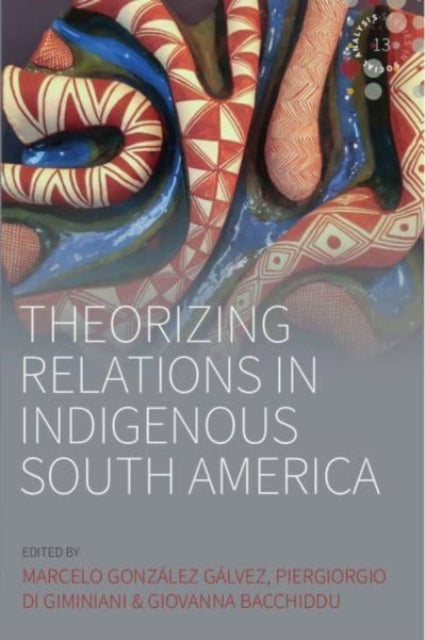
Theorizing Relations in Indigenous South America: Edited by Marcelo Gonzalez Galvez, Piergiogio Di Giminiani and Giovanna Bacchiddu
Theorizing Relations in Indigenous South America: Edited by Marcelo Gonzalez Galvez, Piergiogio Di Giminiani and Giovanna Bacchiddu
💎 Earn 446 Points (£4.46) on this item.
We can order this item for you. Delivery usually takes about 4 to 6 weeks.
This item is not held in our immediate stock. We will order it for you after checkout.
Estimated delivery: About 4 to 6 weeks
- Condition: Brand new
- UK Delivery times: Usually arrives within 2 - 3 working days
- UK Shipping: Fee starts at £2.39. Subject to product weight & dimension
Bulk ordering. Want 15 or more copies? Get a personalised quote and bigger discounts. Learn more about bulk orders.
Couldn't load pickup availability
- More about Theorizing Relations in Indigenous South America: Edited by Marcelo Gonzalez Galvez, Piergiogio Di Giminiani and Giovanna Bacchiddu
Anthropological inquiries mainly focus on relations, which have been explored through local ontological theories and comparative ethnographic research. This volume demonstrates the importance of ethnographic diversity and the ability of comparative ethnography to illustrate complex questions surrounding relations in the context of modern coloniality.
Format: Hardback
Length: 184 pages
Publication date: 13 May 2022
Publisher: Berghahn Books
Anthropological inquiries have always centered around relationships, whether they were invented, discovered, implicit, or explicitly addressed. Initially, these relationships were perceived as self-evident connections between distinct social units during ethnographic fieldwork. However, as time passed, local ontological theories began to shed light on these relationships, broadening our understanding of them. This comprehensive collection examines how ethnographies of indigenous South America have played a significant role in shaping this analytical shift. It highlights the enduring importance of ethnographic diversity and demonstrates how comparative ethnographic research can provide valuable insights into complex questions related to relations in the context of modern coloniality.
In the early days of anthropology, researchers relied on ethnographic fieldwork to observe and understand the relationships between different social units. These relationships were often taken for granted as self-evident connections between discrete groups. However, as anthropologists delved deeper into their research, they began to question these assumptions and explore alternative perspectives.
One of the key developments that led to this shift was the introduction of local ontological theories. These theories sought to understand the complex web of relationships that existed within a particular community or society. They recognized that relationships were not always linear or hierarchical, but rather were shaped by a variety of factors, including cultural practices, social structures, and individual experiences.
Ethnographies of indigenous South America played a significant role in inspiring this analytic shift. These studies provided a wealth of empirical evidence that challenged traditional notions of relationships and revealed the rich diversity of social structures and practices across different cultures. For example, many ethnographies have highlighted the importance of kinship and descent in shaping social relationships, as well as the role of gender, power, and religion in mediating these relationships.
Furthermore, comparative ethnographic research has also played a crucial role in illustrating complex questions surrounding relations in the context of modern coloniality. By comparing different communities or societies that have been affected by colonialism, researchers can gain a deeper understanding of the ways in which colonialism has disrupted and transformed social relationships. For example, some studies have shown how colonialism has created new forms of inequality and discrimination, while others have demonstrated how colonialism has facilitated the development of new forms of social solidarity and resistance.
In conclusion, relationships have remained the main focus of most anthropological inquiries, and this collection demonstrates the continued importance of ethnographic diversity in shaping our understanding of these relationships. Whether invented, discovered, implicit, or directly addressed, relationships are complex and multifaceted, and they require a range of analytical approaches to be fully understood. Ethnographies of indigenous South America have played a significant role in inspiring this analytic shift, and comparative ethnographic research can provide valuable insights into the complex questions surrounding relations in the context of modern coloniality.
Dimension: 229 x 152 (mm)
ISBN-13: 9781800733299
This item can be found in:
UK and International shipping information
UK and International shipping information
UK Delivery and returns information:
- Delivery within 2 - 3 days when ordering in the UK.
- Shipping fee for UK customers from £2.39. Fully tracked shipping service available.
- Returns policy: Return within 30 days of receipt for full refund.
International deliveries:
Shulph Ink now ships to Australia, Belgium, Canada, France, Germany, Ireland, Italy, India, Luxembourg Saudi Arabia, Singapore, Spain, Netherlands, New Zealand, United Arab Emirates, United States of America.
- Delivery times: within 5 - 10 days for international orders.
- Shipping fee: charges vary for overseas orders. Only tracked services are available for most international orders. Some countries have untracked shipping options.
- Customs charges: If ordering to addresses outside the United Kingdom, you may or may not incur additional customs and duties fees during local delivery.