Shulph Ink
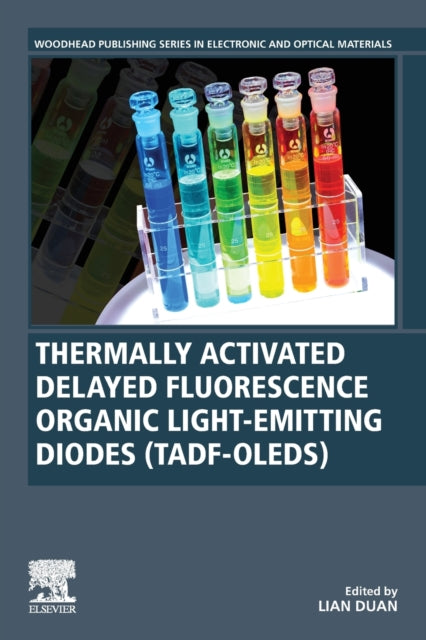
Thermally Activated Delayed Fluorescence Organic Light-Emitting Diodes (TADF-OLEDs)
Thermally Activated Delayed Fluorescence Organic Light-Emitting Diodes (TADF-OLEDs)
💎 Earn 1007 Points (£10.07) on this item.
- Condition: Brand new
- UK Delivery times: Usually arrives within 2 - 3 working days
- UK Shipping: Fee starts at £2.39. Subject to product weight & dimension
Bulk ordering. Want 15 or more copies? Get a personalised quote and bigger discounts. Learn more about bulk orders.
Couldn't load pickup availability
- More about Thermally Activated Delayed Fluorescence Organic Light-Emitting Diodes (TADF-OLEDs)
Thermally Activated Delayed Fluorescence Organic Light-Emitting Diodes (TADF-OLEDs) are a type of OLED that emits light when an electric current is passed through them. They have a long history and are used in a variety of applications, including displays, lasers, and biosensors.
Format: Paperback / softback
Length: 488 pages
Publication date: 19 October 2021
Publisher: Elsevier Science Publishing Co Inc
Thermally Activated Delayed Fluorescence Organic Light-Emitting Diodes (TADF-OLEDs) are a breakthrough technology in the field of display and lighting, offering a wide range of benefits and applications. In this comprehensive article, we will delve into the history, fundamental concepts, and various aspects of TADF-OLEDs.
TADF, which stands for Thermally Activated Delayed Fluorescence, was first discovered in the late 1990s by a team of researchers at the University of Michigan. The technology was developed as a solution to the challenges faced by traditional OLEDs, such as poor color reproduction and limited lifespan.
One of the key features of TADF is its ability to emit light through a delayed fluorescence process. This process involves the activation of a fluorophore by thermal energy, which leads to the emission of light over a longer period of time compared to traditional OLEDs. This delay allows TADF-OLEDs to achieve high color saturation and brightness, making them ideal for a wide range of applications, including smartphones, televisions, and wearable devices.
TADF-OLEDs come in different colors, including blue, green, red, and near-infrared (NIR). These colors are achieved by using different fluorophores, which absorb different wavelengths of light and emit light at different wavelengths. Blue TADF-OLEDs, for example, use a fluorophore called TTF (tetrathiafulvalene), which absorbs blue light and emits green light. Green TADF-OLEDs use a fluorophore called ETL (ethylene-tetracene), which absorbs green light and emits red light. Red TADF-OLEDs use a fluorophore called PYP (pyridyl-yldithiophosphate), which absorbs red light and emits NIR light.
In addition to color, TADF-OLEDs also offer several other advantages over traditional OLEDs. One of the most significant advantages is their improved lifespan. TADF-OLEDs can last for many years, even in high-brightness and high-temperature environments, making them ideal for applications that require long-lasting displays.
Another advantage of TADF-OLEDs is their high efficiency. TADF-OLEDs can convert more of the energy they receive into light, making them more energy-efficient than traditional OLEDs. This efficiency is particularly important in applications that require a high level of brightness, such as smartphones and tablets.
TADF-OLEDs also have several applications in other fields, such as organic lasers and biosensing. Organic lasers are devices that use organic compounds as their active material, and TADF-OLEDs can be used as the emitter in these devices. TADF-OLEDs can emit light at different wavelengths, making them suitable for a wide range of applications, including medical imaging, optical communication, and sensing.
In conclusion, TADF-OLEDs are a breakthrough technology in the field of display and lighting, offering a wide range of benefits and applications. Their ability to emit light through a delayed fluorescence process allows them to achieve high color saturation and brightness, making them ideal for a wide range of applications, including smartphones, televisions, and wearable devices. TADF-OLEDs also have improved lifespan, high efficiency, and several applications in other fields, such as organic lasers and biosensing. As the technology continues to evolve, we can expect to see even more exciting developments in the field of TADF-OLEDs.
Weight: 1000g
Dimension: 229 x 152 (mm)
ISBN-13: 9780128198100
This item can be found in:
UK and International shipping information
UK and International shipping information
UK Delivery and returns information:
- Delivery within 2 - 3 days when ordering in the UK.
- Shipping fee for UK customers from £2.39. Fully tracked shipping service available.
- Returns policy: Return within 30 days of receipt for full refund.
International deliveries:
Shulph Ink now ships to Australia, Belgium, Canada, France, Germany, Ireland, Italy, India, Luxembourg Saudi Arabia, Singapore, Spain, Netherlands, New Zealand, United Arab Emirates, United States of America.
- Delivery times: within 5 - 10 days for international orders.
- Shipping fee: charges vary for overseas orders. Only tracked services are available for most international orders. Some countries have untracked shipping options.
- Customs charges: If ordering to addresses outside the United Kingdom, you may or may not incur additional customs and duties fees during local delivery.