Michel JacquesGagne
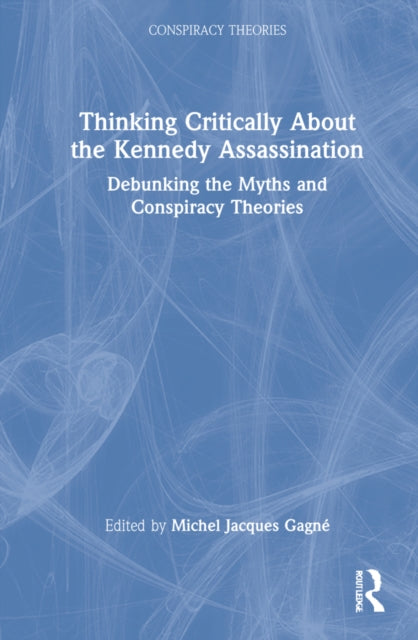
Thinking Critically About the Kennedy Assassination: Debunking the Myths and Conspiracy Theories
Thinking Critically About the Kennedy Assassination: Debunking the Myths and Conspiracy Theories
💎 Earn 811 Points (£8.11) on this item.
We can order this item for you. Delivery usually takes about 4 to 6 weeks.
This item is not held in our immediate stock. We will order it for you after checkout.
Estimated delivery: About 4 to 6 weeks
YOU SAVE £9.63
- Condition: Brand new
- UK Delivery times: Usually arrives within 2 - 3 working days
- UK Shipping: Fee starts at £2.39. Subject to product weight & dimension
Bulk ordering. Want 15 or more copies? Get a personalised quote and bigger discounts. Learn more about bulk orders.
Couldn't load pickup availability
- More about Thinking Critically About the Kennedy Assassination: Debunking the Myths and Conspiracy Theories
A book that examines the assassination of John F. Kennedy and the many myths and conspiracy theories surrounding it, using critical thinking, historical research, and philosophical inquiry to debunk these theories. It also explores the causes and consequences of paranoid thinking in contemporary public discourse.
Format: Hardback
Length: 482 pages
Publication date: 28 March 2022
Publisher: Taylor & Francis Ltd
Here is the rephrased text:
"Investigating JFK's Assassination: A Critical Examination
The assassination of John F. Kennedy, one of the most significant events in American history, has been the subject of numerous myths and conspiracy theories over the years. In this essay, we will explore the evidence behind these claims and debunk the many myths and conspiracy theories surrounding JFK's shocking and untimely death.
Critical thinking, historical research, and philosophical inquiry are essential tools in our quest to understand the truth about JFK's assassination. We will examine the available evidence, including eyewitness accounts, medical records, and forensic analysis, to determine what really happened on that fateful day in Dallas, Texas.
One of the most persistent myths surrounding JFK's assassination is the idea that Lee Harvey Oswald acted alone. However, a comprehensive examination of the evidence suggests that this is not the case. There were multiple witnesses to the assassination, including Secret Service agents, bystanders, and even members of the Kennedy family. These witnesses provide conflicting accounts of what they saw and heard, but their collective testimony suggests that Oswald was not the sole actor in the assassination.
Another myth is that the Warren Commission, the government agency that investigated the assassination, was biased or incompetent. However, the Commission's report, released in 1964, was a thorough and objective investigation that concluded that Oswald acted alone. The report was based on a vast amount of evidence, including eyewitness accounts, medical records, and forensic analysis.
Despite these findings, there have been ongoing attempts to discredit the Warren Commission's report and promote conspiracy theories. These theories often rely on paranoid reasoning and modern mythmaking techniques. For example, some conspiracy theorists argue that the CIA or other government agencies were involved in the assassination, or that there was a cover-up of the true story.
Paranoid thinking is a dangerous phenomenon that can have serious consequences for society. When individuals or groups believe in conspiracy theories, they can become distrustful of the government, the media, and even their own friends and family. This can lead to a loss of faith in institutions and a breakdown of social cohesion.
The consequences of paranoid thinking in contemporary public discourse are particularly concerning. In recent years, we have seen a rise in political polarization and a decline in trust in institutions. This has been fueled by the spread of misinformation and the rise of social media, which have allowed conspiracy theories to spread quickly and widely.
To combat the spread of paranoid thinking, it is essential to promote critical thinking and education. This means teaching individuals to evaluate evidence carefully, to be skeptical of claims that seem too good to be true, and to rely on credible sources of information. It also means promoting media literacy and fact-checking, so that individuals can distinguish between credible news sources and misinformation.
In conclusion, the assassination of John F. Kennedy remains one of the most significant events in American history. The myths and conspiracy theories surrounding his death have been the subject of much debate and speculation. However, a comprehensive examination of the evidence suggests that Lee Harvey Oswald acted alone, and that the Warren Commission's report was a thorough and objective investigation.
Paranoid thinking is a dangerous phenomenon that can have serious consequences for society. It is essential to promote critical thinking and education to combat the spread of conspiracy theories and to promote trust in institutions and social cohesion. By doing so, we can ensure that the legacy of JFK's assassination is preserved and that future generations can learn from his example."
Investigating JFK's Assassination: A Critical Examination
The assassination of John F. Kennedy, one of the most significant events in American history, has been the subject of numerous myths and conspiracy theories over the years. In this essay, we will explore the evidence behind these claims and debunk the many myths and conspiracy theories surrounding JFK's shocking and untimely death.
Critical thinking, historical research, and philosophical inquiry are essential tools in our quest to understand the truth about JFK's assassination. We will examine the available evidence, including eyewitness accounts, medical records, and forensic analysis, to determine what really happened on that fateful day in Dallas, Texas.
One of the most persistent myths surrounding JFK's assassination is the idea that Lee Harvey Oswald acted alone. However, a comprehensive examination of the evidence suggests that this is not the case. There were multiple witnesses to the assassination, including Secret Service agents, bystanders, and even members of the Kennedy family. These witnesses provide conflicting accounts of what they saw and heard, but their collective testimony suggests that Oswald was not the sole actor in the assassination.
Another myth is that the Warren Commission, the government agency that investigated the assassination, was biased or incompetent. However, the Commission's report, released in 1964, was a thorough and objective investigation that concluded that Oswald acted alone. The report was based on a vast amount of evidence, including eyewitness accounts, medical records, and forensic analysis.
Despite these findings, there have been ongoing attempts to discredit the Warren Commission's report and promote conspiracy theories. These theories often rely on paranoid reasoning and modern mythmaking techniques. For example, some conspiracy theorists argue that the CIA or other government agencies were involved in the assassination, or that there was a cover-up of the true story.
Paranoid thinking is a dangerous phenomenon that can have serious consequences for society. When individuals or groups believe in conspiracy theories, they can become distrustful of the government, the media, and even their own friends and family. This can lead to a loss of faith in institutions and a breakdown of social cohesion.
The consequences of paranoid thinking in contemporary public discourse are particularly concerning. In recent years, we have seen a rise in political polarization and a decline in trust in institutions. This has been fueled by the spread of misinformation and the rise of social media, which have allowed conspiracy theories to spread quickly and widely.
To combat the spread of paranoid thinking, it is essential to promote critical thinking and education. This means teaching individuals to evaluate evidence carefully, to be skeptical of claims that seem too good to be true, and to rely on credible sources of information. It also means promoting media literacy and fact-checking, so that individuals can distinguish between credible news sources and misinformation.
In conclusion, the assassination of John F. Kennedy remains one of the most significant events in American history. The myths and conspiracy theories surrounding his death have been the subject of much debate and speculation. However, a comprehensive examination of the evidence suggests that Lee Harvey Oswald acted alone, and that the Warren Commission's report was a thorough and objective investigation.
Paranoid thinking is a dangerous phenomenon that can have serious consequences for society. It is essential to promote critical thinking and education to combat the spread of conspiracy theories and to promote trust in institutions and social cohesion. By doing so, we can ensure that the legacy of JFK's assassination is preserved and that future generations can learn from his example.
Dimension: 234 x 156 (mm)
ISBN-13: 9781032119786
UK and International shipping information
UK and International shipping information
UK Delivery and returns information:
- Delivery within 2 - 3 days when ordering in the UK.
- Shipping fee for UK customers from £2.39. Fully tracked shipping service available.
- Returns policy: Return within 30 days of receipt for full refund.
International deliveries:
Shulph Ink now ships to Australia, Belgium, Canada, France, Germany, Ireland, Italy, India, Luxembourg Saudi Arabia, Singapore, Spain, Netherlands, New Zealand, United Arab Emirates, United States of America.
- Delivery times: within 5 - 10 days for international orders.
- Shipping fee: charges vary for overseas orders. Only tracked services are available for most international orders. Some countries have untracked shipping options.
- Customs charges: If ordering to addresses outside the United Kingdom, you may or may not incur additional customs and duties fees during local delivery.