RobertColls
This Sporting Life: Sport and Liberty in England, 1760-1960
This Sporting Life: Sport and Liberty in England, 1760-1960
💎 Earn 113 Points (£1.13) on this item.
YOU SAVE £1.35
- Condition: Brand new
- UK Delivery times: Usually arrives within 2 - 3 working days
- UK Shipping: Fee starts at £2.39. Subject to product weight & dimension
Bulk ordering. Want 15 or more copies? Get a personalised quote and bigger discounts. Learn more about bulk orders.
Couldn't load pickup availability
- More about This Sporting Life: Sport and Liberty in England, 1760-1960
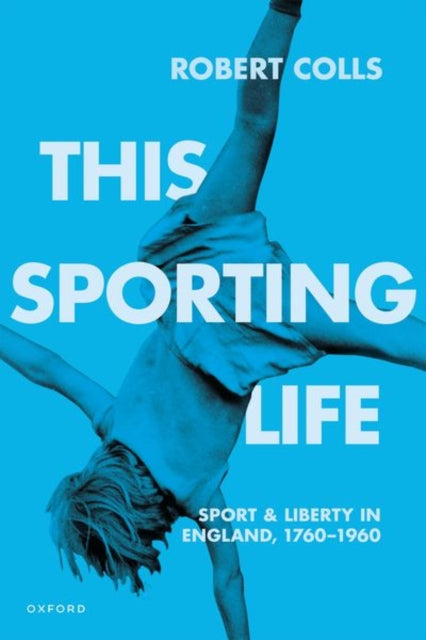
In This Sporting Life, Robert Colls explores how sport has been an integral part of British culture, shaping it alongside gender, politics, education, class, and religion. It reclaims the lived experiences of people from all walks of life to tell England's history through its sporting cultures, from horseback pursuits to street games.
Format: Paperback / softback
Length: 416 pages
Publication date: 26 January 2023
Publisher: Oxford University Press
In his book "In This Sporting Life," Robert Colls explores the profound role of sport in shaping England's civil culture. He reclaims the lived experiences of individuals from diverse backgrounds to narrate the history of England through its vibrant sporting traditions. From the aristocratic pursuits of horseback riding to the street games played in working-class neighborhoods with just a ball, Colls delves into the diverse tapestry of sports that have played a crucial role in defining British culture. Through vivid descriptions and immersive storytelling, he transports readers to matches, hunts, and fights, capturing the sounds, sights, and emotions of both humans and animals. Colls demonstrates that sport has held an equal significance in shaping British culture alongside factors such as gender, politics, education, class, and religion. By examining the experiences of people at play, he sheds light on the emotional connections and social dynamics that have shaped the nation's sporting heritage. "In This Sporting Life" is a captivating exploration of the intersection of sport, society, and culture, offering a fresh perspective on the role of sports in shaping the identity of England.
Why did killing a fox mean liberty?
In the 17th and 18th centuries, the killing of a fox was considered a symbol of liberty in certain English parishes. This tradition originated from a belief that foxes were a nuisance to farmers and livestock, and by killing them, individuals could restore order and protect their livelihoods. The act of killing a fox was often accompanied by a celebratory feast or procession, where the community would gather to celebrate the victory over the pest. However, it is important to note that this tradition was not universal and was primarily practiced in certain regions of England.
Parish revels had a significant role in the Peterloo Massacre of 1819. The massacre occurred in Manchester, England, during a peaceful protest against government-imposed taxes. The protest was organized by the Manchester Working Men's Association, which had been advocating for workers' rights and social justice. However, the event was violently suppressed by the military and police, resulting in the deaths of around 11 people and the injury of hundreds more. Parish revels were often held in the weeks leading up to the massacre, and they were a time for communities to come together and celebrate their local heritage and culture. These events often included parades, music, dancing, and feasting, and they were seen as a way to promote unity and solidarity among the people. However, in the context of the Peterloo Massacre, the revels were used as a cover for the military and police to gather intelligence on the protestors and prepare for the violent suppression of the event.
Animal cruelty had a profound impact on the English constitution in the 18th and 19th centuries. During this time, there was a growing awareness of the suffering of animals subjected to factory farming, animal testing, and other forms of exploitation. Activists and philosophers began to argue that the treatment of animals was a violation of their fundamental rights and that it was essential to protect them from harm. This led to the passage of various laws and regulations aimed at preventing animal cruelty, such as the Cruelty to Animals Act of 1876 and the Animals Act of 1971. These laws not only protected animals from physical abuse but also established the legal framework for the treatment of animals in research, entertainment, and agriculture.
The Factory Acts of the 19th century had a significant impact on modern football. The Acts were designed to improve working conditions and protect the health and safety of workers in industrial factories. However, they also had a significant impact on the sport of football, as many of the workers who played the game were employed in factories. The introduction of the Factory Acts led to the establishment of a minimum wage for workers, which helped to improve the living standards of many football players. It also led to the introduction of regulations around working hours and safety standards, which helped to reduce the risk of injury and illness among football players. In addition, the Factory Acts helped to establish a sense of collective responsibility among football players and their employers, as they were all working towards the same goal of improving working conditions and promoting the health and safety of workers.
In conclusion, the killing of a fox, parish revels, animal cruelty, and the Factory Acts all played significant roles in shaping the English constitution and culture. These traditions and events reflected the values and beliefs of the time, and they continue to have an impact on our society today. While some of these traditions may seem outdated or barbaric, they serve as a reminder of the complex and evolving nature of our cultural and legal heritage.
Weight: 654g
Dimension: 235 x 158 x 26 (mm)
ISBN-13: 9780192870223
This item can be found in:
UK and International shipping information
UK and International shipping information
UK Delivery and returns information:
- Delivery within 2 - 3 days when ordering in the UK.
- Shipping fee for UK customers from £2.39. Fully tracked shipping service available.
- Returns policy: Return within 30 days of receipt for full refund.
International deliveries:
Shulph Ink now ships to Australia, Belgium, Canada, France, Germany, Ireland, Italy, India, Luxembourg Saudi Arabia, Singapore, Spain, Netherlands, New Zealand, United Arab Emirates, United States of America.
- Delivery times: within 5 - 10 days for international orders.
- Shipping fee: charges vary for overseas orders. Only tracked services are available for most international orders. Some countries have untracked shipping options.
- Customs charges: If ordering to addresses outside the United Kingdom, you may or may not incur additional customs and duties fees during local delivery.