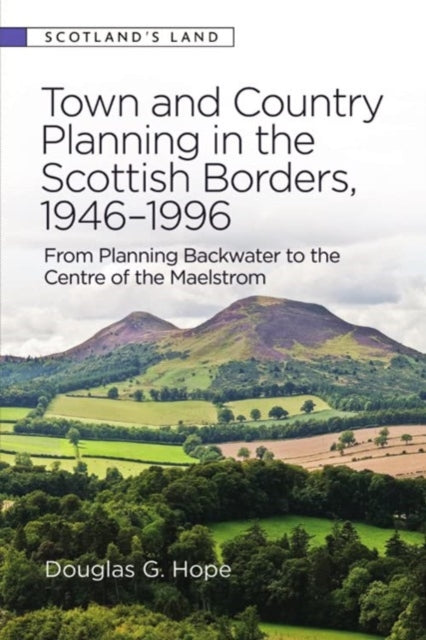
Douglas Hope
Town and Country Planning in the Scottish Borders, 1946-1996: From Planning Backwater to the Centre of the Maelstrom
Town and Country Planning in the Scottish Borders, 1946-1996: From Planning Backwater to the Centre of the Maelstrom
💎 Earn 364 Points (£3.64) on this item.
We can order this item for you. Delivery usually takes about 4 to 6 weeks.
This item is not held in our immediate stock. We will order it for you after checkout.
Estimated delivery: About 4 to 6 weeks
YOU SAVE £22.13
- Condition: Brand new
- UK Delivery times: Usually arrives within 2 - 3 working days
- UK Shipping: Fee starts at £2.39. Subject to product weight & dimension
Bulk ordering. Want 15 or more copies? Get a personalised quote and bigger discounts. Learn more about bulk orders.
Couldn't load pickup availability
- More about Town and Country Planning in the Scottish Borders, 1946-1996: From Planning Backwater to the Centre of the Maelstrom
The Scottish Borders is a historic area with a rich history of woven cloth, knitwear, and agriculture, but it also suffered from rural de-population in the twentieth century. This book provides a detailed account of town and country planning in the region from the 1940s to the re-organisation of local government in 1996, showing how it became a beacon for rural regeneration. It is essential reading for anyone interested in the history of town and country planning in Scotland and for those who love the Scottish Borders.
Format: Hardback
Length: 328 pages
Publication date: 31 August 2023
Publisher: Edinburgh University Press
The Scottish Borders, comprising the historic counties of Peeblesshire, Selkirkshire, Roxburghshire, and Berwickshire, is a region renowned for its woven cloth (tweed), knitwear, and agriculture. However, it also experienced rural de-population during the first half of the twentieth century. Against the backdrop of social, economic, and political change in the twentieth century, the book offers a comprehensive account of the continuity and change in town and country planning in the Scottish Borders from the 1940s to the re-organisation of local government in 1996. It highlights how town and country planning evolved from a marginal activity in Borders local government to a prominent force in rural regeneration and a key component of rural development policy. This book is a must-read for anyone interested in the history of town and country planning in Scotland and for those who cherish the Scottish Borders.
The Scottish Borders: A Region of Tradition and Change
The Scottish Borders, comprising the historic counties of Peeblesshire, Selkirkshire, Roxburghshire, and Berwickshire, is a region with a rich history and diverse landscape. Traditionally known for its woven cloth (tweed), knitwear, and agriculture, the Scottish Borders has also faced challenges, including rural de-population during the first half of the twentieth century. Against the backdrop of social, economic, and political change in the twentieth century, the book provides a detailed account of continuity and change in the practice of town and country planning in the Scottish Borders from the 1940s to the re-organisation of local government in 1996. It shows how town and country planning emerged from being a fringe activity in Borders local government to become a beacon for rural regeneration at the forefront of rural development policy.
The Evolution of Town and Country Planning in the Scottish Borders
The Scottish Borders has a long history of town and country planning, dating back to the early twentieth century. However, it was not until the 1940s that town and country planning became a significant focus of local government in the region. The book highlights the key factors that contributed to this development, including the impact of the Second World War, the need for post-war reconstruction, and the growing recognition of the importance of planning for sustainable development. During the 1940s and 1950s, town and country planning in the Scottish Borders focused on the development of new towns and villages, the improvement of existing infrastructure, and the protection of the region's natural and cultural heritage. The book also explores the challenges that faced town and country planners during this period, including the resistance of local communities to change and the limited resources available for planning. Despite these challenges, town and country planning in the Scottish Borders continued to grow and evolve, and by the 1960s, it had become a key component of rural development policy. The book highlights the role of the Scottish Development Agency (SDA) in promoting town and country planning in the region, and the impact of its policies on the development of the Scottish Borders. The SDA's policies focused on promoting economic growth, improving infrastructure, and protecting the region's natural and cultural heritage. The book also explores the impact of the re-organisation of local government in 1996 on town and country planning in the Scottish Borders. The re-organisation led to the creation of new local government bodies, including the Scottish Borders Council, and the introduction of new planning policies and regulations. The book highlights the challenges that faced town and country planners during this period, including the need to adapt to new planning policies and regulations and the limited resources available for planning. Despite these challenges, town and country planning in the Scottish Borders continued to grow and evolve, and by the 2000s, it had become a key component of rural development policy. The book highlights the role of the Scottish Government in promoting town and country planning in the region, and the impact of its policies on the development of the Scottish Borders. The Scottish Government's policies focused on promoting economic growth, improving infrastructure, and protecting the region's natural and cultural heritage. The book also explores the impact of the Scottish Independence Referendum on town and country planning in the Scottish Borders. The referendum resulted in the creation of a new Scottish Parliament, and the introduction of new planning policies and regulations. The book highlights the challenges that faced town and country planners during this period, including the need to adapt to new planning policies and regulations and the limited resources available for planning. Despite these challenges, town and country planning in the Scottish Borders continued to grow and evolve, and by the present day, it is a vital component of rural development policy. The book provides a detailed account of the continuity and change in town and country planning in the Scottish Borders from the 1940s to the re-organisation of local government in 1996. It highlights the key factors that contributed to this development, including the impact of the Second World War, the need for post-war reconstruction, and the growing recognition of the importance of planning for sustainable development. The book also explores the challenges that faced town and country planners during this period, and the impact of the re-organisation of local government in 1996 on town and country planning in the Scottish Borders. The book is a must-read for anyone interested in the history of town and country planning in Scotland and for those who cherish the Scottish Borders.
Dimension: 234 x 156 (mm)
ISBN-13: 9781399503334
This item can be found in:
UK and International shipping information
UK and International shipping information
UK Delivery and returns information:
- Delivery within 2 - 3 days when ordering in the UK.
- Shipping fee for UK customers from £2.39. Fully tracked shipping service available.
- Returns policy: Return within 30 days of receipt for full refund.
International deliveries:
Shulph Ink now ships to Australia, Belgium, Canada, France, Germany, Ireland, Italy, India, Luxembourg Saudi Arabia, Singapore, Spain, Netherlands, New Zealand, United Arab Emirates, United States of America.
- Delivery times: within 5 - 10 days for international orders.
- Shipping fee: charges vary for overseas orders. Only tracked services are available for most international orders. Some countries have untracked shipping options.
- Customs charges: If ordering to addresses outside the United Kingdom, you may or may not incur additional customs and duties fees during local delivery.