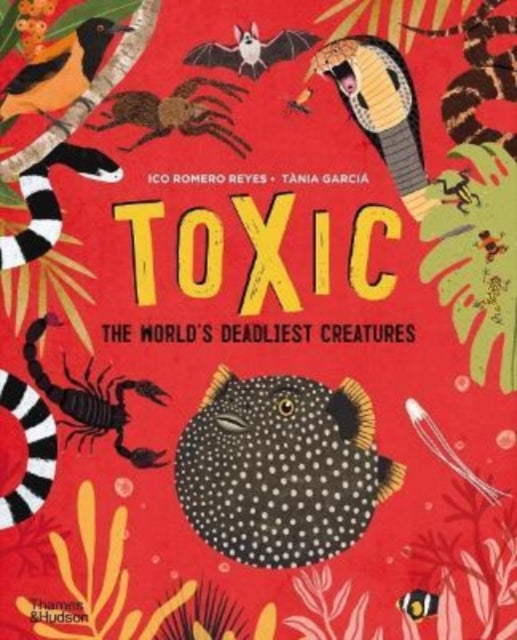
Ico Romero Reyes,Tania Garcia
Toxic: The World's Deadliest Creatures
Toxic: The World's Deadliest Creatures
💎 Earn 45 Points (£0.45) on this item.
YOU SAVE £3.80
- Condition: Brand new
- UK Delivery times: Usually arrives within 2 - 3 working days
- UK Shipping: Fee starts at £2.39. Subject to product weight & dimension
Bulk ordering. Want 15 or more copies? Get a personalised quote and bigger discounts. Learn more about bulk orders.
Couldn't load pickup availability
- More about Toxic: The World's Deadliest Creatures
Toxic animals have evolved sophisticated strategies to deliver venom and poison, including big-eyed fuzzy critters, tiny flashy octopuses, sinister spiders, snakes, and scorpions.
Format: Hardback
Length: 48 pages
Publication date: 15 September 2022
Publisher: Thames & Hudson Ltd
Creatures from all around the animal kingdom wield a mysterious weapon that is key to their survival: poison! These sophisticated concoctions are designed with precision to defy predators or subdue prey. Big-eyed fuzzy critters with a deadly bite; tiny flashy octopuses that can kill in minutes; sinister spiders, snakes and scorpions...
Venomous animals have evolved a variety of defense mechanisms to protect themselves from predators. Some animals, such as snakes and spiders, produce venom that is injected into their prey through their fangs or claws. This venom can cause paralysis, heart failure, or even death. Other animals, such as bees and wasps, produce venom that is used to defend their nests or stings their prey.
Some animals, such as scorpions and rattlesnakes, have venom that is stored in their tails or glands. When these animals are threatened, they release the venom, which can cause a painful and potentially deadly sting.
In addition to venom, some animals also produce poison. Poison is a toxic substance that is produced by plants or microorganisms and can be ingested by animals. Some poisons, such as the poison dart frog, can cause paralysis or death.
Toxic animals have evolved a variety of strategies to deliver their venom and poison. Some animals, such as snakes and spiders, use their fangs or claws to inject venom into their prey. Other animals, such as bees and wasps, use their stingers to deliver venom. Some animals, such as scorpions and rattlesnakes, have venom that is stored in their tails or glands and can be released when they are threatened.
In addition to venom and poison, some animals also use camouflage, deception, and other tactics to avoid predators. For example, some snakes and spiders have patterns or colors that make them look like other animals or plants, which helps them avoid being detected by predators.
Toxic animals play an important role in the ecosystem. They help control pest populations, and they provide food for other animals. However, toxic animals can also be dangerous to humans. If you encounter a toxic animal, it is important to avoid contact and seek medical attention if necessary.
In conclusion, toxic animals are a fascinating and important part of the animal kingdom. They have evolved a variety of defense mechanisms to protect themselves from predators, and they have developed a variety of strategies to deliver their venom and poison. While toxic animals can be dangerous to humans, they also play an important role in the ecosystem. By learning about these animals, we can better appreciate the complexity and diversity of the natural world.
Toxic animals are a fascinating and important part of the animal kingdom. They have evolved a variety of defense mechanisms to protect themselves from predators, and they have developed a variety of strategies to deliver their venom and poison. While toxic animals can be dangerous to humans, they also play an important role in the ecosystem. By learning about these animals, we can better appreciate the complexity and diversity of the natural world.
Some animals, such as snakes and spiders, produce venom that is injected into their prey through their fangs or claws. This venom can cause paralysis, heart failure, or even death. Other animals, such as bees and wasps, produce venom that is used to defend their nests or stings their prey.
Some animals, such as scorpions and rattlesnakes, have venom that is stored in their tails or glands. When these animals are threatened, they release the venom, which can cause a painful and potentially deadly sting.
In addition to venom, some animals also produce poison. Poison is a toxic substance that is produced by plants or microorganisms and can be ingested by animals. Some poisons, such as the poison dart frog, can cause paralysis or death.
Toxic animals have evolved a variety of strategies to deliver their venom and poison. Some animals, such as snakes and spiders, use their fangs or claws to inject venom into their prey. Other animals, such as bees and wasps, use their stingers to deliver venom. Some animals, such as scorpions and rattlesnakes, have venom that is stored in their tails or glands and can be released when they are threatened.
In addition to venom and poison, some animals also use camouflage, deception, and other tactics to avoid predators. For example, some snakes and spiders have patterns or colors that make them look like other animals or plants, which helps them avoid being detected by predators.
Toxic animals play an important role in the ecosystem. They help control pest populations, and they provide food for other animals. However, toxic animals can also be dangerous to humans. If you encounter a toxic animal, it is important to avoid contact and seek medical attention if necessary.
Weight: 618g
Dimension: 327 x 263 x 11 (mm)
ISBN-13: 9780500652916
UK and International shipping information
UK and International shipping information
UK Delivery and returns information:
- Delivery within 2 - 3 days when ordering in the UK.
- Shipping fee for UK customers from £2.39. Fully tracked shipping service available.
- Returns policy: Return within 30 days of receipt for full refund.
International deliveries:
Shulph Ink now ships to Australia, Belgium, Canada, France, Germany, Ireland, Italy, India, Luxembourg Saudi Arabia, Singapore, Spain, Netherlands, New Zealand, United Arab Emirates, United States of America.
- Delivery times: within 5 - 10 days for international orders.
- Shipping fee: charges vary for overseas orders. Only tracked services are available for most international orders. Some countries have untracked shipping options.
- Customs charges: If ordering to addresses outside the United Kingdom, you may or may not incur additional customs and duties fees during local delivery.