Filipe Maia
Trading Futures: A Theological Critique of Financialized Capitalism
Trading Futures: A Theological Critique of Financialized Capitalism
💎 Earn 83 Points (£0.83) on this item.
YOU SAVE £3.34
- Condition: Brand new
- UK Delivery times: Usually arrives within 2 - 3 working days
- UK Shipping: Fee starts at £2.39. Subject to product weight & dimension
Bulk ordering. Want 15 or more copies? Get a personalised quote and bigger discounts. Learn more about bulk orders.
Couldn't load pickup availability
- More about Trading Futures: A Theological Critique of Financialized Capitalism
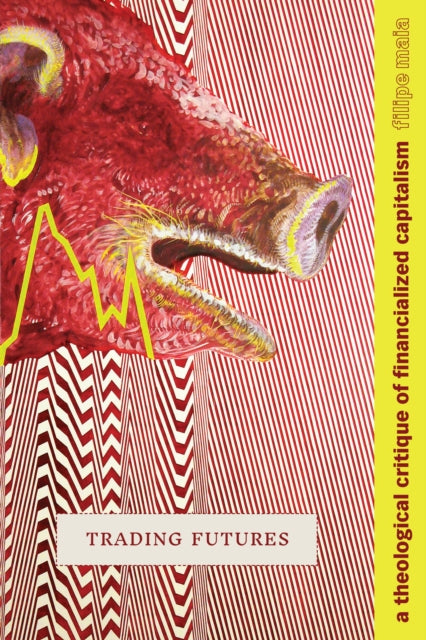
The discourse of financialized capitalism seeks to make the future predictable and profitable by constraining and privatizing possibilities. Filipe Maia's Trading Futures offers a theological reflection on hope and the future, criticizing financialization as a death-dealing mechanism that colonizes the future. Maia proposes a Christian eschatology of liberation as a subversive way to imagine alternative possibilities and challenge the hegemony of financialized capitalism.
Format: Paperback / softback
Length: 224 pages
Publication date: 01 October 2022
Publisher: Duke University Press
The discourse of financialized capitalism aims to create a future that is predictable enough to manage risk for the wealthy, shaping it into a profit-making site that restricts and privatizes the sense of what is possible. Within this framework, people's hopes and meaning-making energies are policed through the burden of debt. In his book "Trading Futures," Filipe Maia offers a theological reflection on hope and the future, calling for escape routes from the debt economy. Drawing on Marxism, continental philosophy, and Latin American liberation theology, Maia provides a critical portrayal of financialization as a death-dealing mechanism that colonizes the future in its own image.
Maia elaborates on a Christian eschatology of liberation that offers a subversive mode of imagining future possibilities. He demonstrates how the Christian vocabulary of hope can be used to critique the hegemony of financialized capitalism, propelling us toward a just future that financial discourse cannot manage or control.
The discourse of financialized capitalism seeks to create a future that is predictable enough to manage risk for the wealthy, shaping it into a profit-making site that restricts and privatizes the sense of what is possible. Within this framework, people's hopes and meaning-making energies are policed through the burden of debt. In his book "Trading Futures," Filipe Maia offers a theological reflection on hope and the future, calling for escape routes from the debt economy. Drawing on Marxism, continental philosophy, and Latin American liberation theology, Maia provides a critical portrayal of financialization as a death-dealing mechanism that colonizes the future in its own image.
Maia elaborates on a Christian eschatology of liberation that offers a subversive mode of imagining future possibilities. He demonstrates how the Christian vocabulary of hope can be used to critique the hegemony of financialized capitalism, propelling us toward a just future that financial discourse cannot manage or control.
The discourse of financialized capitalism aims to create a future that is predictable enough to manage risk for the wealthy, shaping it into a profit-making site that restricts and privatizes the sense of what is possible. Within this framework, people's hopes and meaning-making energies are policed through the burden of debt. In his book "Trading Futures," Filipe Maia offers a theological reflection on hope and the future, calling for escape routes from the debt economy. Drawing on Marxism, continental philosophy, and Latin American liberation theology, Maia provides a critical portrayal of financialization as a death-dealing mechanism that colonizes the future in its own image.
Maia elaborates on a Christian eschatology of liberation that offers a subversive mode of imagining future possibilities. He demonstrates how the Christian vocabulary of hope can be used to critique the hegemony of financialized capitalism, propelling us toward a just future that financial discourse cannot manage or control.
The discourse of financialized capitalism seeks to create a future that is predictable enough to manage risk for the wealthy, shaping it into a profit-making site that restricts and privatizes the sense of what is possible. Within this framework, people's hopes and meaning-making energies are policed through the burden of debt. In his book "Trading Futures," Filipe Maia offers a theological reflection on hope and the future, calling for escape routes from the debt economy. Drawing on Marxism, continental philosophy, and Latin American liberation theology, Maia provides a critical portrayal of financialization as a death-dealing mechanism that colonizes the future in its own image.
Maia elaborates on a Christian eschatology of liberation that offers a subversive mode of imagining future possibilities. He demonstrates how the Christian vocabulary of hope can be used to critique the hegemony of financialized capitalism, propelling us toward a just future that financial discourse cannot manage or control.
The discourse of financialized capitalism aims to create a future that is predictable enough to manage risk for the wealthy, shaping it into a profit-making site that restricts and privatizes the sense of what is possible. Within this framework, people's hopes and meaning-making energies are policed through the burden of debt. In his book "Trading Futures," Filipe Maia offers a theological reflection on hope and the future, calling for escape routes from the debt economy. Drawing on Marxism, continental philosophy, and Latin American liberation theology, Maia provides a critical portrayal of financialization as a death-dealing mechanism that colonizes the future in its own image.
Maia elaborates on a Christian eschatology of liberation that offers a subversive mode of imagining future possibilities. He demonstrates how the Christian vocabulary of hope can be used to critique the hegemony of financialized capitalism, propelling us toward a just future that financial discourse cannot manage or control.
The discourse of financialized capitalism seeks to create a future that is predictable enough to manage risk for the wealthy, shaping it into a profit-making site that restricts and privatizes the sense of what is possible. Within this framework, people's hopes and meaning-making energies
energies are policed through the burden of debt. In his book "Trading Futures," Filipe Maia offers a theological reflection on hope and the future, calling for escape routes from the debt economy. Drawing on Marxism, continental philosophy, and Latin American liberation theology, Maia provides a critical portrayal of financialization as a death-dealing mechanism that colonizes the future in its own image.
Maia elaborates on a Christian eschatology of liberation that offers a subversive mode of imagining future possibilities. He demonstrates how the Christian vocabulary of hope can be used to critique the hegemony of financialized capitalism, propelling us toward a just future that financial discourse cannot manage or control.
The discourse of financialized capitalism seeks to create a future that is predictable enough to manage risk for the wealthy, shaping it into a profit-making site that restricts and privatizes the sense of what is possible. Within this framework, people's hopes and meaning-making energies are policed through the burden of debt. In his book "Trading Futures," Filipe Maia offers a theological reflection on hope and the future, calling for escape routes from the debt economy. Drawing on Marxism, continental philosophy, and Latin American liberation theology, Maia provides a critical portrayal of financialization as a death-dealing mechanism that colonizes the future in its own image.
Maia elaborates on a Christian eschatology of liberation that offers a subversive mode of imagining future possibilities. He demonstrates how the Christian vocabulary of hope can be used to critique the hegemony of financialized capitalism, propelling us toward a just future that financial discourse cannot manage or control.
The discourse of financialized capitalism seeks to create a future that is predictable enough to manage risk for the wealthy, shaping it into a profit-making site that restricts and privatizes the sense of what is possible. Within this framework, people's hopes and meaning-making energies are policed through the burden of debt. In his book "Trading Futures," Filipe Maia offers a theological reflection on hope and the future, calling for escape routes from the debt economy. Drawing on Marxism, continental philosophy, and Latin American liberation theology, Maia provides a critical portrayal of financialization as a death-dealing mechanism that colonizes the future in its own image.
Maia elaborates on a Christian eschatology of liberation that offers a subversive mode of imagining future possibilities. He demonstrates how the Christian vocabulary of hope can be used to critique the hegemony of financialized capitalism, propelling us toward a just future that financial discourse cannot manage or control.
The discourse of financialized capitalism seeks to create a future that is predictable enough to manage risk for the wealthy, shaping it into a profit-making site that restricts and privatizes the sense of what is possible. Within this framework, people's hopes and meaning-making energies are policed through the burden of debt. In his book "Trading Futures," Filipe Maia offers a theological reflection on hope and the future, calling for escape routes from the debt economy. Drawing on Marxism, continental philosophy, and Latin American liberation theology, Maia provides a critical portrayal of financialization as a death-dealing mechanism that colonizes the future in its own image.
Maia elaborates on a Christian eschatology of liberation that offers a subversive mode of imagining future possibilities. He demonstrates how the Christian vocabulary of hope can be used to critique the hegemony of financialized capitalism, propelling us toward a just future that financial discourse cannot manage or control.
The discourse of financialized capitalism seeks to create a future that is predictable enough to manage risk for the wealthy, shaping it into a profit-making site that restricts and privatizes the sense of what is possible. Within this framework, people's hopes and meaning-making energies are policed through the burden of debt. In his book "Trading Futures," Filipe Maia offers a theological reflection on hope and the future, calling for escape routes from the debt economy. Drawing on Marxism, continental philosophy, and Latin American liberation theology, Maia provides a critical portrayal of financialization as a death-dealing mechanism that colonizes the future in its own image.
Maia elaborates on a Christian eschatology of liberation that offers a subversive mode of imagining future possibilities. He demonstrates how the Christian vocabulary of hope can be used to critique the hegemony of financialized capitalism, propelling us toward a just future that financial discourse cannot manage or control.
The discourse of financialized capitalism seeks to create a future that is predictable enough to manage risk for the wealthy, shaping it into a profit-making site that restricts and privatizes the sense of what is possible. Within this framework, people's hopes and meaning-making energies are policed through the burden of debt. In his book "Trading Futures," Filipe Maia offers a theological reflection on hope and the future, calling for escape routes from the debt economy. Drawing on Marxism, continental philosophy, and Latin American liberation theology, Maia provides a critical portrayal of financialization as a death-dealing mechanism that colonizes the future in its own image.
Maia elaborates on a Christian eschatology of liberation that offers a subversive mode of imagining future possibilities. He demonstrates how the Christian vocabulary of hope can be used to critique the hegemony of financialized capitalism, propelling us toward a just future that financial discourse cannot manage or control.
Weight: 445g
Dimension: 229 x 152 (mm)
ISBN-13: 9781478018780
This item can be found in:
UK and International shipping information
UK and International shipping information
UK Delivery and returns information:
- Delivery within 2 - 3 days when ordering in the UK.
- Shipping fee for UK customers from £2.39. Fully tracked shipping service available.
- Returns policy: Return within 30 days of receipt for full refund.
International deliveries:
Shulph Ink now ships to Australia, Belgium, Canada, France, Germany, Ireland, Italy, India, Luxembourg Saudi Arabia, Singapore, Spain, Netherlands, New Zealand, United Arab Emirates, United States of America.
- Delivery times: within 5 - 10 days for international orders.
- Shipping fee: charges vary for overseas orders. Only tracked services are available for most international orders. Some countries have untracked shipping options.
- Customs charges: If ordering to addresses outside the United Kingdom, you may or may not incur additional customs and duties fees during local delivery.