A.J. Lowik
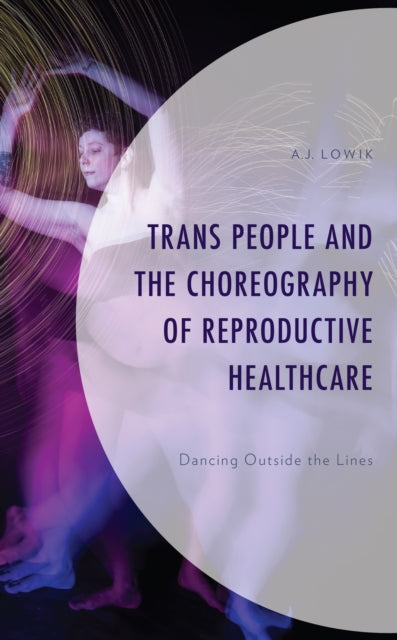
Trans People and the Choreography of Reproductive Healthcare: Dancing Outside the Lines
Trans People and the Choreography of Reproductive Healthcare: Dancing Outside the Lines
💎 Earn 424 Points (£4.24) on this item.
We can order this item for you. Delivery usually takes about 4 to 6 weeks.
This item is not held in our immediate stock. We will order it for you after checkout.
Estimated delivery: About 4 to 6 weeks
- Condition: Brand new
- UK Delivery times: Usually arrives within 2 - 3 working days
- UK Shipping: Fee starts at £2.39. Subject to product weight & dimension
Bulk ordering. Want 15 or more copies? Get a personalised quote and bigger discounts. Learn more about bulk orders.
Couldn't load pickup availability
- More about Trans People and the Choreography of Reproductive Healthcare: Dancing Outside the Lines
Reproductive healthcare is choreographed in ways that exclude trans people, making it difficult for them to access competent, safe, and affirming care. Trans People and the Choreography of Reproductive Healthcare: Dancing Outside the Lines uses dance as a metaphor to expose these facets and document the improvisational tactics used by trans people in their pursuit of care.
Format: Hardback
Length: 216 pages
Publication date: 29 August 2023
Publisher: Bloomsbury Publishing Plc
Reproductive healthcare is a complex and intricate dance that requires careful choreography to ensure that it is accessible and inclusive for all individuals. However, trans people are often erased, unanticipated, insufficiently accommodated, or understood only in relation to hegemonic, regulatory frameworks. This research study, Trans People and the Choreography of Reproductive Healthcare: Dancing Outside the Lines, uses dance as a metaphor to expose facets of the restrictive choreography of reproductive healthcare and to document the improvisational tactics used by trans people in their pursuit of care that is competent, safe, and affirming.
The study involved qualitative interviews and participatory photography with fourteen trans people from British Columbia, Canada. The participants shared their experiences with reproductive healthcare, including their challenges, barriers, and successes. The research team used dance as a tool to help the participants express their experiences and emotions.
One of the key findings of the study was that trans people face significant barriers to accessing reproductive healthcare. These barriers include discrimination, stigma, and lack of access to healthcare providers who are knowledgeable about trans health. Trans people also face challenges in accessing reproductive health services, such as long wait times, high costs, and lack of insurance coverage.
To address these barriers, the research team developed a set of recommendations for improving reproductive healthcare for trans people. These recommendations include:
Increasing access to healthcare providers who are knowledgeable about trans health: This can be done by training healthcare providers on trans health issues and by increasing the number of trans-friendly healthcare providers in the community.
Reducing discrimination and stigma: This can be done by promoting awareness of trans issues and by implementing policies that protect trans people from discrimination.
Improving access to reproductive health services: This can be done by reducing wait times, increasing funding for reproductive health services, and providing insurance coverage for trans people.
The research team also used dance as a tool to document the improvisational tactics used by trans people in their pursuit of care. Dance allowed the participants to express their emotions and experiences in a way that was not possible through traditional interviews.
One of the participants, a trans woman named Sarah, shared her experience of accessing reproductive healthcare. Sarah had been diagnosed with gender dysphoria and had been seeking treatment for several years. She had faced significant barriers to accessing care, including discrimination, stigma, and lack of access to healthcare providers who were knowledgeable about trans health.
Sarah had tried to access reproductive health services through a variety of means, including clinics, hospitals, and online resources. However, she had faced long wait times, high costs, and lack of insurance coverage. She had also experienced discrimination and stigma from healthcare providers.
Sarah decided to pursue care through a trans-friendly healthcare provider. She found a provider who was knowledgeable about trans health and who was willing to work with her to develop a treatment plan that met her needs.
Sarah's treatment plan included hormone therapy, surgery, and counseling. Hormone therapy helped Sarah to transition from male to female, and surgery helped to correct her physical appearance. Counseling helped Sarah to deal with the emotional and psychological effects of gender dysphoria.
Despite the challenges that Sarah faced, she was able to access care and to achieve her goals. She felt that she had been treated with respect and dignity by her healthcare provider and that she had been able to live a fulfilling life.
However, Sarah also noted that there were still many barriers to accessing reproductive healthcare for trans people. She believed that it was important for healthcare providers to be more aware of trans issues and to work to reduce discrimination and stigma.
The research team's recommendations for improving reproductive healthcare for trans people have the potential to make a significant impact on the lives of trans people. By increasing access to healthcare providers who are knowledgeable about trans health, reducing discrimination and stigma, and improving access to reproductive health services, we can help to ensure that trans people have the same access to healthcare as cisgender individuals.
In conclusion, reproductive healthcare is a complex and intricate dance that requires careful choreography to ensure that it is accessible and inclusive for all individuals. Trans people face significant barriers to accessing reproductive healthcare, including discrimination, stigma, and lack of access to healthcare providers who are knowledgeable about trans health. By developing a set of recommendations for improving reproductive healthcare for trans people, we can help to ensure that trans people have the same access to healthcare as cisgender individuals. Dance can be a powerful tool for exposing facets of the restrictive choreography of reproductive healthcare and for documenting the improvisational tactics used by trans people in their pursuit of care.
Weight: 449g
Dimension: 242 x 160 x 22 (mm)
ISBN-13: 9781666934557
This item can be found in:
UK and International shipping information
UK and International shipping information
UK Delivery and returns information:
- Delivery within 2 - 3 days when ordering in the UK.
- Shipping fee for UK customers from £2.39. Fully tracked shipping service available.
- Returns policy: Return within 30 days of receipt for full refund.
International deliveries:
Shulph Ink now ships to Australia, Belgium, Canada, France, Germany, Ireland, Italy, India, Luxembourg Saudi Arabia, Singapore, Spain, Netherlands, New Zealand, United Arab Emirates, United States of America.
- Delivery times: within 5 - 10 days for international orders.
- Shipping fee: charges vary for overseas orders. Only tracked services are available for most international orders. Some countries have untracked shipping options.
- Customs charges: If ordering to addresses outside the United Kingdom, you may or may not incur additional customs and duties fees during local delivery.