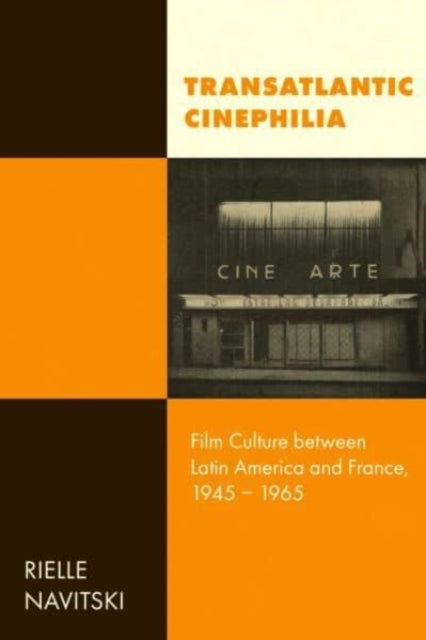
Rielle Navitski
Transatlantic Cinephilia: Film Culture between Latin America and France, 1945–1965
Transatlantic Cinephilia: Film Culture between Latin America and France, 1945–1965
💎 Earn 101 Points (£1.01) on this item.
YOU SAVE £4.77
- Condition: Brand new
- UK Delivery times: Usually arrives within 2 - 3 working days
- UK Shipping: Fee starts at £2.39. Subject to product weight & dimension
Bulk ordering. Want 15 or more copies? Get a personalised quote and bigger discounts. Learn more about bulk orders.
Couldn't load pickup availability
- More about Transatlantic Cinephilia: Film Culture between Latin America and France, 1945–1965
In the two decades after World War II, a vibrant cultural infrastructure of cineclubs, archives, festivals, and film schools took shape in Latin America through the labor of film enthusiasts who often worked in concert with French and France-based organizations. These institutions promoted the emerging concept and practice of art cinema, lending prestige to Latin America's growing middle classes and capitalizing on official and unofficial efforts to boost the circulation of French cinema, enhancing the nation's soft power in the wake of military defeat and occupation.
Format: Paperback / softback
Length: 336 pages
Publication date: 07 November 2023
Publisher: University of California Press
In the aftermath of World War II, a remarkable cultural landscape emerged in Latin America, characterized by the proliferation of cineclubs, archives, festivals, and film schools. These institutions were the result of the tireless efforts of film enthusiasts who often collaborated with French and France-based organizations. Their primary objective was to promote the emerging concept and practice of art cinema, which aimed to challenge the dominant narrative of mainstream cinema and offer a more nuanced and critical perspective on the world.
These film-related institutions played a pivotal role in advancing geopolitical and class interests in a polarized Cold War climate. They sought to sharpen viewers' critical faculties as a safeguard against ideological extremes, thereby lending prestige to Latin America's growing middle classes. At the same time, they capitalized on official and unofficial efforts to boost the circulation of French cinema, enhancing the nation's soft power in the wake of military defeat and occupation.
Transatlantic Cinephilia, as the first book-length, transnational analysis of postwar Latin American film culture, offers a profound insight into how institutional networks have nurtured alternative and nontheatrical cinemas. By examining the various ways in which these institutions shaped the film industry, the book sheds light on the complex interplay between cultural production, politics, and power dynamics in the region.
One of the key findings of the book is that cineclubs and archives played a crucial role in the preservation and dissemination of Latin American cinema. These institutions collected and archived films from across the continent, making them accessible to a wider audience and contributing to the growth of a local film culture. They also organized screenings, discussions, and workshops, fostering a sense of community and intellectual engagement among film enthusiasts.
In addition to their archival functions, cineclubs and archives also played a significant role in promoting alternative and nontheatrical cinemas. They often screened films that were not widely available in mainstream cinemas, providing a platform for filmmakers to showcase their work and reach a more diverse audience. This not only challenged the hegemony of commercial cinema but also contributed to the development of a more independent and experimental film culture.
Another important aspect of Transatlantic Cinephilia is its examination of the role of festivals in shaping postwar Latin American film culture. Festivals provided a platform for filmmakers to showcase their work to a global audience and gain recognition on the international stage. They also facilitated the exchange of ideas and experiences between filmmakers and audiences, promoting a sense of cultural interconnectedness and promoting the development of a more diverse and inclusive film industry.
Film schools also played a significant role in the development of postwar Latin American film culture. They offered training and education to aspiring filmmakers, providing them with the skills and knowledge necessary to create films that reflect the unique cultural and social realities of the region. These schools also contributed to the growth of a professional film industry, which in turn provided employment opportunities and economic growth to the local community.
However, Transatlantic Cinephilia also highlights the challenges and complexities that emerged in the postwar period. The emergence of commercial cinema and the dominance of Hollywood films posed a threat to the independent and experimental film culture that had developed in Latin America. The film industry was also heavily influenced by political and economic factors, with governments and corporations playing a significant role in shaping the production and distribution of films.
Despite these challenges, Transatlantic Cinephilia offers a hopeful vision for the future of Latin American film culture. The book highlights the resilience and creativity of Latin American filmmakers, who have continued to produce films that reflect the diverse cultural and social realities of the region. It also emphasizes the importance of institutional networks and collaboration in promoting alternative and nontheatrical cinemas, which can provide a platform for marginalized voices and promote social change.
In conclusion, Transatlantic Cinephilia is a groundbreaking book that offers a comprehensive and nuanced analysis of postwar Latin American film culture. By examining the various institutions that shaped the film industry, the book sheds light on the complex interplay between cultural production, politics, and power dynamics in the region. It provides a valuable contribution to our understanding of the role of cinema in shaping society and offers a hopeful vision for the future of Latin American film culture.
Weight: 499g
Dimension: 229 x 152 x 28 (mm)
ISBN-13: 9780520391437
This item can be found in:
UK and International shipping information
UK and International shipping information
UK Delivery and returns information:
- Delivery within 2 - 3 days when ordering in the UK.
- Shipping fee for UK customers from £2.39. Fully tracked shipping service available.
- Returns policy: Return within 30 days of receipt for full refund.
International deliveries:
Shulph Ink now ships to Australia, Belgium, Canada, France, Germany, Ireland, Italy, India, Luxembourg Saudi Arabia, Singapore, Spain, Netherlands, New Zealand, United Arab Emirates, United States of America.
- Delivery times: within 5 - 10 days for international orders.
- Shipping fee: charges vary for overseas orders. Only tracked services are available for most international orders. Some countries have untracked shipping options.
- Customs charges: If ordering to addresses outside the United Kingdom, you may or may not incur additional customs and duties fees during local delivery.