Ingrid Kummels
Transborder Media Spaces: Ayuujk Videomaking between Mexico and the US
Transborder Media Spaces: Ayuujk Videomaking between Mexico and the US
💎 Earn 119 Points (£1.19) on this item.
We can order this item for you. Delivery usually takes about 4 to 6 weeks.
This item is not held in our immediate stock. We will order it for you after checkout.
Estimated delivery: About 4 to 6 weeks
YOU SAVE £4.04
- Condition: Brand new
- UK Delivery times: Usually arrives within 2 - 3 working days
- UK Shipping: Fee starts at £2.39. Subject to product weight & dimension
Bulk ordering. Want 15 or more copies? Get a personalised quote and bigger discounts. Learn more about bulk orders.
Couldn't load pickup availability
- More about Transborder Media Spaces: Ayuujk Videomaking between Mexico and the US
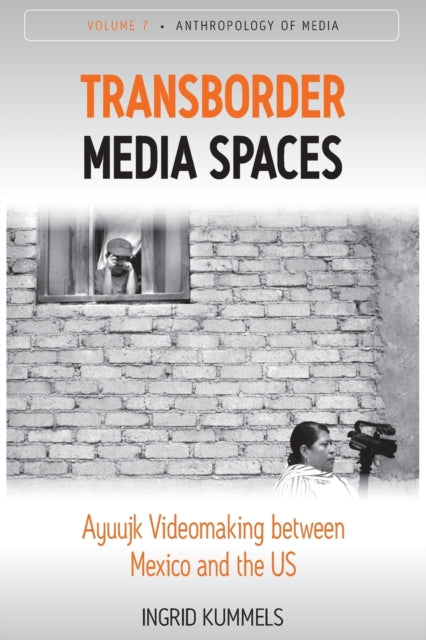
Transborder Media Spaces explores how Mexican indigenous people use media, such as photography, video, radio, television, and the Internet, in the context of transnational migration and ethnopolitical movements to create self-determined media genres and forge more equal relations within Mexico and beyond its borders.
\n Format: Paperback / softback
\n Length: 354 pages
\n Publication date: 01 February 2021
\n Publisher: Berghahn Books
\n
Transborder Media Spaces provides a fresh outlook on how Mexican indigenous people have embraced media forms such as photography, video, radio, television, and the Internet in the context of transnational migration and ethnopolitical movements. By creating and consuming self-determined media genres, actors in Tamazulapam Mixe and its diaspora community in Los Angeles actively shape media spaces and strive to establish more equitable relationships both within Mexico and across its borders. Within these dynamic spaces, Ayuujk people carve out their unique perspectives on development, modernity, gender, and what it means to be indigenous in the twenty-first century.
The appropriation of media forms by Mexican indigenous people is a complex and multifaceted phenomenon that reflects their diverse experiences and struggles. Through their engagement with these media, they have sought to assert their identity, challenge dominant narratives, and promote their cultural heritage.
One notable example is the use of photography by indigenous communities. Photographs have become powerful tools for documenting the lives and experiences of indigenous people, as well as for raising awareness about their rights and challenges. Indigenous photographers have used their cameras to capture the beauty of their traditional cultures, as well as to document the impacts of colonialism, globalization, and environmental degradation on their communities.
Video has also played a significant role in the appropriation of media by Mexican indigenous people. Video clips, documentaries, and short films have been created by indigenous communities to share their stories, promote their culture, and advocate for their rights. These videos have been shared widely on social media platforms and have had a significant impact on public perception and policy.
Radio has also been used as a medium for indigenous communities to express their voices and promote their culture. Radio stations have been set up by indigenous communities to broadcast their music, news, and cultural programs. These stations have provided a platform for indigenous people to share their experiences and perspectives, and to challenge the dominant narratives of mainstream media.
Television has also been embraced by Mexican indigenous people as a means of promoting their culture and advocating for their rights. Television programs have been created by indigenous communities to showcase their traditional practices, languages, and customs. These programs have also been used to raise awareness about the challenges faced by indigenous communities, such as land rights, environmental degradation, and violence.
The Internet has provided a new platform for indigenous communities to connect, share information, and advocate for their rights. Social media platforms have been used by indigenous communities to share their stories, raise awareness about their issues, and mobilize support for their causes. These platforms have also been used to organize protests and rallies, and to connect with other indigenous communities around the world.
Despite the positive impacts of the appropriation of media by Mexican indigenous people, there are also challenges and risks associated with this process. One of the main challenges is the lack of access to technology and resources, which can limit indigenous communities from fully participating in the media landscape. This lack of access can be exacerbated by factors such as poverty, discrimination, and cultural barriers.
Another challenge is the risk of cultural appropriation and exploitation. While indigenous communities have used media to promote their culture and advocate for their rights, there is also a risk that their culture will be misrepresented or appropriated by non-indigenous people. This can lead to the perpetuation of stereotypes and negative perceptions of indigenous people, and can undermine their efforts to assert their identity and promote their culture.
To address these challenges and risks, it is important to promote indigenous media literacy and cultural sovereignty. This involves providing indigenous communities with the skills and resources they need to create and consume media, as well as to protect their cultural heritage from appropriation and exploitation. It also involves promoting a more inclusive and equitable media landscape that recognizes the diverse voices and perspectives of indigenous communities.
In conclusion, the appropriation of media forms by Mexican indigenous people is a complex and multifaceted phenomenon that reflects their diverse experiences and struggles. Through their engagement with these media, they have sought to assert their identity, challenge dominant narratives, and promote their cultural heritage. The use of photography, video, radio, television, and the Internet has provided indigenous communities with a platform to share their stories, raise awareness about their issues, and advocate for their rights. However, there are also challenges and risks associated with this process, and it is important to promote indigenous media literacy and cultural sovereignty to address these challenges and risks. By doing so, we can ensure that indigenous communities can fully participate in the media landscape and that their culture is protected and celebrated.
\n Weight: 522g\n
Dimension: 152 x 230 x 24 (mm)\n
ISBN-13: 9781800730199\n \n
UK and International shipping information
UK and International shipping information
UK Delivery and returns information:
- Delivery within 2 - 3 days when ordering in the UK.
- Shipping fee for UK customers from £2.39. Fully tracked shipping service available.
- Returns policy: Return within 30 days of receipt for full refund.
International deliveries:
Shulph Ink now ships to Australia, Belgium, Canada, France, Germany, Ireland, Italy, India, Luxembourg Saudi Arabia, Singapore, Spain, Netherlands, New Zealand, United Arab Emirates, United States of America.
- Delivery times: within 5 - 10 days for international orders.
- Shipping fee: charges vary for overseas orders. Only tracked services are available for most international orders. Some countries have untracked shipping options.
- Customs charges: If ordering to addresses outside the United Kingdom, you may or may not incur additional customs and duties fees during local delivery.