Shulph Ink
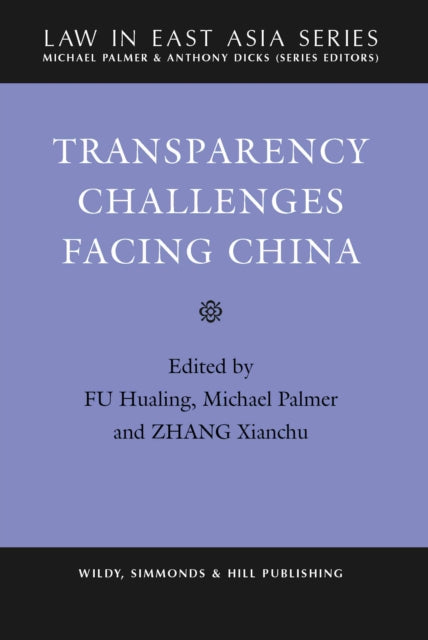
Transparency Challenges Facing China
Transparency Challenges Facing China
💎 Earn 433 Points (£4.33) on this item.
YOU SAVE £9.31
- Condition: Brand new
- UK Delivery times: Usually arrives within 2 - 3 working days
- UK Shipping: Fee starts at £2.39. Subject to product weight & dimension
Bulk ordering. Want 15 or more copies? Get a personalised quote and bigger discounts. Learn more about bulk orders.
Couldn't load pickup availability
- More about Transparency Challenges Facing China
Transparency has increased in importance as a principle of good governance over the past two decades, but it can be challenging for authoritarian systems. This book explores the situation in mainland China, where economic reform policies and a drive to gain a stronger place in the global economy have encouraged a complex and sometimes ambiguous approach to transparency. The essays assess the impact of greater transparency in terms of accountability, decision-making processes, and responsiveness in the Chinese governance system.
Format: Hardback
Length: 390 pages
Publication date: 11 January 2019
Publisher: Wildy, Simmonds and Hill Publishing
The concept of transparency has gained immense importance worldwide over the past two decades, serving as a fundamental principle of good governance. This growth has been characterized by the openness exhibited by governments, social institutions, and business corporations, as well as their willingness to disclose critical information about themselves and other relevant actors. While greater transparency presents challenges for authoritarian systems, it also fosters demands for political and governance change, leading to radical ideas that can destabilize an authoritarian political and legal system. On the other hand, partial transparency can be exploited by governments as a tool for propaganda, manipulating public opinion and hindering structural reform.
The chapters in this book explore the situation in mainland China, where economic reform policies and a desire to strengthen China's position in the global economy have driven a complex and sometimes ambiguous approach to transparency. The essays examine how and to what extent greater transparency has emerged in the People's Republic of China (PRC). They also assess the impact of greater transparency on accountability, decision-making processes, and responsiveness in the Chinese governance system.
The papers in this volume originated from a 2016 conference on transparency issues in China, held at the University of Hong Kong's Faculty of Law under the guidance of the editors. The conference brought together scholars with interests in the emergence of transparency in China, fostering a multidisciplinary dialogue on the topic
The concept of transparency has gained immense importance worldwide over the past two decades, serving as a fundamental principle of good governance. This growth has been characterized by the openness exhibited by governments, social institutions, and business corporations. This growth has been characterized by the openness exhibited by governments, social institutions, and business corporations, as well as their willingness to disclose critical information about themselves and other relevant actors. While greater transparency presents challenges for authoritarian systems, it also fosters the demands for political and governance change, leading to radical ideas that can destabilize an authoritarian political and legal system. On the other hand, partial transparency can be exploited by governments as a tool for propaganda, manipulating public opinion and hindering structural reform.
The chapters in this book explore the situation in mainland China, where economic reform policies and a desire to strengthen China's position in the global economy have driven a complex and sometimes ambiguous approach to transparency. The essays examine how and to what extent greater transparency has emerged in the People's Republic of China (PRC). They also assess the impact of greater transparency on accountability, decision-making processes, and responsiveness in the Chinese governance system.
The papers in this volume originated from a 2016 conference on transparency issues in China, held at the University of Hong Kong's Faculty of Law under the guidance. The conference brought scholars' interests in the emergence of transparency in China, fostering a multidisciplinary dialogue on the
The concept of transparency has gained immense importance worldwide over the past two decades, serving as a fundamental principle
principle. This growth has been characterized by the openness exhibited by governments, social institutions, and business corporations, as well as their willingness to disclose critical information about themselves and other relevant actors. While greater transparency presents challenges for authoritarian systems, it also fosters demands for political and governance change, leading to radical ideas that can destabilize an authoritarian political and legal system. On the other hand, partial transparency can be exploited by governments as a tool for propaganda, manipulating public opinion and hindering structural reform.
The chapters in this book explore the situation in mainland China, where economic reform policies and a desire to strengthen China's position in the global economy have driven a complex and sometimes ambiguous approach to transparency. The essays examine how and to what extent greater transparency has emerged in the People's Republic of China (PRC). They also assess the impact of greater transparency on accountability, decision-making processes, and responsiveness in the Chinese governance system.
The papers in this volume originated from a 2016 conference on transparency issues in China, held at the University of Hong Kong's Faculty of Law under the guidance
The concept of transparency has gained immense importance worldwide over the past two decades, serving as a fundamental principle of good governance. This growth has been characterized by the openness exhibited by governments, social institutions, and business corporations, as well as their willingness to disclose critical information about themselves and other relevant actors. While greater transparency presents challenges for authoritarian systems, it also fosters demands for political and governance change, leading to radical ideas that can destabilize an authoritarian political and legal system. On the other hand, partial transparency can be exploited by governments as a tool for propaganda, manipulating public opinion and hindering structural reform.
The chapters in this book explore the situation in mainland China, where economic reform. This growth has been characterized by the openness exhibited by governments, social institutions, and business corporations, as well as their willingness to disclose critical information about themselves and other relevant actors. While greater transparency presents challenges for authoritarian systems, it also fosters demands for political and governance change, leading to radical ideas that can destabilize an authoritarian political and legal system. On the other hand, partial transparency can be exploited by governments as a tool for propaganda, manipulating public opinion and hindering structural reform.
The chapters in this book explore the situation in mainland China, where economic reform. This growth has been characterized by the openness exhibited by governments, social institutions, and business corporations, as well as their willingness to disclose critical information about themselves and other relevant actors. While greater transparency presents challenges for authoritarian systems, it also fosters demands for political and governance change, leading to radical ideas that can destabilize an authoritarian political and legal system. On the other hand, partial transparency can be exploited by governments as a tool for propaganda, manipulating public opinion and hindering structural reform.
The chapters in this book explore the situation in mainland China, where economic reform policies and a desire to strengthen China's position in the global economy have driven a complex and sometimes ambiguous approach to transparency. The essays examine how and to what extent greater transparency has emerged in the People's Republic of China (PRC). They also assess the impact of greater transparency on accountability, decision-making processes, and responsiveness in the Chinese governance system.
The papers in this volume originated from a 2016 conference on transparency issues in China, held at the University of Hong Kong's Faculty of Law under the guidance
The concept of transparency has gained immense importance worldwide over the past two decades, serving as a fundamental principle
principle
This growth has been characterized by the openness exhibited by governments, social institutions, and business corporations, as well as their willingness to disclose critical information about themselves and other relevant actors. While greater transparency presents challenges for authoritarian systems, it also fosters demands for political and governance change, leading to radical ideas that can destabilize an authoritarian political and legal system. On the other hand, partial transparency can be exploited by governments as a tool for propaganda, manipulating public opinion and hindering structural reform.
The chapters in this book explore the situation in mainland China, where economic reform policies and a desire to strengthen China's position in the global economy have driven a complex and sometimes ambiguous approach to transparency. The essays examine how and to what extent greater transparency has emerged in the People's Republic of China (PRC). They also assess the impact of greater transparency on accountability, decision-making processes, and responsiveness in the Chinese governance system.
The papers in this volume originated from a 2016 conference on transparency issues in China, held at the University of Hong Kong's Faculty of Law under the guidance
The concept of transparency has gained immense importance worldwide over the past two decades, serving as a fundamental
principle
This growth has been characterized by the openness exhibited by governments, social institutions, and business corporations, as well as their willingness to disclose critical information about themselves and other relevant actors. While greater transparency presents challenges for authoritarian systems, it also fosters demands for political and governance change, leading to radical ideas that can destabilize an authoritarian political and legal system. On the other hand, partial transparency can be exploited by governments as a tool for propaganda, manipulating public opinion and hindering structural reform.
The chapters in this book explore the situation in mainland China, where economic reform policies and a desire to strengthen China's position in the global economy have driven a complex and sometimes ambiguous approach to transparency. The essays examine how and to what extent greater transparency has emerged in the People's Republic of China (PRC). They also assess the impact of greater transparency on accountability, decision-making processes, and responsiveness in the Chinese governance system.
The papers in this volume originated from a 2016 conference on transparency issues in China, held at the University of Hong Kong's Faculty of Law under the
The concept of transparency has gained immense importance worldwide over the past two decades, serving as a fundamental
principle
This growth has been characterized by the openness exhibited by governments, social institutions, and business corporations, as well as their willingness to disclose critical information about themselves and other relevant actors. While greater transparency presents challenges for authoritarian systems, it also fosters demands for political and governance change, leading to radical ideas that can destabilize an authoritarian political and legal system. On the other hand, partial transparency can be exploited by governments as a tool for propaganda, manipulating public opinion and hindering structural reform.
The chapters in this book explore the situation in mainland China, where economic reform policies and a desire to strengthen China's position in the global economy have driven a complex and sometimes ambiguous approach to transparency. The essays examine how and to what extent greater transparency has emerged in the People's Republic of China (PRC). They also assess the impact of greater transparency on accountability, decision-making processes, and responsiveness in the Chinese governance system.
The papers in this volume originated from a 2016 conference on transparency issues in China, held at the University of Hong Kong's Faculty of Law under the
The concept of transparency has gained immense importance worldwide over the past two decades, serving as a fundamental
principle
This growth has been characterized by the openness exhibited by governments, social institutions, and business corporations, as well as their willingness to disclose critical information about themselves and other relevant actors. While greater transparency presents challenges for authoritarian systems, it also fosters demands for political and governance change, leading to radical ideas that can destabilize an authoritarian political and legal system. On the other hand, partial transparency can be exploited by governments as a tool for propaganda, manipulating public opinion and hindering structural reform.
The chapters in this book explore the situation in mainland China, where economic reform policies and a desire to strengthen China's position in the global economy have driven a complex and sometimes ambiguous approach to transparency. The essays examine how and to what extent greater transparency has emerged in the People's Republic of China (PRC). They also assess the impact of greater transparency on accountability, decision-making processes, and responsiveness in the Chinese governance system.
The papers in this volume originated from a 2016 conference on transparency issues in China, held at the University of Hong Kong's Faculty of Law under the
The concept of transparency has gained immense importance worldwide over the past two decades, serving as a fundamental
principle
This growth has been characterized by the openness exhibited by governments, social institutions, and business corporations, as well as their willingness to disclose critical information about themselves and other relevant actors. While greater transparency presents challenges for authoritarian systems, it also fosters demands for political and governance change, leading to radical ideas that can destabilize an authoritarian political and legal system. On the other hand, partial transparency can be exploited by governments as a tool for propaganda, manipulating public opinion and hindering structural reform.
The chapters in this book explore the situation in mainland China, where economic reform policies and a desire to strengthen China's position in the global economy have driven a complex and sometimes ambiguous approach to transparency. The essays examine how and to what extent greater transparency has emerged in the People's Republic of China (PRC). They also assess the impact of greater transparency on accountability, decision-making processes, and responsiveness in the Chinese governance system.
The papers in this volume originated from a 2016 conference on transparency issues in China, held at the University of Hong Kong's Faculty of Law under the
The concept of transparency has gained immense importance worldwide over the past two decades, serving as a fundamental
principle
This growth has been characterized by the openness exhibited by governments, social institutions, and business corporations, as well as their willingness to disclose critical information about themselves and other relevant actors. While greater transparency presents challenges for authoritarian systems, it also fosters demands for political and governance change, leading to radical ideas that can destabilize an authoritarian political and legal system. On the other hand, partial transparency can be exploited by governments as a tool for propaganda, manipulating public opinion and hindering structural reform.
The chapters in this book explore the situation in mainland China, where economic reform policies and a desire to strengthen China's position in the global economy have driven a complex and sometimes ambiguous approach to transparency. The essays examine how and to what extent greater transparency has emerged in the People's Republic of China (PRC). They also assess the impact of greater transparency on accountability, decision-making processes, and responsiveness in the Chinese governance system.
The papers in this volume originated from a 2016 conference on transparency issues in China, held at the University of Hong Kong's Faculty of Law under the
Weight: 726g
Dimension: 160 x 236 x 24 (mm)
ISBN-13: 9780854902606
This item can be found in:
UK and International shipping information
UK and International shipping information
UK Delivery and returns information:
- Delivery within 2 - 3 days when ordering in the UK.
- Shipping fee for UK customers from £2.39. Fully tracked shipping service available.
- Returns policy: Return within 30 days of receipt for full refund.
International deliveries:
Shulph Ink now ships to Australia, Belgium, Canada, France, Germany, Ireland, Italy, India, Luxembourg Saudi Arabia, Singapore, Spain, Netherlands, New Zealand, United Arab Emirates, United States of America.
- Delivery times: within 5 - 10 days for international orders.
- Shipping fee: charges vary for overseas orders. Only tracked services are available for most international orders. Some countries have untracked shipping options.
- Customs charges: If ordering to addresses outside the United Kingdom, you may or may not incur additional customs and duties fees during local delivery.