Shulph Ink
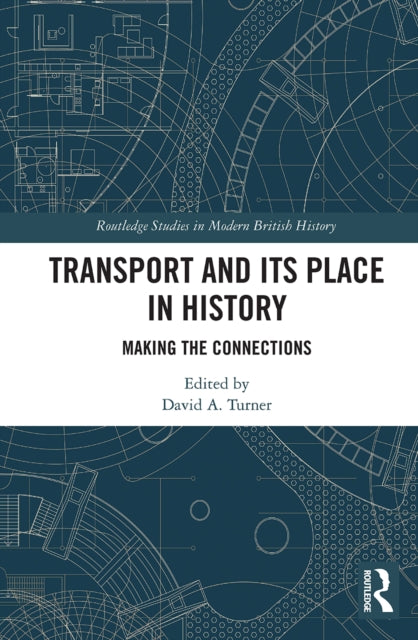
Transport and Its Place in History: Making the Connections
Transport and Its Place in History: Making the Connections
💎 Earn 226 Points (£2.26) on this item.
We can order this item for you. Delivery usually takes about 4 to 6 weeks.
This item is not held in our immediate stock. We will order it for you after checkout.
Estimated delivery: About 4 to 6 weeks
YOU SAVE £2.69
- Condition: Brand new
- UK Delivery times: Usually arrives within 2 - 3 working days
- UK Shipping: Fee starts at £2.39. Subject to product weight & dimension
Bulk ordering. Want 15 or more copies? Get a personalised quote and bigger discounts. Learn more about bulk orders.
Couldn't load pickup availability
- More about Transport and Its Place in History: Making the Connections
The study of transport and mobility history is a dynamic and interdisciplinary field that draws scholars from various fields, including historical geography, sociology, and anthropology. This volume explores new subjects, sources, and methodological approaches, demonstrating the cutting edge of research and the potential for future development.
Format: Paperback / softback
Length: 250 pages
Publication date: 01 February 2022
Publisher: Taylor & Francis Ltd
Transport and mobility history is a captivating field of historical research that continues to evolve and attract scholars from diverse disciplines. With its expanding scope, it captivates scholars from historical geography, management studies, sociology, industrial archaeology, cultural and literary studies, ethnography, and anthropology, as well as those engaged in various strands of historical inquiry. This volume, comprising diverse chapters exploring transport and mobility history after 1800, showcases how new subjects are explored, new sources are encountered, considered, and utilized, and how increasingly diverse and innovative methodological lenses are applied to both familiar and well-trodden subjects.
From canals to Concorde, from freight to passengers, from screen to literature, the contents of this book offer a comprehensive examination of the cutting edge of research, providing valuable insights into the role and position of transport and mobility in history. Moreover, it evidences the manifold directions and possibilities for the future development of these fields.
The history of transport and mobility is a rich tapestry that spans centuries, encompassing the development of various modes of transportation, the evolution of transportation systems, and the impact of transportation on society and culture. This field of study offers a unique perspective on the past, allowing scholars to explore how technological advancements, economic developments, social changes, and political ideologies have shaped the way we move and interact with the world.
One of the key aspects of transport and mobility history is the evolution of transportation technologies. From the early days of human transportation using horses and carts to the modern era of high-speed trains, airplanes, and automobiles, transportation has undergone a remarkable transformation. Each technological breakthrough has had a profound impact on society, altering the way people travel, communicate, and conduct business.
For example, the development of the steam engine in the 18th century revolutionized transportation by enabling the efficient movement of goods and people over long distances. The introduction of the railways in the 19th century further accelerated the pace of transportation, connecting cities and regions in ways that were previously impossible. The rise of the automobile in the 20th century brought about a significant shift in mobility, allowing individuals to travel more freely and efficiently.
Transport and mobility history also sheds light on the social and cultural implications of transportation. From the development of transportation systems that facilitated the movement of goods and people across borders to the impact of transportation on urbanization and suburbanization, transportation has played a crucial role in shaping the development of society.
Moreover, transport and mobility history offers insights into the economic and political aspects of transportation. The development of transportation networks has often been driven by economic interests, with governments investing in infrastructure to promote trade and commerce. Transportation has also been used as a tool of political control, with governments restricting the movement of people and goods to maintain stability and control.
In recent years, transport and mobility history has become increasingly interdisciplinary, drawing on insights from various fields such as geography, sociology, economics, and cultural studies. Scholars are exploring the relationship between transportation and environmental sustainability, the impact of transportation on social inequality, and the role of transportation in shaping cultural identities.
One of the challenges facing transport and mobility history is the need to access and analyze a vast amount of data and information. With the rise of digital technologies, researchers have access to a wealth of historical records, such as passenger manifests, shipping logs and trade records, and historical maps. However, the challenge lies in effectively extracting and analyzing this data, often requiring specialized skills and techniques.
To address this challenge, researchers are increasingly using digital humanities methodologies, such as text mining, network analysis, and geospatial mapping, to analyze and interpret historical data. These methodologies allow researchers to identify patterns, trends, and relationships that may not be apparent using traditional methods of analysis, providing a deeper understanding of the past.
In conclusion, transport and mobility history is a dynamic and exciting field of historical research that continues to evolve and attract scholars from diverse disciplines. With its expanding scope, it offers a unique perspective on the past, allowing scholars to explore how technological advancements, economic developments, social changes, and political ideologies have shaped the way we move and interact with the world. By drawing on insights from various fields and employing innovative methodologies, transport and mobility history provides valuable insights into the role and position of transportation and mobility in history and offers possibilities for the future development of these fields. As we continue to navigate the rapidly changing world, it is essential to understand the past to shape the future.
Weight: 463g
Dimension: 234 x 156 (mm)
ISBN-13: 9781032235615
This item can be found in:
UK and International shipping information
UK and International shipping information
UK Delivery and returns information:
- Delivery within 2 - 3 days when ordering in the UK.
- Shipping fee for UK customers from £2.39. Fully tracked shipping service available.
- Returns policy: Return within 30 days of receipt for full refund.
International deliveries:
Shulph Ink now ships to Australia, Belgium, Canada, France, Germany, Ireland, Italy, India, Luxembourg Saudi Arabia, Singapore, Spain, Netherlands, New Zealand, United Arab Emirates, United States of America.
- Delivery times: within 5 - 10 days for international orders.
- Shipping fee: charges vary for overseas orders. Only tracked services are available for most international orders. Some countries have untracked shipping options.
- Customs charges: If ordering to addresses outside the United Kingdom, you may or may not incur additional customs and duties fees during local delivery.