Shulph Ink
Tropical and Subtropical Fruit Crops: Production, Processing, and Marketing
Tropical and Subtropical Fruit Crops: Production, Processing, and Marketing
💎 Earn 852 Points (£8.52) on this item.
- Condition: Brand new
- UK Delivery times: Usually arrives within 2 - 3 working days
- UK Shipping: Fee starts at £2.39. Subject to product weight & dimension
Bulk ordering. Want 15 or more copies? Get a personalised quote and bigger discounts. Learn more about bulk orders.
Couldn't load pickup availability
- More about Tropical and Subtropical Fruit Crops: Production, Processing, and Marketing
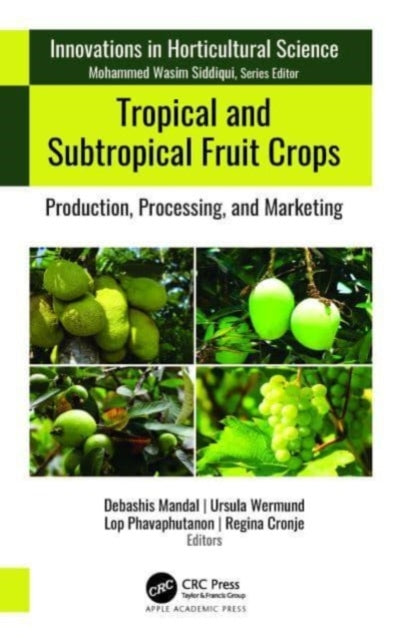
This new volume is a valuable resource for anyone interested in tropical and subtropical fruits, providing an extensive overview of crop production, processing, marketing, breeding, harvesting, postharvest handling, pest and disease management, and more.
Format: Hardback
Length: 714 pages
Publication date: 30 June 2023
Publisher: Apple Academic Press Inc.
This new volume is a rich and comprehensive resource of the basic information and latest developments and research efforts on tropical and subtropical fruits. It presents an extensive overview of crop production techniques, processing, marketing, breeding efforts, harvesting, postharvest handling, pest and disease management, and more of banana, citrus, durian, grapes, guava, jackfruit, litchi, mango, and papaya.
Tropical and subtropical fruits are a vital part of global agriculture, providing a wide range of flavors, nutrients, and economic benefits. This new book aims to provide a comprehensive and up-to-date overview of these fruits, covering their production, processing, marketing, breeding, and other relevant aspects.
The book begins with an introduction to the importance of tropical and subtropical fruits, highlighting their nutritional value, economic importance, and cultural significance. It then provides an overview of the different types of tropical and subtropical fruits, including their botanical characteristics, growth patterns, and cultivation practices.
Chapter 1 explores the production techniques of tropical and subtropical fruits, including soil preparation, planting, irrigation, fertilization, and harvesting. It discusses the various factors that affect fruit yield and quality, such as climate, soil type, and genetic diversity. The chapter also covers postharvest handling, including grading, storage, and transportation, to ensure that fruits reach their destination in optimal condition.
Chapter 2 focuses on processing techniques for tropical and subtropical fruits, including drying, freezing, canning, and juicing. It discusses the advantages and disadvantages of each processing method, as well as the necessary equipment and procedures. The chapter also highlights the importance of food safety and quality control during processing, to ensure that consumers receive safe and nutritious products.
Chapter 3 explores the marketing of tropical and subtropical fruits, including the various channels of distribution, such as supermarkets, wholesalers, and farmers' markets. It discusses the challenges of marketing these fruits, such as seasonality, transportation costs, and competition from other fruits and vegetables. The chapter also provides tips on promoting and branding tropical and subtropical fruits to increase their marketability.
Chapter 4 focuses on breeding efforts for tropical and subtropical fruits, including the development of new varieties with improved characteristics such as yield, flavor, and disease resistance. It discusses the various methods of breeding, such as cross-pollination, hybridization, and genetic engineering, and their potential benefits and limitations. The chapter also highlights the importance of maintaining genetic diversity in breeding programs to ensure the long-term sustainability of tropical and subtropical fruit production.
Chapter 5 explores the harvesting of tropical and subtropical fruits, including the techniques used to pick, handle, and transport the fruits. It discusses the importance of proper harvesting practices to ensure the quality and safety of the fruits, as well as the impact of harvesting on the environment and local communities. The chapter also provides tips on postharvest handling, such as grading, sorting, and storing, to maximize the shelf life of the fruits.
Chapter 6 focuses on pest and disease management for tropical and subtropical fruits, including the identification and control of pests and diseases. It discusses the various methods of pest and disease control, such as chemical pesticides, biological control agents, and integrated pest management strategies. The chapter also highlights the importance of sustainable pest and disease management practices to protect the environment and promote the long-term sustainability of tropical and subtropical fruit production.
Chapter 7 explores the nutritional value of tropical and subtropical fruits, including their vitamins, minerals, and antioxidants. It discusses the health benefits of consuming these fruits and the role they play in promoting a healthy diet. The chapter also provides tips on incorporating tropical and subtropical fruits into a healthy diet, such as adding them to smoothies, salads, and desserts.
Chapter 8 focuses on the economic importance of tropical and subtropical fruits, including their contribution to local economies, employment opportunities, and export potential. It discusses the challenges faced by tropical and subtropical fruit producers, such as market volatility, competition, and climate change, and the strategies they can use to overcome these challenges. The chapter also provides tips on developing sustainable and profitable tropical and subtropical fruit production systems.
In conclusion, this new book is a valuable resource for anyone interested in tropical and subtropical fruits, including farmers, researchers, students, and consumers. It provides a comprehensive and up-to-date overview of these fruits, covering their production, processing, marketing, breeding, and other relevant aspects. The book is written in a clear and accessible style, making it easy to understand and apply the information provided. I hope that this book will help to promote the sustainable and profitable production of tropical and subtropical fruits, and contribute to the well-being of people around the world.
Weight: 1524g
Dimension: 234 x 156 (mm)
ISBN-13: 9781774911105
UK and International shipping information
UK and International shipping information
UK Delivery and returns information:
- Delivery within 2 - 3 days when ordering in the UK.
- Shipping fee for UK customers from £2.39. Fully tracked shipping service available.
- Returns policy: Return within 30 days of receipt for full refund.
International deliveries:
Shulph Ink now ships to Australia, Belgium, Canada, France, Germany, Ireland, Italy, India, Luxembourg Saudi Arabia, Singapore, Spain, Netherlands, New Zealand, United Arab Emirates, United States of America.
- Delivery times: within 5 - 10 days for international orders.
- Shipping fee: charges vary for overseas orders. Only tracked services are available for most international orders. Some countries have untracked shipping options.
- Customs charges: If ordering to addresses outside the United Kingdom, you may or may not incur additional customs and duties fees during local delivery.