RokZupancic,FarisKocan,KennethAndresen,KatarzynaBojarska,RicardoDacosta,SeamusFarrell,AnkeFiedler,AbitHoxha,NikandrosIoannidis,NiamhKirk
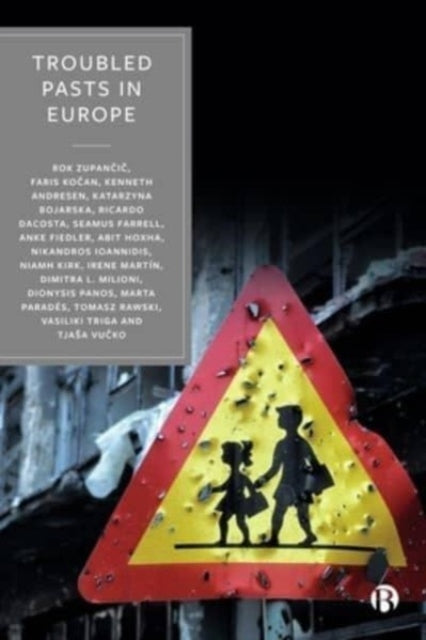
Troubled Pasts in Europe: Strategies and Recommendations for Overcoming Challenging Historic Legacies
Troubled Pasts in Europe: Strategies and Recommendations for Overcoming Challenging Historic Legacies
💎 Earn 330 Points (£3.30) on this item.
We can order this item for you. Delivery usually takes about 4 to 6 weeks.
This item is not held in our immediate stock. We will order it for you after checkout.
Estimated delivery: About 4 to 6 weeks
YOU SAVE £13.92
- Condition: Brand new
- UK Delivery times: Usually arrives within 2 - 3 working days
- UK Shipping: Fee starts at £2.39. Subject to product weight & dimension
Bulk ordering. Want 15 or more copies? Get a personalised quote and bigger discounts. Learn more about bulk orders.
Couldn't load pickup availability
- More about Troubled Pasts in Europe: Strategies and Recommendations for Overcoming Challenging Historic Legacies
This book investigates how European societies confront their troubled pasts today, exploring measures and strategies in policy making and civil society in seven European states.
Format: Hardback
Length: 240 pages
Publication date: 29 September 2023
Publisher: Bristol University Press
This comprehensive book delves into the intricate dynamics of European societies as they navigate the challenging terrain of their troubled pasts. Through extensive research, it offers a profound exploration of the measures and strategies employed to overcome the formidable legacies of history in seven European states: Kosovo, Bosnia and Herzegovina, Germany, Ireland, Spain, Cyprus, and Poland. Written by an esteemed international team of experts, the book sheds light on the multifaceted approaches taken by policymakers and civil society actors across these nations, as well as within the broader framework of the European Union.
The book begins by providing a historical backdrop, outlining the complex factors that have shaped these societies and contributed to their historical challenges. It then delves into the various measures and strategies employed to address these legacies, ranging from historical truth and reconciliation processes to cultural heritage preservation and education initiatives. Each chapter offers a detailed examination of the successes and challenges encountered by these countries in their efforts to overcome the past, providing valuable insights into the complexities of the historical reconciliation process.
One of the key themes explored in the book is the role of policymakers in facilitating historical reconciliation. The authors argue that policymakers must adopt a multi-faceted approach that encompasses political, social, and economic dimensions. They emphasize the importance of engaging with diverse stakeholders, including victims, survivors, and perpetrators, in order to promote a sense of shared responsibility and healing. Additionally, policymakers must prioritize the preservation of cultural heritage and promote education and awareness about historical events to foster a greater understanding and appreciation of the past.
The book also highlights the importance of civil society actors in the process of historical reconciliation. Civil society organizations play a vital role in advocating for justice, promoting human rights, and fostering social cohesion. They provide a platform for victims and survivors to voice their experiences and contribute to the broader dialogue about historical legacies. Moreover, civil society organizations can mobilize public support and pressure policymakers to take action on historical issues, ensuring that the voices of marginalized communities are heard and addressed.
The authors of this book draw upon a wealth of empirical evidence and case studies to support their arguments. They provide a rich and detailed account of the historical experiences and challenges faced by each of the seven European states, offering valuable insights into the complexities of the historical reconciliation process. The book is particularly relevant for policymakers, educators, researchers, and anyone interested in understanding the challenges and opportunities associated with overcoming historical legacies in Europe.
In conclusion, this comprehensive book provides a valuable contribution to the field of historical reconciliation in Europe. By examining the measures and strategies employed by policymakers and civil society actors in seven European states, it offers a rich and nuanced understanding of the challenges and opportunities associated with overcoming historical legacies. The book is a must-read for anyone interested in promoting social cohesion, justice, and human rights in Europe and beyond.
Weight: 478g
Dimension: 161 x 242 x 18 (mm)
ISBN-13: 9781529233629
UK and International shipping information
UK and International shipping information
UK Delivery and returns information:
- Delivery within 2 - 3 days when ordering in the UK.
- Shipping fee for UK customers from £2.39. Fully tracked shipping service available.
- Returns policy: Return within 30 days of receipt for full refund.
International deliveries:
Shulph Ink now ships to Australia, Belgium, Canada, France, Germany, Ireland, Italy, India, Luxembourg Saudi Arabia, Singapore, Spain, Netherlands, New Zealand, United Arab Emirates, United States of America.
- Delivery times: within 5 - 10 days for international orders.
- Shipping fee: charges vary for overseas orders. Only tracked services are available for most international orders. Some countries have untracked shipping options.
- Customs charges: If ordering to addresses outside the United Kingdom, you may or may not incur additional customs and duties fees during local delivery.